




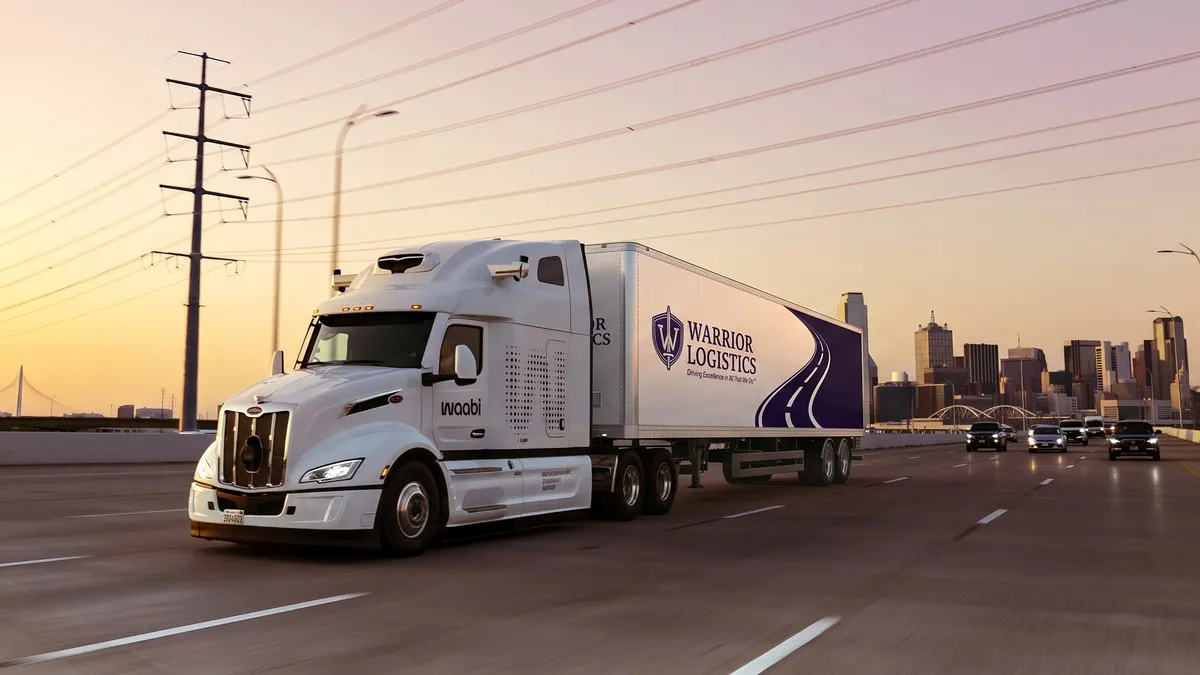
Waabi and Warrior Logistics have entered a commercial partnership to transport recurring customer freight between Dallas and Houston, Texas, using trucks equipped with Waabi Driver autonomous driving technology.
Warrior Logistics, an asset-based carrier headquartered in Coppell, Texas, has integrated Waabi-powered trucks into its logistics network. According to Waabi, the arrangement is intended to add freight capacity, improve fleet utilisation and support service reliability as customer demand grows.
The companies are using the trucks for shipments involving food and beverage products, consumer goods and other freight categories. They plan to identify additional routes for potential expansion across Warrior’s network over the coming year.
Waabi Reports Delivery and Safety Performance
Waabi said its trucks have achieved 100% on-time pickups and deliveries and recorded zero safety incidents since commercial operations began earlier in 2026.
The company did not disclose the number of trucks involved, the volume of freight transported or the total distance covered during the reported period. The figures are company-reported results and have not been independently verified in the announcement.
The companies also did not specify whether a human safety operator remains in the cab during these commercial operations.
Autonomous Trucks and Professional Drivers
Warrior plans to incorporate autonomous trucks alongside its existing professional-driver operations rather than replace its entire network with autonomous vehicles.
Scott McFarlane, CEO of Warrior Logistics, said the combination could allow the carrier to handle additional freight while allocating routes according to operational requirements and driver preferences.
“We see autonomous trucks and professional drivers working side by side in the same network,”
McFarlane said.
“That combination lets us say yes to more freight, expand our customer footprint, and keep our drivers on the lanes they want to run.”
McFarlane also said the autonomous trucks would complement the company’s existing operations.
“complement our professional drivers, build density on our power lanes, and add capacity on the routes that are less desirable for our drivers.”
Partnership Built on Technology Development
McFarlane said Warrior chose to work with Waabi based on its management team, technology and collaborative development process.
“They have a leadership team we trust, technology that is truly innovative, and a co-development approach that has let us see firsthand how safely the Waabi Driver performs. The results on our own freight speak for themselves.”
Lior Ron, Waabi’s chief operating officer, described the agreement as an expansion of the company’s commercial operations.
“the latest milestone in Waabi’s commercial expansion, bringing safe, reliable autonomous capacity into Warrior’s everyday customer operations.”
Ron added that:
“Warrior has helped shape our technology over the course of our partnership.”
Dallas-Houston Corridor Remains a Focus
The Warrior agreement adds another commercial freight customer to Waabi’s operations on the Dallas-Houston corridor. Waabi said commercial load volumes on the route have increased by more than 80% this year, although it did not disclose the baseline used to calculate the growth.
The company also recently began customer operations with Volvo Autonomous Solutions, starting with logistics provider Warp on the same corridor. That operation was reported to include an observer in the driver’s seat.
Waabi has said it is working toward driverless truck operations. FreightWaves reported that Ron said the company was “fully on track for driverless next year, with Volvo as the first OEM platform.” The statement indicates a future target rather than confirmation that driverless commercial service is already operating.
The Warrior partnership will initially focus on recurring freight shipments between Dallas and Houston, with the companies planning to assess additional routes for expansion. Details on fleet size, shipment volumes and the timeline for extending operations beyond the corridor have not been disclosed.


