
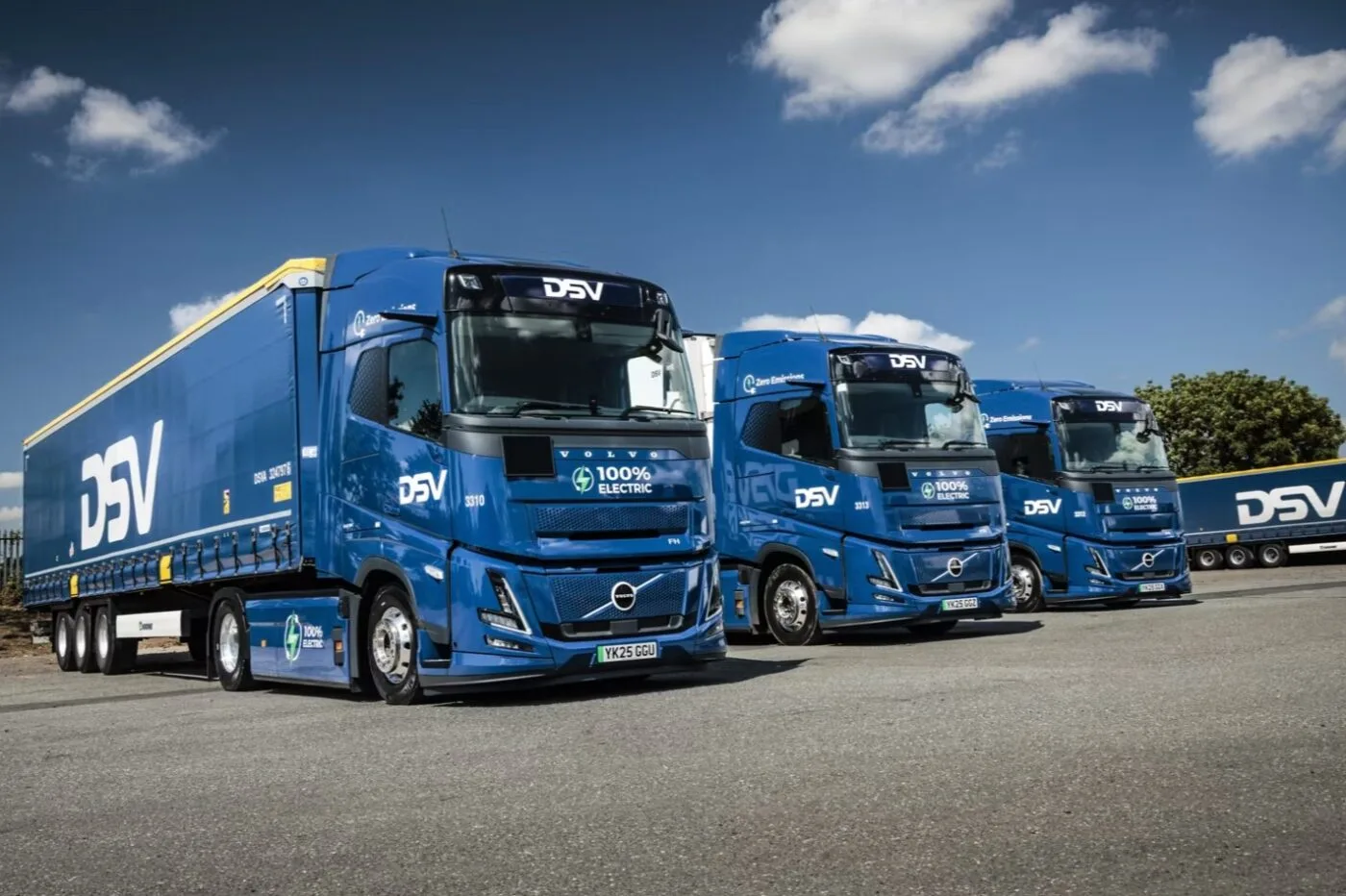
Volvo Trucks’ global fleet of battery-electric vehicles has driven more than 250 million kilometers since the company began delivering its first models in 2019, the Swedish manufacturer said on Tuesday. The milestone, achieved with over 5,700 electric trucks across 50 countries, is estimated to have avoided 213,000 tonnes of CO₂ emissions compared with diesel equivalents.
“The shift to electric is going way too slowly,” said Roger Alm, President of Volvo Trucks. “We lack the market conditions that would make it profitable for all transport companies to decarbonize transport. This must change if we are to see more electric trucks on the road.”
See also: Volvo Unveils Long-Range Electric Coach Chassis Based On BZR Platform
Volvo noted that the distance covered by its fleet is equivalent to roughly 6,200 trips around the Earth and represents the measurable environmental benefits of electrifying freight transport, which accounts for approximately 5% of global CO₂-equivalent emissions.
Volvo’s electric trucks currently serve a range of applications, including urban distribution, waste collection, regional haul, and construction. Key markets include Germany, the Netherlands, Norway, Sweden, and the United States.
See also: Siemens and Volvo Power World’s First Fully Electric Deconstruction Site in Germany
The company said it plans to expand its heavy-duty offering in 2026 with a new electric truck capable of up to 600 kilometers per charge. Volvo’s broader decarbonization strategy also includes fuel-cell electric trucks and combustion engines powered by renewable fuels.
Current models in Volvo’s electric lineup include the FL Electric, FE Electric, FM Electric, FM Low Entry, FMX Electric, FH Electric, FH Aero Electric, and VNR Electric.