

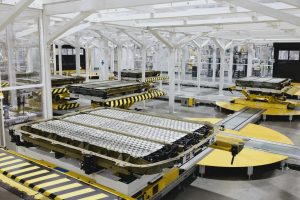




Volvo Cars is temporarily suspending operations at Novo Energy after failing to secure a new technology partner for the battery cell venture, dealing a setback to the Swedish automaker’s plans to localise battery production in Europe.
Novo Energy was originally established as a joint venture between Volvo Cars and battery maker Northvolt to build a large-scale cell factory in Gothenburg, Sweden. Construction of the site began in September 2023, with production initially planned to start this year and capacity targeted at up to 50 gigawatt-hours annually. Following Northvolt’s insolvency, Volvo took full ownership of the venture.
See also: Novo Energy Cuts Half of Workforce Amid Reorganisation
Despite the takeover, Volvo has been unable to find a replacement technology partner to operate the plant. The company said it had “intensively searched for a new partner over the past year” but had not succeeded, leaving no viable path to proceed with operations as originally planned.
As a result, Novo Energy will lay off its remaining 75 employees and place the company into hibernation until a suitable partner is found. “This decision was not made lightly but is necessary given the current situation,” the company said in a statement, adding that it was currently unable to provide a timeline for when battery production might begin or what form it could take.
See also: Volvo Cars Acquires Full Stake in Novo Energy Battery Venture at No Cost
The move follows earlier job cuts announced in May 2025, when Volvo laid off around 150 Novo Energy employees amid growing uncertainty over the project. The battery factory had initially been expected to create about 3,000 jobs and supply cells for Volvo’s European plants in Gothenburg and Ghent, as well as potentially other brands within China’s Geely Group, which owns Volvo Cars.
Labour representatives said prospects for a restart appeared limited. “We had hoped and trusted that the matter would be resolved, so this is truly sad. It is also a loss for Gothenburg and western Sweden that this chapter is now closed,” said Katarina Atterström, head of department at the Swedish Union of Engineers, in comments to public broadcaster SVT.
See also: Volvo Says EX60 Electric SUV Can Travel Up to 810 km on a Charge
The suspension underscores the broader challenges facing Europe’s efforts to build a domestic battery value chain. Northvolt had been viewed as a cornerstone of European battery ambitions before its collapse, leaving automakers largely dependent on Asian suppliers. While some projects are advancing — including Volkswagen subsidiary PowerCo’s cell production in Salzgitter — much of the underlying technology and expertise still comes from Chinese and Korean partners.
Industry leaders have warned of the risks involved. Stefan Hartung, chief executive of Bosch, said recently that entering battery cell production would have required investments of “double-digit billions,” adding that “the risk was simply too great.”


