
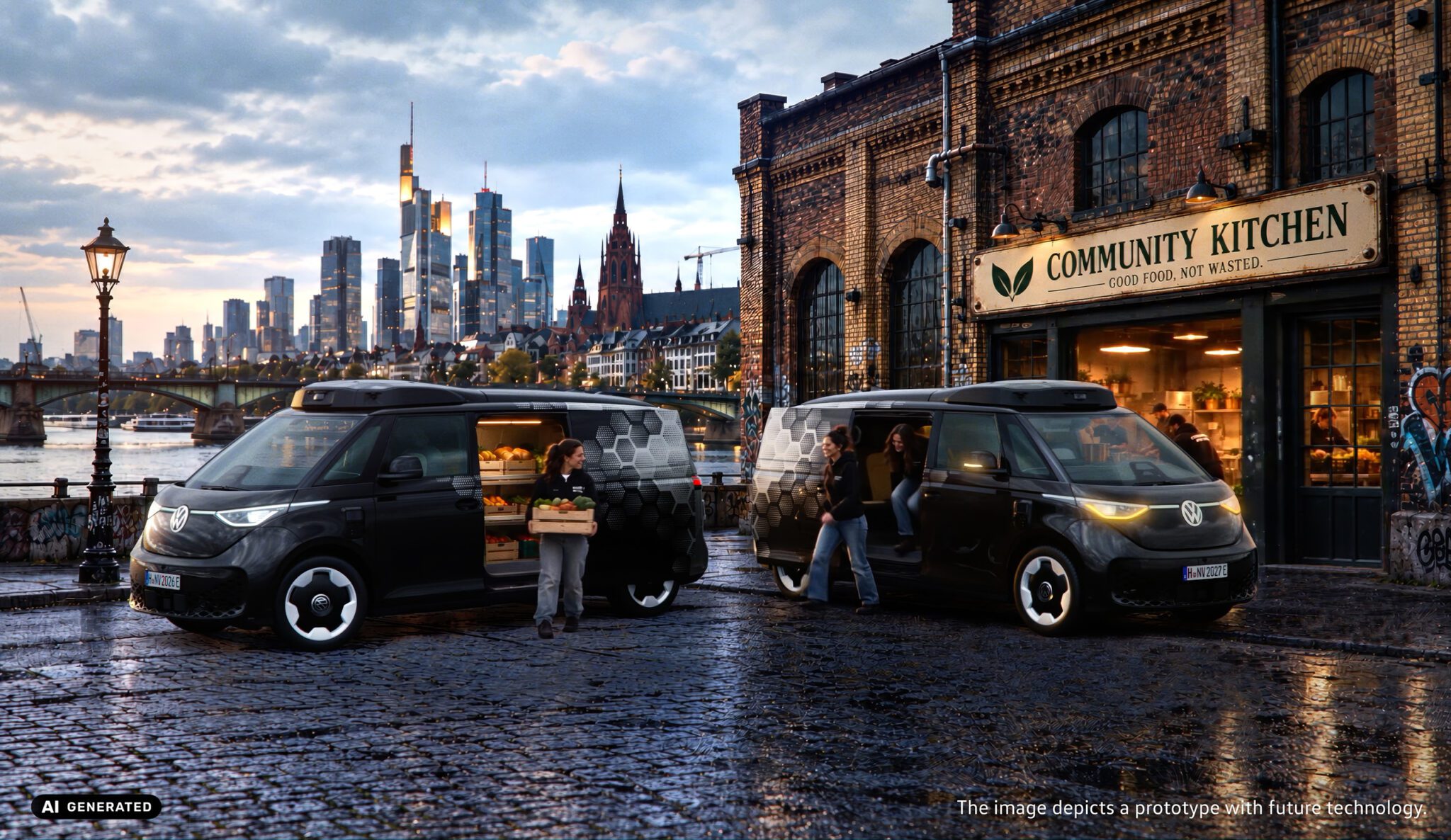
Volkswagen Commercial Vehicles has showcased a long-wheelbase autonomous ID. Buzz equipped with NVIDIA’s DRIVE AGX Hyperion 10 reference architecture at NVIDIA GTC Berlin. The exhibit demonstrates how an advanced computing and sensor system can be integrated into a vehicle based on series-production standards for autonomous passenger and commercial transport.
Announced on 22 October, the display features a sensor configuration comprising 14 cameras, nine radars and three lidar units. The setup is intended to illustrate how a Level 4 autonomous-driving technology stack can be incorporated into the electric van platform.
Sensor Architecture Supports Autonomous Driving Development
The autonomous ID. Buzz on display combines Volkswagen Commercial Vehicles’ vehicle platform with NVIDIA’s computing and sensor reference architecture. The configuration is designed to support the development and integration of autonomous-driving systems.
The vehicle is presented as a potential foundation for applications ranging from mobility services and passenger transport to logistics and other commercial operations. Its long-wheelbase configuration and mobility-as-a-service interior are intended to demonstrate its suitability for passenger-focused autonomous services.
Volkswagen Commercial Vehicles says its contribution extends beyond supplying the base vehicle. The company also provides series-production engineering, integration capabilities and vehicle-side validation to support the installation of qualified autonomous-driving technology.
A Platform for Autonomous Mobility Operators
The approach is intended to help autonomous-driving developers and fleet operators avoid having to engineer vehicle integration entirely from scratch. By using a vehicle designed around series-production requirements, partners can concentrate on developing and validating their autonomous-driving systems.
Volkswagen Commercial Vehicles says a common vehicle foundation could reduce integration complexity and support the deployment of both passenger and commercial transport applications. The same platform concept could serve different operating models, from driverless mobility services to logistics.
The company aims to establish the autonomous ID. Buzz as a series-production-quality platform for driverless passenger and commercial transport across different customers and markets.
Hyperion 10 Adds Another Technology Option
The GTC Berlin exhibit demonstrates how NVIDIA’s DRIVE AGX Hyperion 10 reference architecture can be integrated into the ID. Buzz platform as an additional qualified technology option.
The configuration brings together cameras, radar and lidar sensors with the computing architecture required for autonomous-driving development. The display is intended to show the integration potential of the vehicle rather than announce a new production vehicle or confirm commercial deployment of the complete system.
Volkswagen Commercial Vehicles has also been involved in autonomous ID. Buzz passenger transport initiatives with mobility operators, including MOIA and Beep. The latest exhibit builds on broader industry efforts to develop vehicle platforms that can accommodate autonomous-driving technology at scale.
As autonomous mobility programmes advance, the ability to integrate computing, sensors and vehicle systems into a repeatable production-based platform remains an important consideration for developers and operators. Volkswagen Commercial Vehicles is positioning the ID. Buzz as a foundation for those applications, with the NVIDIA Hyperion 10 configuration illustrating one approach to the integration process.