


Volkswagen Group is overhauling its in-house software division, Cariad, in a major strategic shift that will see the unit transition from an independent developer to a coordinator for externally developed technologies. The move comes as Volkswagen expands partnerships with U.S. electric vehicle startup Rivian and Chinese automaker Xpeng to accelerate progress on software-defined vehicle (SDV) architectures.
The change marks a departure from the original vision set out in 2020 by then-CEO Herbert Diess, who established Cariad to unify the company’s software efforts across its multiple brands. However, the division, which employs around 6,000 people, struggled to deliver on its objectives, contributing to major delays in key vehicle launches, including the electric Porsche Macan.
See also: Cariad Making Progress After Major Losses, Says CEO Peter Bosch
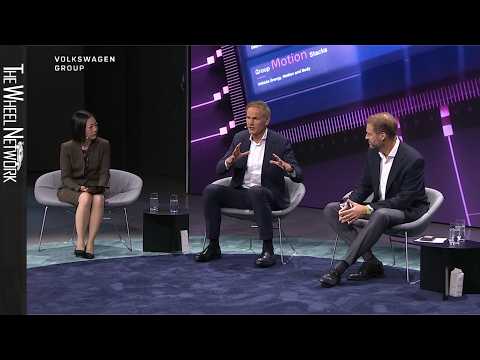
Volkswagen Group CEO Oliver Blume confirmed the restructuring at the Financial Times Auto x Software Summit in Munich, describing it as a “complete restart” of the company’s software strategy. “Now that we have defined a clear software strategy, we are achieving excellent cost positioning,” Blume said, citing the benefits of scale through collaboration with external partners.
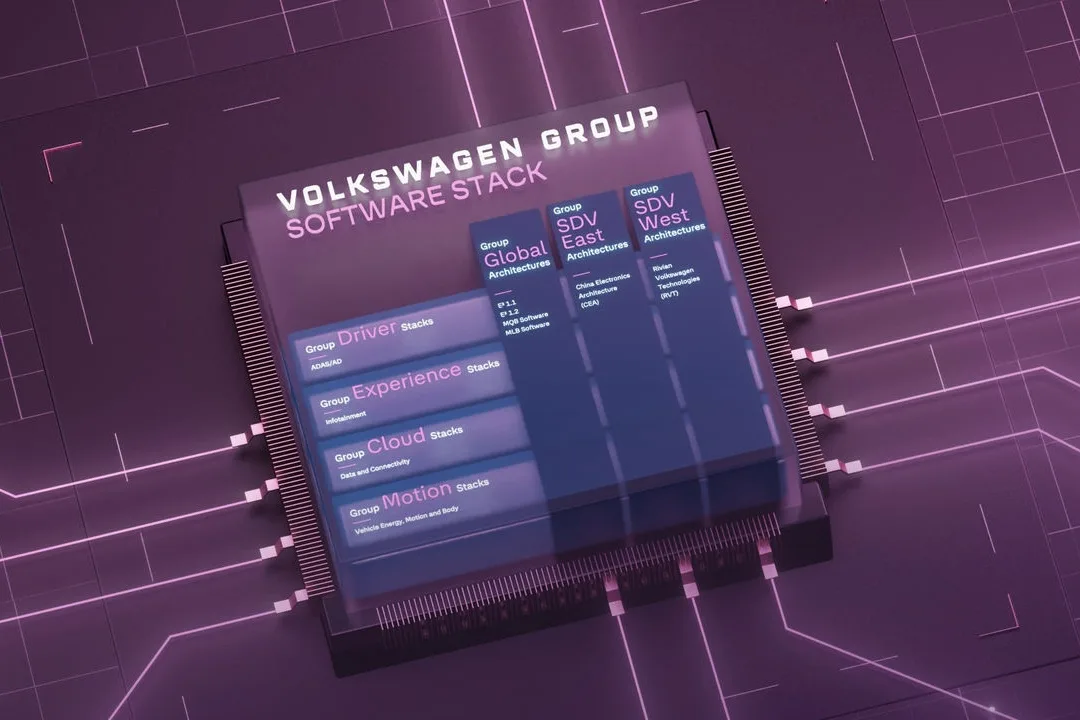
According to a post on the Cariad blog, the company’s new “Group Software Stack” will serve as a framework encompassing four core areas — Driver Stack, Experience Stack, Cloud Stack, and Motion Stack. These are being aligned across three main architectures: the Global Architecture (developed internally by Cariad), SDV East (created with Xpeng), and SDV West (in partnership with Rivian).
See also: Volkswagen’s Cariad Software Unit to Cut 1,600 Jobs Amid Restructuring
Under the new structure, Cariad will continue to exist but with a reduced mandate. The division will now focus on maintaining and updating Volkswagen’s existing software systems while integrating technologies from Rivian and Xpeng into the group’s vehicle lineup. Cariad will also oversee core areas such as autonomous driving, infotainment, and cloud-based services.
Cariad CEO Peter Bosch said the transformation marks a pivotal change in Volkswagen’s approach to software development. “I am somewhat relieved that we have managed to do this within two years, because it is quite a massive transformation,” Bosch told the Financial Times, referring to the shift from a “do it yourself” strategy to one centred on partnerships.
See also: Volkswagen’s Cariad Software Unit to Cut 1,600 Jobs Amid Restructuring
Volkswagen plans to begin using Xpeng’s driver assistance system, known as XNGP, in its electric vehicles produced for the Chinese market from 2026. The first model to feature the system will be a mid-range SUV co-developed with Xpeng, according to CarNewsChina. While Cariad had also been working on autonomous driving solutions for China, it remains unclear how the adoption of XNGP — a Level 2 advanced driver assistance system — will affect those plans.
Meanwhile, Volkswagen’s alliance with Rivian, announced in 2023, continues to grow. The California-based joint venture has expanded from 900 to 1,300 employees, with a new office set to open in Berlin. Rivian, in which Volkswagen is the second-largest shareholder, is developing the software and electrical architecture for its upcoming R2 electric SUV, expected to enter production next year.
See also: Volkswagen’s Cariad and TomTom Launch Navigation System Tailored for Electric Vehicles
The restructuring underscores Volkswagen’s effort to streamline its software operations and regain momentum in the competitive electric and connected vehicle market. By leveraging partnerships with established EV specialists, the company aims to reduce complexity, improve cost efficiency, and accelerate the rollout of advanced software across its global brands.