

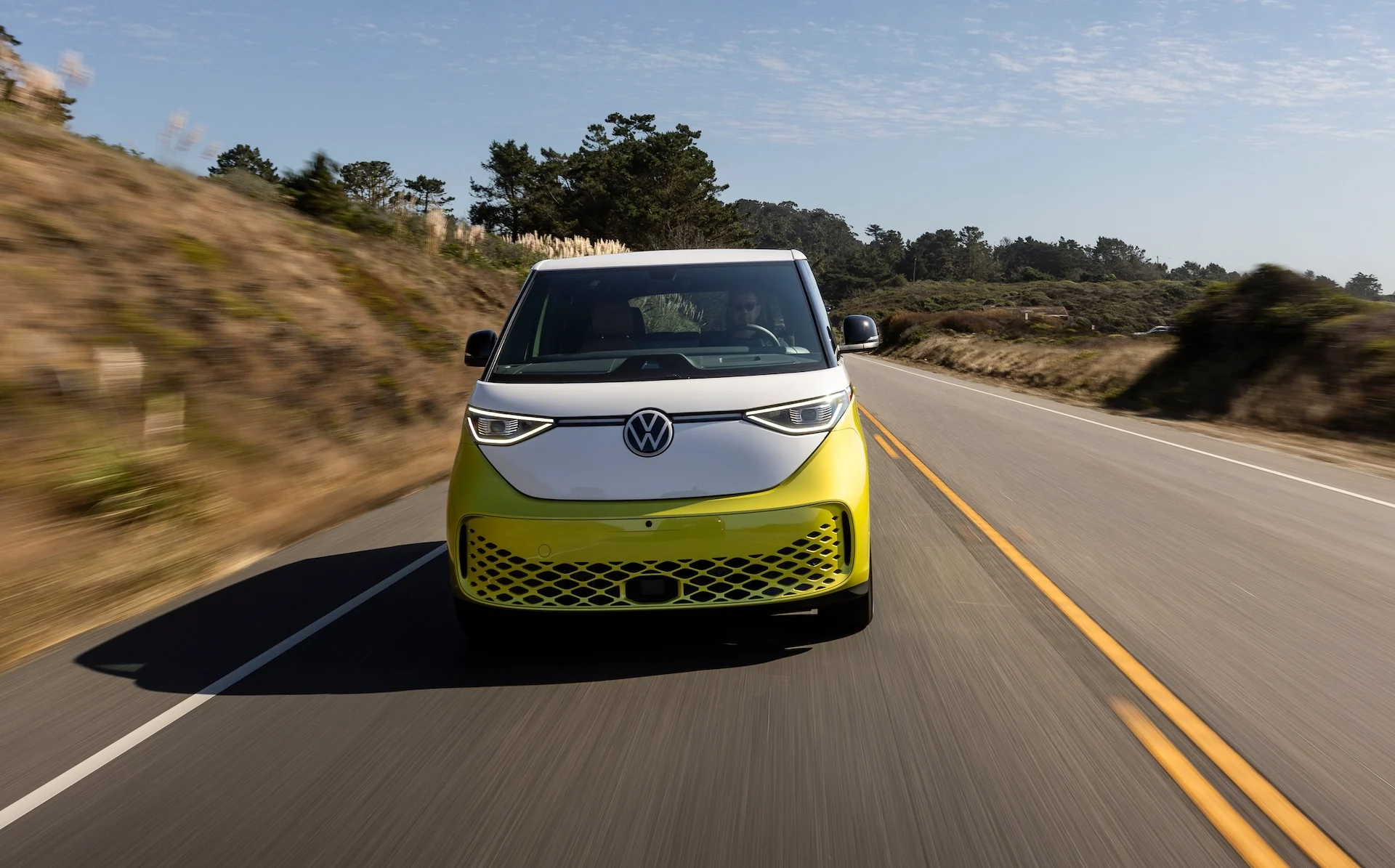
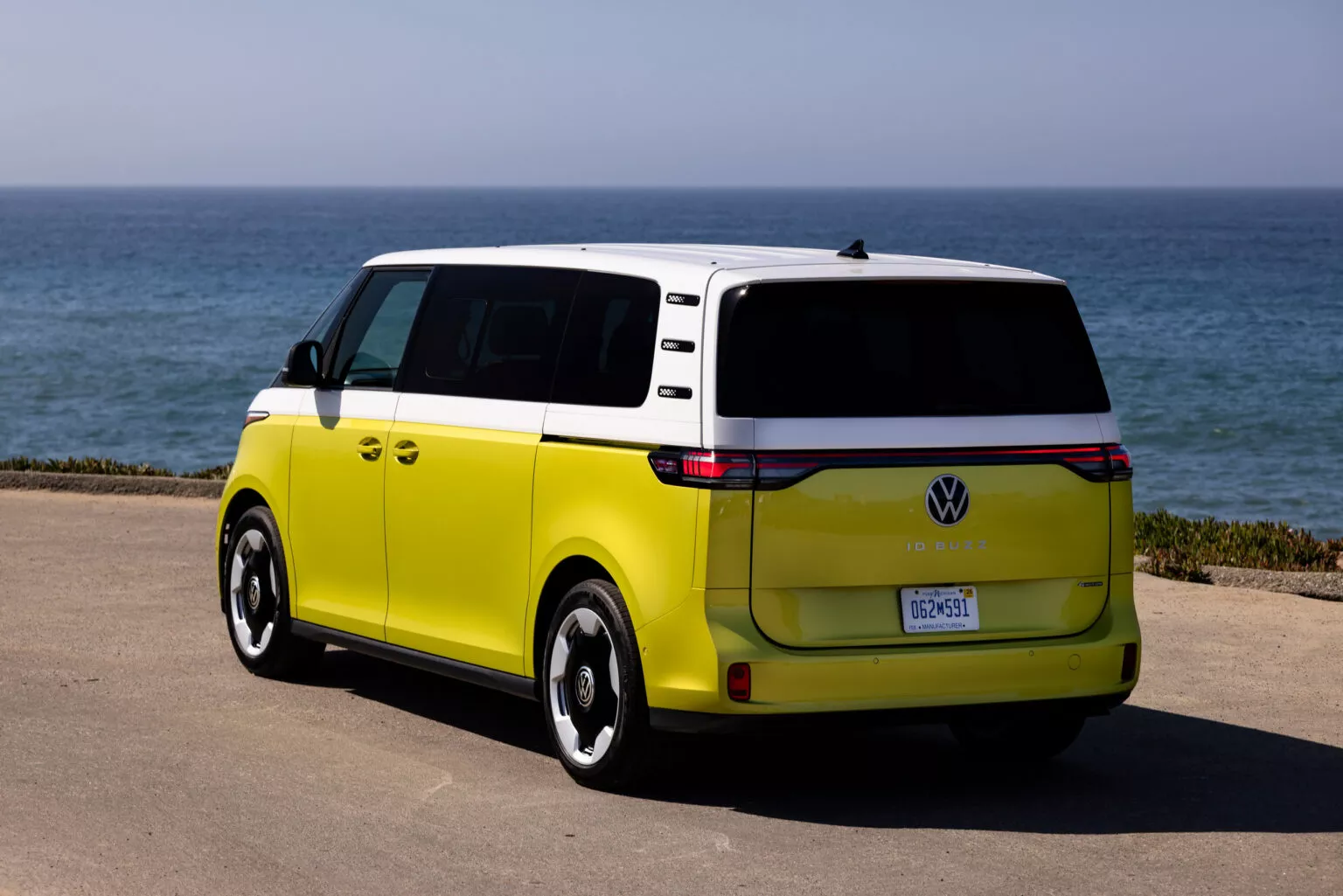
Volkswagen will not offer a 2026 model year version of its electric ID. Buzz van in the United States, the automaker confirmed, as it reassesses market conditions and cost pressures, according to a report by Carscoops.
The move follows a temporary suspension of U.S. deliveries announced in July, initially linked to a recall that required modifications to the third-row seating. Industry sources cited by Carscoops also pointed to tariff-related challenges, as the ID. Buzz is produced exclusively at Volkswagen Commercial Vehicles’ plant in Hanover, Germany, making it subject to U.S. import duties.
See also: Volkswagen to Add Long-Wheelbase ID. Buzz Cargo With Larger Battery From 2026


“Following a thorough assessment of current market conditions for electric vehicles, we have made the strategic decision not to continue production of the MY26 ID. Buzz for the US market,” a spokesperson for Volkswagen told Carscoops. The spokesperson added that the decision is intended to allow the company to focus on existing inventory and dealer performance through the 2025 model year, while “laying a strong foundation for preparing the transition to model year 27 next year.”
Rumours of a full withdrawal from the U.S. market had circulated on online forums after some dealers reportedly told customers that remaining stock would be the final allocation. Volkswagen has not confirmed a permanent discontinuation but declined to comment further when asked by Carscoops about specific plans for the 2027 model year.
See also: Volkswagen ID. Buzz Secures NHTSA 5-Star Safety Rating for 2025 Model

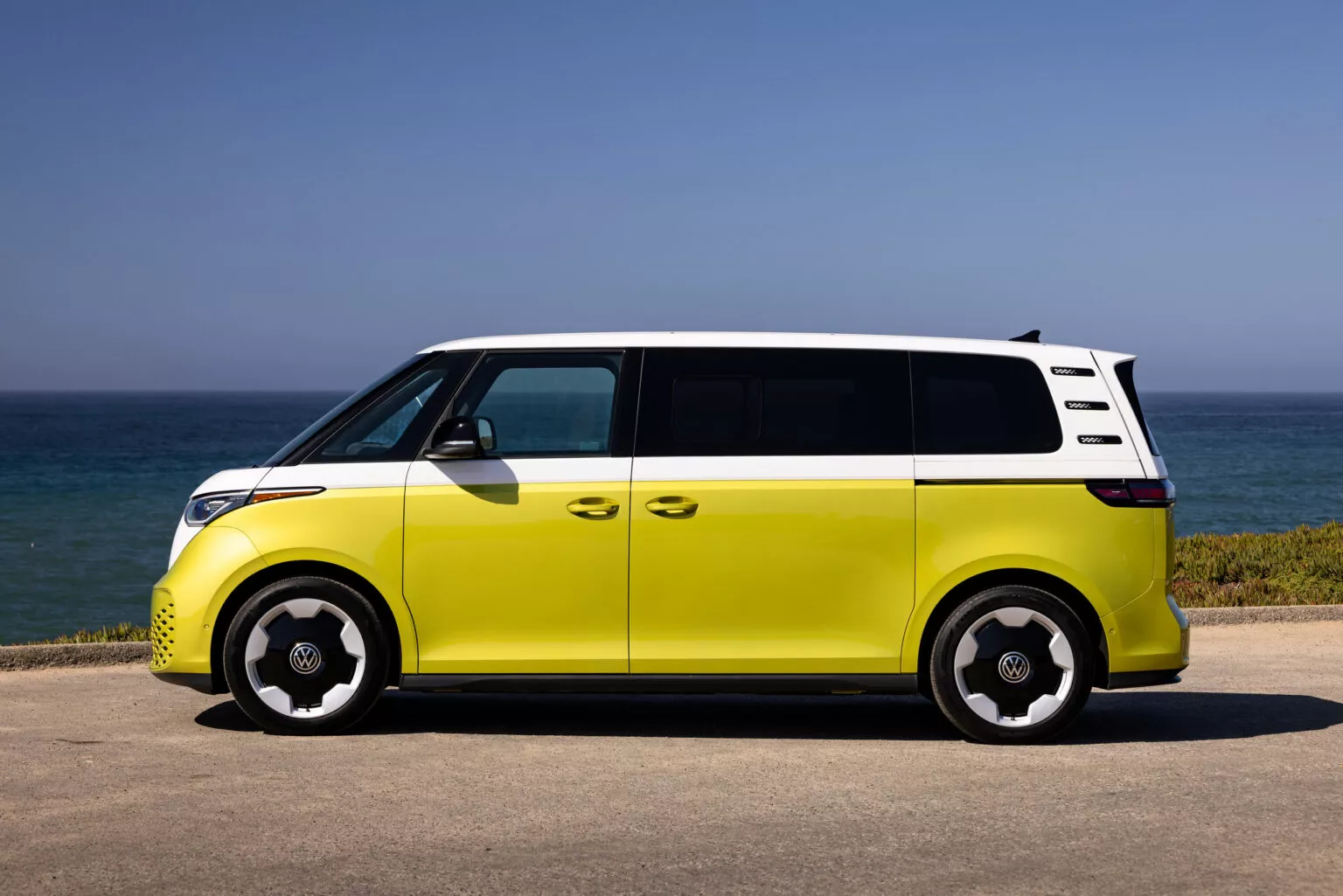
In Europe, Volkswagen is preparing wider updates to its electric vehicle lineup. The automaker has confirmed that it will introduce a new family of small electric vehicles in 2026 built around its unified battery cell platform. The technology will also be applied to the upgraded MEB+ architecture, which is expected to underpin both smaller front-wheel-drive models and larger rear- or all-wheel-drive vehicles. Industry observers expect these changes to be introduced to the ID. Buzz over time.
The long-term outlook for the model in the United States remains uncertain. Volkswagen has no announced plans for tariff-free domestic production, which continues to weigh on the economics of the imported van. The company is also navigating a weaker U.S. electric vehicle market following the expiration of federal tax incentives.
See also: Volkswagen and BVG Begin Testing Autonomous ID. Buzz Shuttles in Berlin
A comparable situation has emerged at Nissan, which has suspended the 2026 model year of its Japan-built Ariya electric crossover for North America due to similar tariff pressures, while maintaining sales in other regions. Nissan has also left open the possibility of a U.S. return in 2027.