



Vilnius Airport will begin transporting passengers between terminal buildings and aircraft exclusively with electric buses from the second half of 2026, following a fleet renewal agreement with specialist airport bus manufacturer Cobus.
Lithuanian Airports, the state-owned operator of Vilnius, Kaunas and Palanga airports, has signed a €7.2 million ($7.9 million) net contract for 12 battery-electric apron buses, which will replace all existing diesel-powered vehicles at Vilnius Airport.
See also: Stagecoach Launches Electric Bus Fleet on Edinburgh Airport Route
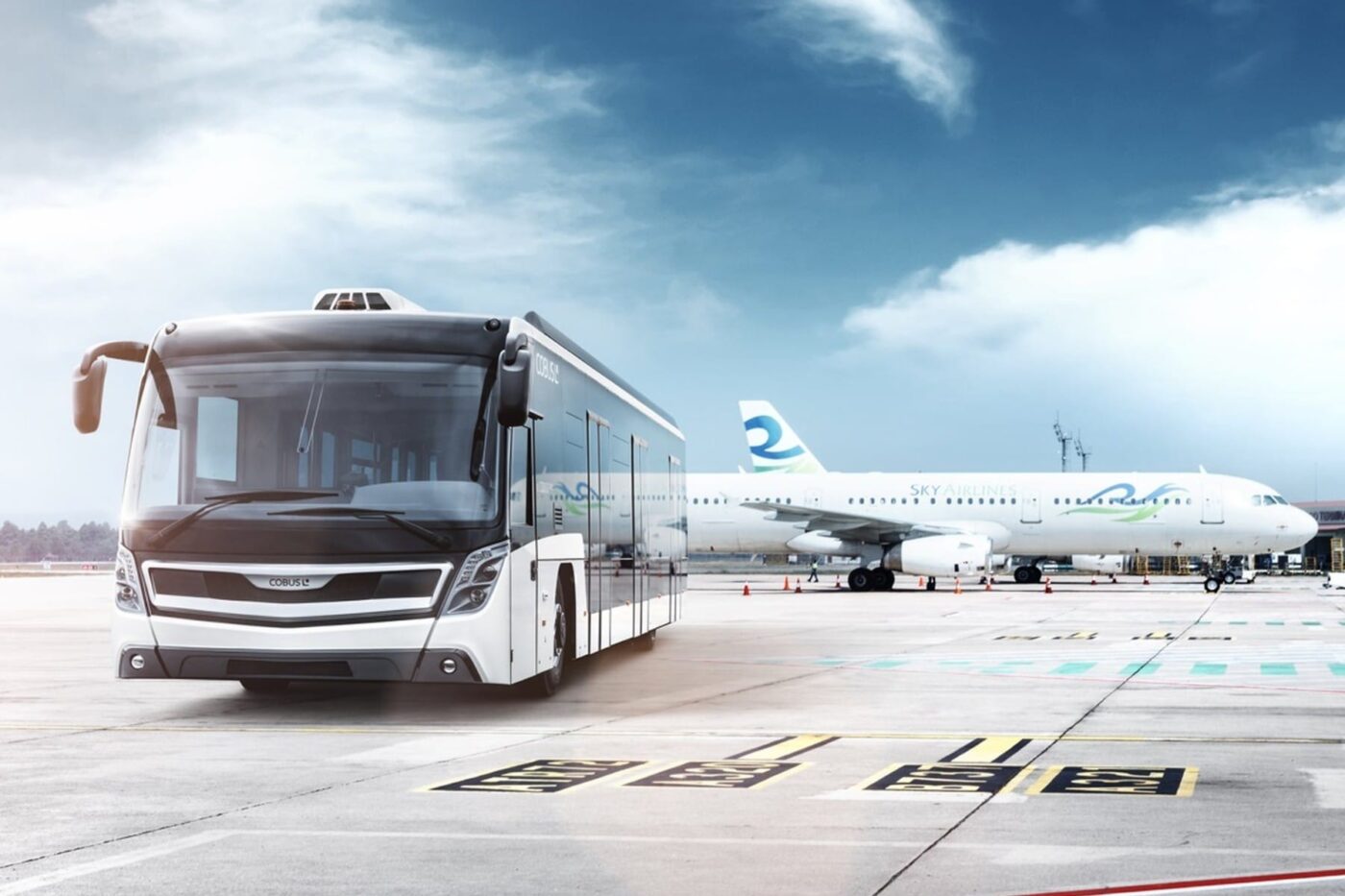
The order covers Cobus’ e.Cobus 2700 model, a low-floor electric bus designed specifically for airport operations. The vehicles are built on a Mercedes-Benz chassis, reflecting Cobus’ ownership structure as a joint venture between CaetanoBus and Daimler Truck. The buses will be equipped with lithium-titanate batteries providing a total capacity of 282 kilowatt-hours, according to the manufacturer.
Lithuanian Airports said the move supports its long-term decarbonisation targets. “Electrification of ground transport is a key step toward achieving the NET ZERO goal that we have set in our airport strategy,” said Simonas Bartkus, chief executive of Lithuanian Airports.
Cobus said its vehicles are already deployed globally. “Cobus buses are already in operation at over 350 airports worldwide,” the company said in a statement accompanying the announcement.
Cobus chief executive Patricia Vasconcelos said the project aligns with the airport’s environmental goals. “Our fully electric, low-floor buses are designed to ensure safe, efficient, and reliable transportation while contributing to Vilnius’ environmental objectives,” she said.
See also: Munich Airport Opens Bavaria’s Largest EV Charging Park With 275 Solar-Powered Points
The contract also includes an option for Lithuanian Airports to purchase three additional electric buses if future passenger growth requires fleet expansion.
Lithuanian Airports has set a strategic target to become a CO₂-neutral organisation by 2030, with ground transport electrification forming a central part of that plan.


