



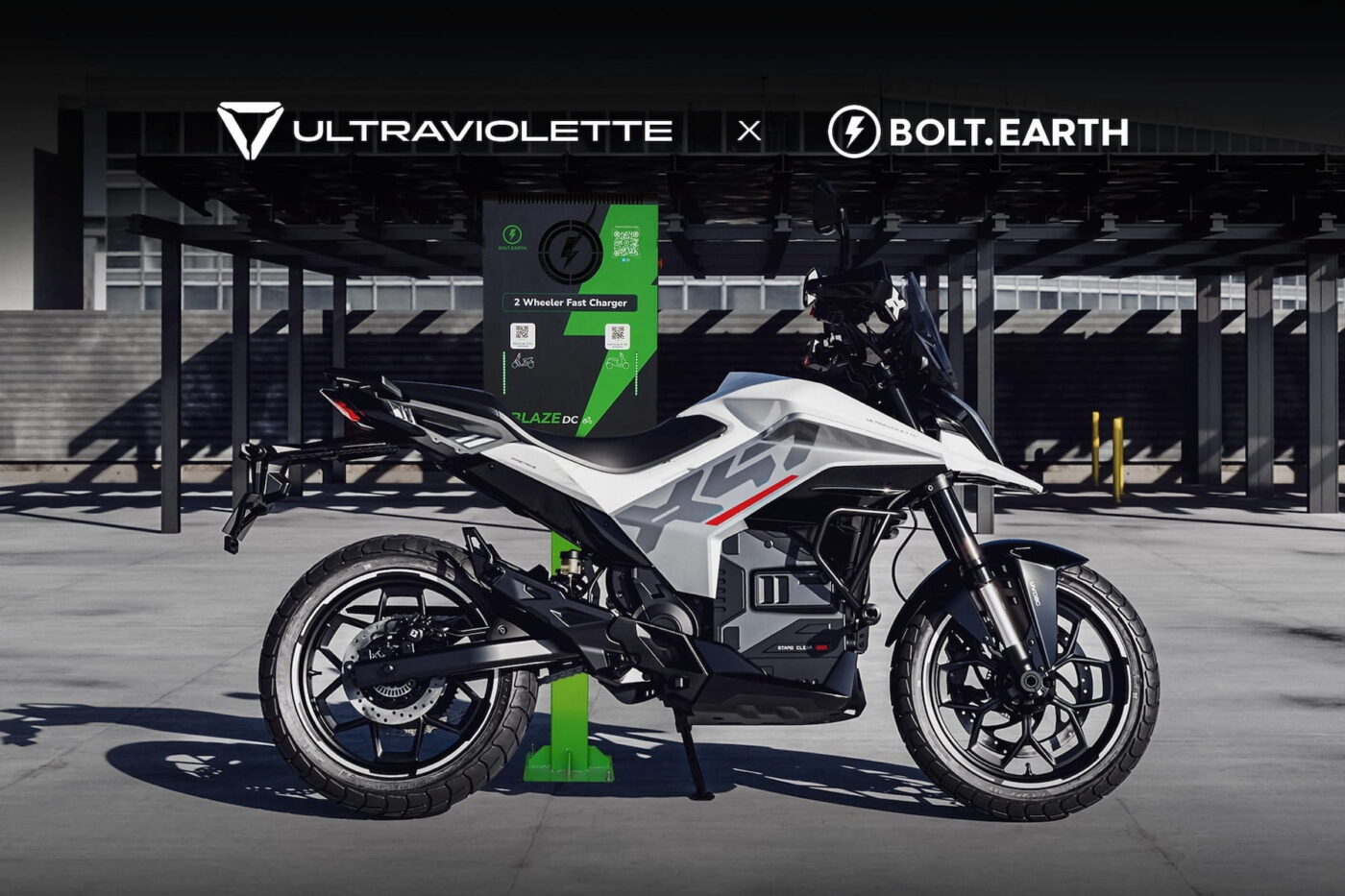
Ultraviolette has partnered with Bolt.Earth to deploy a dedicated fast-charging network for electric two- and three-wheelers across India.
Under the collaboration, Bolt.Earth will roll out Type-6 DC chargers capable of delivering up to 3 kW, designed specifically for light electric vehicles. The chargers will support Ultraviolette’s current lineup, including the Ultraviolette F77 and Ultraviolette X-47.
In addition to these chargers, Ultraviolette is also deploying higher-capacity “Supernova” and “Supernova Plus” DC chargers, offering 6 kW and 12 kW respectively, primarily along highways to support intercity travel. Bolt.Earth plans to introduce its own “Blaze” series of 6 kW and 12 kW chargers later this year for urban and high-density routes.
The companies have already installed charging points in key regions including Delhi and several states such as Gujarat, Karnataka, Kerala, Maharashtra, Tamil Nadu and Telangana. Bolt.Earth aims to establish 50 charging stations by May and scale the network to 2,000 chargers within 24 months.
Type-6 is India’s standardized DC charging format for light electric vehicles, enabling interoperability across brands and supporting a wide range of vehicle types, including scooters, motorcycles, rickshaws and small commercial EVs.
Niraj Rajmohan said the partnership represents a step toward building scalable and interoperable charging infrastructure tailored to the needs of two- and three-wheelers.
The initiative comes as India’s EV market continues to expand rapidly, with two- and three-wheelers accounting for the majority of electric vehicle sales in the country.
Bolt.Earth, which entered the EV charging sector in 2018, has already deployed more than 100,000 chargers across 1,900 locations and plans to further expand its footprint as demand grows.


