



British battery recycling company Altilium has secured support from the UK Department for Energy Security and Net Zero and Innovate UK to validate electric vehicle battery cells made using recycled anode and cathode materials, the company said. The project is designed to demonstrate the commercial feasibility, carbon reduction potential and supply-chain benefits of integrating recycled materials into next-generation EV batteries.
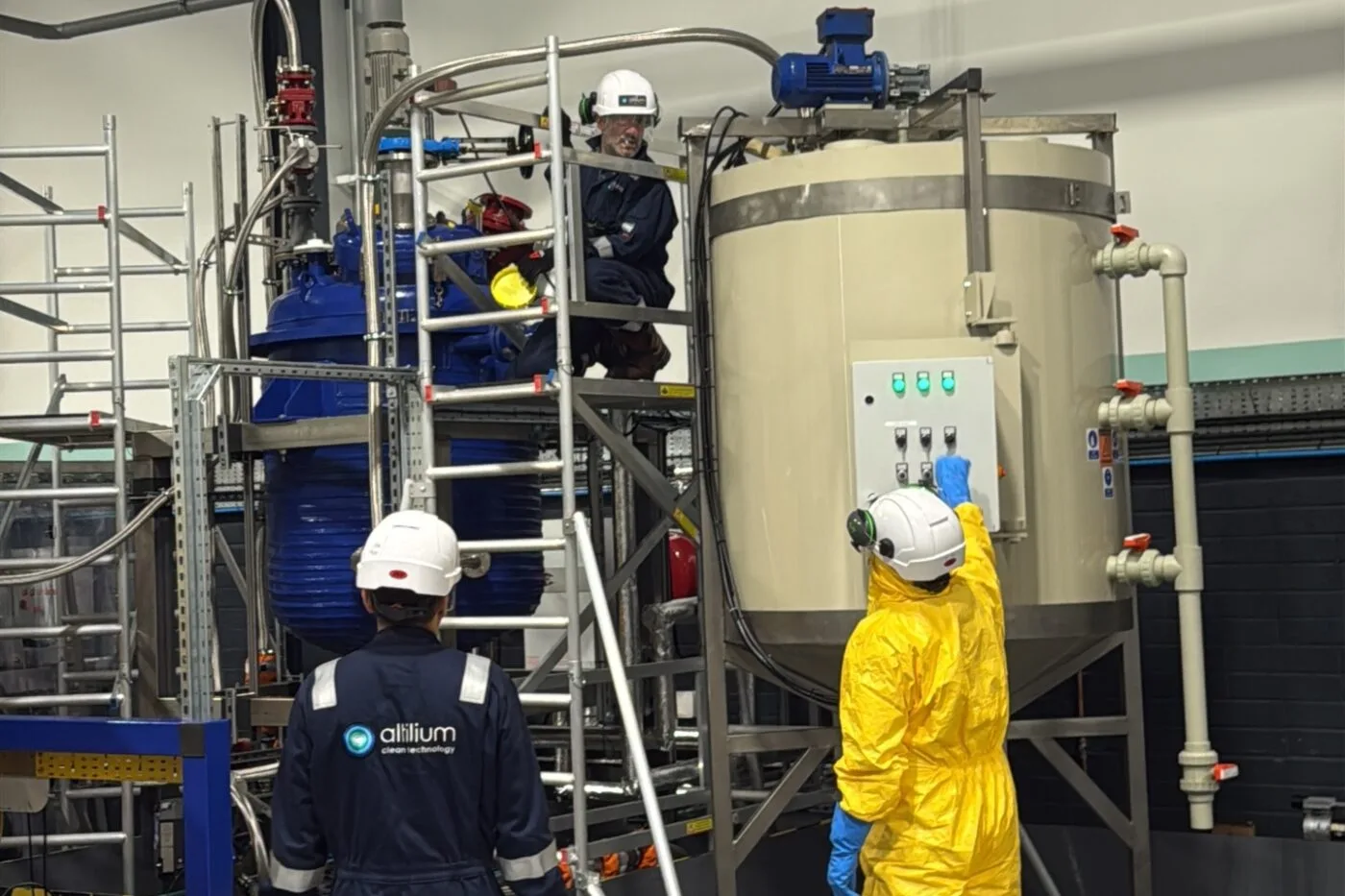
Altilium said its proprietary EcoAnode and EcoCathode processes will be used to assess the performance and manufacturability of battery materials recovered from end-of-life electric vehicles. The company said its EcoCathode technology is capable of achieving recovery rates above 95% for critical minerals including lithium, nickel and cobalt, while producing cathode materials with high purity and consistency suitable for commercial cell production.
The programme builds on a recent technology demonstration in which Altilium and Jaguar Land Rover showcased what they described as the UK’s first EV battery cells made from both recycled cathode and anode materials at the Cenex Expo 2025. The automotive-grade multilayer pouch cells were produced using cathode active material recovered at Altilium’s Devon facility, providing early evidence of the carbon-saving potential of a circular battery supply chain within the UK.
The project also aligns with the UK’s recently announced Critical Minerals Strategy, which aims to reduce reliance on imported raw materials by targeting domestic production of 10% of national mineral demand and at least 50,000 tonnes of lithium by 2035. At the same time, new European Union Battery Regulations will require minimum levels of recycled content in EV batteries, increasing pressure on manufacturers to secure compliant supply chains.
See also: Altilium and JLR Showcase UK’s First EV Battery Cells Using Recycled Materials
Altilium is scaling up its recycling capacity following the opening of its ACT 2 facility in Plymouth, the UK’s first commercial EV battery recycling plant. The company is also developing its ACT 3 facility, which is designed to recover battery-grade minerals from up to 24,000 electric vehicles per year.


