


Ride-hailing platform Uber has announced a partnership with electric vehicle maker Rivian to deploy a large-scale fleet of robotaxis, as part of its broader push into autonomous mobility.
Under the agreement, Uber plans to invest up to $1.25 billion in Rivian over the coming years, with the goal of bringing as many as 50,000 autonomous vehicles based on Rivian’s R2 electric SUV onto its platform. The deal includes an initial investment of $300 million, with additional funding tied to the achievement of development milestones in autonomous driving.
The partnership marks Uber’s latest move in a series of collaborations aimed at expanding its robotaxi operations. The company has recently launched services in Las Vegas with Motional, a subsidiary of Hyundai Motor, and is also working with Zoox to integrate driverless vehicles in U.S. cities.
RJ Scaringe, founder and chief executive of Rivian, said the collaboration would accelerate the company’s autonomous ambitions. “We couldn’t be more excited about this partnership with Uber — it will help accelerate our path to level 4 autonomy to create one of the safest and most convenient autonomous platforms in the world,” he said.
Uber plans to deploy an initial fleet of 10,000 fully autonomous Rivian vehicles starting in 2028, with early operations expected in San Francisco and Miami. The rollout is set to expand to 25 cities across the United States, Canada and Europe by 2031. The agreement also includes an option for Uber to procure up to 40,000 additional vehicles through its fleet partners.
Dara Khosrowshahi said Rivian’s vertically integrated approach to vehicle and software development was a key factor in the partnership. “We’re big believers in Rivian’s approach—designing the vehicle, compute platform, and software stack together, while maintaining end-to-end control of scaled manufacturing and supply in the US,” he said. “That vertical integration, combined with data from their growing consumer vehicle base and experience managing the complexities of commercial fleets, gives us conviction to set these ambitious but achievable targets.”
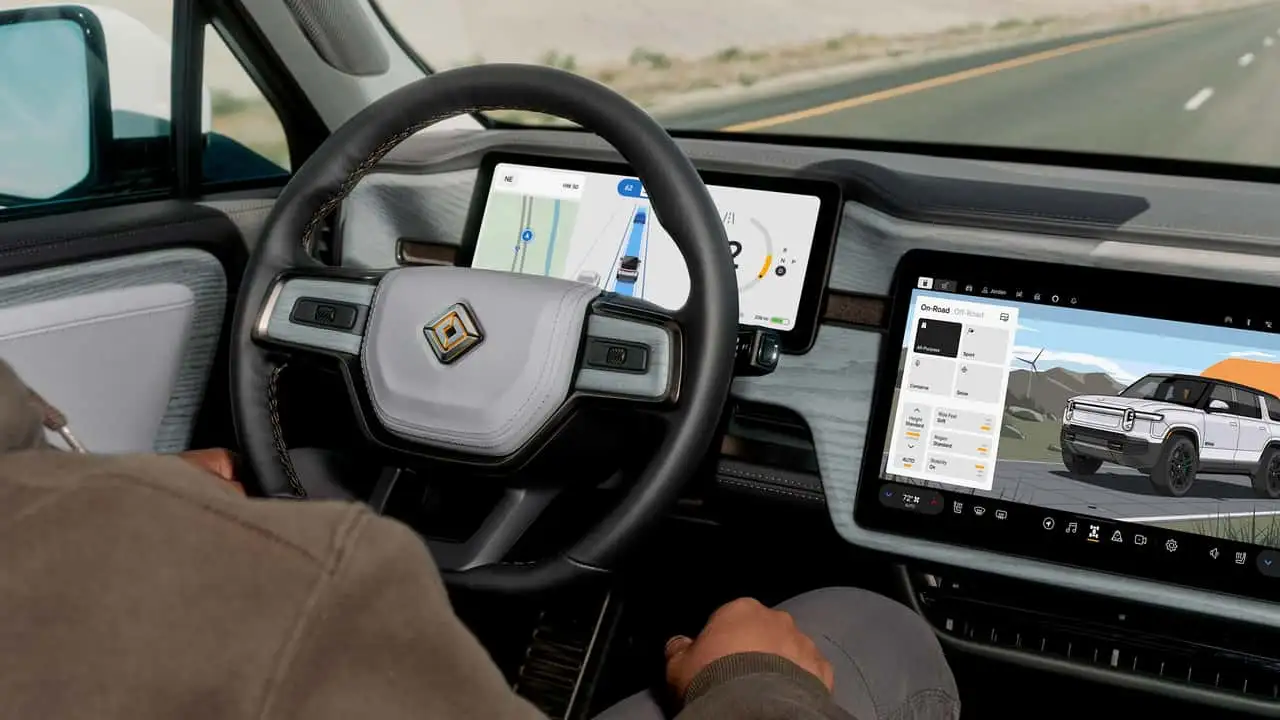
Rivian is developing its autonomous technology in-house, including its proprietary Rivian Autonomy Processor (RAP1) and a sensor suite combining cameras, radar and LiDAR systems. The company has presented its progress in autonomous driving as part of its broader strategy to compete in the robotaxi market.
Uber has also recently struck a similar agreement with Lucid Motors and previously partnered with Volkswagen to deploy autonomous ID. Buzz vans in the United States.
The ride-hailing company has said it aims to introduce robotaxis in 28 cities by 2028, using technology supported by systems from Nvidia.


