



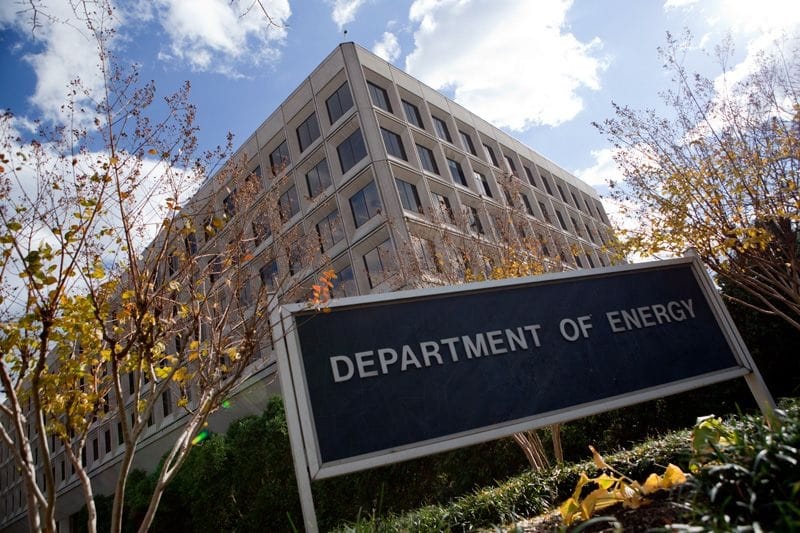
The U.S. Department of Energy (DOE) has withdrawn more than $700 million in federal funding for battery and manufacturing initiatives approved under the Biden administration, marking one of the largest reversals in the sector to date. The decision reflects the Trump administration’s ongoing rollback of clean energy programs launched during the previous presidency.
According to Politico’s E&E News, the DOE rescinded $718 million in grants that had been awarded to five recipients: battery manufacturers Ascend Elements, American Battery Technology, Anovion and ICL Specialty Products, as well as glass producer LuxWall. The largest single grant, worth $316 million, was intended to support Ascend Elements’ plan to produce components from recycled electric vehicle batteries at a facility in Hopkinsville, Kentucky.
See also: General Motors Lifts Full-Year Outlook, Trims Tariff Impact After Solid Q3 Results
DOE spokesperson Ben Dietderich said the department cancelled the projects in mid-October because they “had missed milestones, and it was determined they did not adequately advance the nation’s energy needs, were not economically viable, and would not provide a positive return on investment of taxpayer dollars.” He did not specify which milestones were missed.
The cancellations also include projects in Republican-led states such as Kentucky and Missouri, distinguishing this round from earlier cuts that primarily affected Democratic strongholds. In total, the DOE’s Manufacturing and Energy Supply Chains Office has now revoked $718 million in clean energy grants. Energy Secretary Chris Wright defended the move, stating that the affected projects “contain termination clauses” and that the government “always has the ability to cancel these projects” if they no longer serve taxpayers’ interests.
Democratic lawmakers, however, have sharply criticized the decision. In a letter to Secretary Wright, 37 Democratic and independent senators argued that “the illegality of your cancellations is the only thing as indisputable as the harm your cancellations will wreak.”
The now-cancelled grants were tied to the 2021 bipartisan infrastructure law. ICL Specialty Products was to receive $197.3 million for a St. Louis facility producing lithium iron phosphate powder for batteries, while American Battery Technology sought $57.7 million to build a lithium hydroxide plant in Nevada. Anovion planned to use $117 million to manufacture synthetic graphite in Alabama, and LuxWall was allocated $31.7 million for a glass plant in Detroit.
See also: Vulcan Energy Signs Eight-Year Lithium Supply Deal with Glencore for Phase One Project
Ascend Elements CEO Linh Austin said the company intends to proceed with its Kentucky plant despite the cancellation. “$206 million of the DOE funding has already been paid out,” Austin noted, meaning that roughly $110 million remains affected by the decision. Some companies have reportedly filed appeals challenging the DOE’s move.
CATL Holds 36.8% Global EV Battery Market Share in Jan–Aug, BYD Follows With 18.0%


