




The Battery Labfactory Braunschweig has commissioned three new research systems aimed at advancing next-generation battery cell technologies, including dry coating processes, solid-state electrode production and circular battery recycling.
The new facilities were installed at TU Braunschweig and funded with approximately €10 million by the Federal Ministry for Research, Technology and Space through its ForBatt programme. The investment is intended to strengthen research into future battery manufacturing methods in Germany.
The newly inaugurated infrastructure includes a 3D printing system for solid-state electrodes, designed to develop and produce innovative electrode structures for next-generation battery cells. The system will support research into solid-state battery technologies that could enable improved energy density and safety compared with conventional lithium-ion batteries.
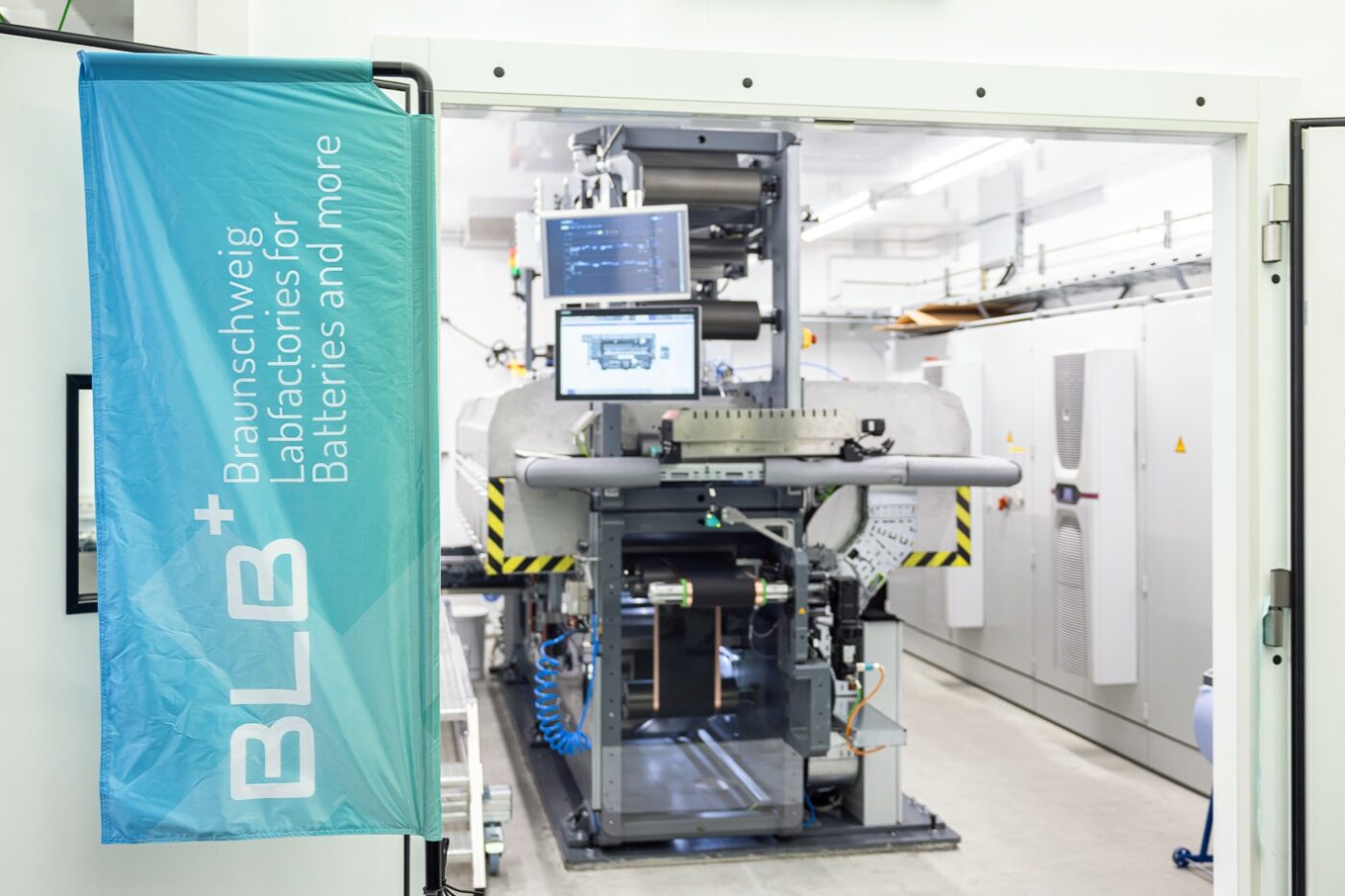
The second installation is a pilot system for dry electrode coating, accompanied by a dedicated dry room and laboratory infrastructure. Dry coating technology is considered a promising alternative to traditional wet coating methods, potentially reducing energy consumption and manufacturing costs while improving sustainability in battery production.
A third system, a tandem wet coating line for circular battery cell production, is designed to enable multiple production cycles using sustainable drying processes. The equipment allows researchers to manufacture larger quantities of electrodes and battery cells reproducibly, supporting studies on closed-loop material cycles.
Combined with the facility’s existing recycling capabilities, the new systems are expected to support industrial-scale research into circular battery production.
“Together, the three facilities complete a research infrastructure that is unique in Germany, enabling us to develop innovations for sustainable, circular and high-performance battery cell technologies along the entire value chain – from basic research to industry-oriented demonstration,” said Arno Kwade.
Kwade added that the investment strengthens the BLB+ regional research network, supporting efforts to develop the Braunschweig region and the state of Lower Saxony as a hub for advanced battery technologies.
The inauguration ceremony was also attended by Falko Mohrs, who highlighted the importance of linking academic research with industry and start-ups.
“We need strong research, closely networked with companies and start-ups, and well coordinated at national level,” Mohrs said. “Above all, the question of how batteries and battery materials can be reused is being addressed here.”
The Battery Labfactory Braunschweig was established in 2012 and opened a pilot production hall for battery cells in 2015. The research centre later added a battery diagnosis line in 2020 and the CircularLab facility in 2023, focusing on circular manufacturing and recycling of lithium-ion batteries.
TU Braunschweig is currently also constructing the Center for Circular Production of Next Batteries and Fuel Cells, which will operate alongside the BLB as part of the broader BLB+ research consortium.


