



Strabag has tested a partially electric construction site in Oberhausen, Germany, using 11 fully electric construction machines and a mobile battery storage system as part of the refurbishment of an existing soil treatment plant.
The trial was designed to evaluate the performance of battery-electric construction equipment under real-world operating conditions and identify practical requirements for broader electrification of construction sites.
11 Electric Machines Used At Oberhausen Site
The project involved the redevelopment of a soil processing facility that recycles demolition waste into materials used for road construction. Once the upgrade is completed, the plant’s annual processing capacity is expected to increase from about 120,000 tonnes to 350,000 tonnes.
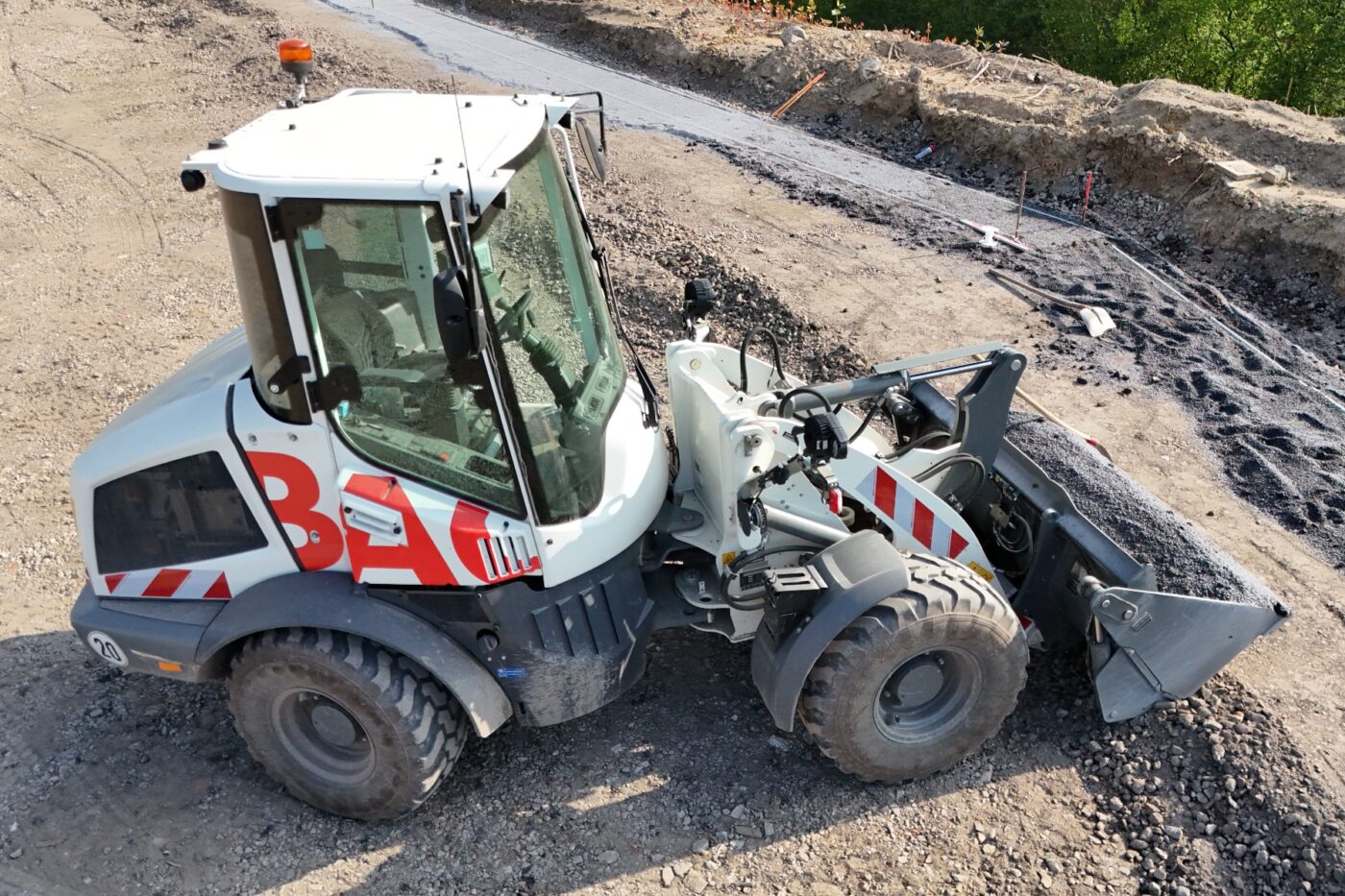
Among the electric equipment deployed were a 25-tonne excavator, Liebherr’s battery-electric L 507 E wheel loader, a battery-electric mobile crane and an electric road paver.
The electric crane was used to position two precast concrete shafts equipped with lamella clarifiers for surface water treatment.
A mobile battery storage system with a capacity of 153 kWh was also installed to provide a more stable power supply for the electric machinery and help manage peak electricity demand.
Robert Kucza, a sustainability expert with Strabag’s North Rhine-Westphalia division, said the project was intended to demonstrate the practicality of electric construction equipment under actual site conditions.
“With this electric construction site, we’re demonstrating that electric mobility is already a practical reality in the construction industry.”
Electric Equipment Cuts Energy Costs
Strabag said the trial showed that heavy electric construction machinery can deliver performance comparable to conventional diesel-powered equipment while producing no local CO₂ emissions and significantly less construction noise.
Although electric machinery generally has higher upfront purchase costs, the company said lower operating expenses can help offset the difference.
At the Oberhausen site, energy costs were reduced by around 90%, while maintenance expenses were also significantly lower than those associated with diesel-powered equipment.
The results provide evidence that battery-electric machinery can already perform demanding construction tasks in certain applications, although the technology remains at an early stage of wider adoption.
Infrastructure Limits Full Electrification
Strabag said several barriers continue to limit the deployment of fully electric construction sites in Germany.
Electric machinery is not yet available across every size category or for all construction applications. Charging infrastructure can also be difficult to install at construction sites, particularly where access to high-capacity electricity connections is limited.
The Technical University of Munich has identified coordination and streamlined processes among stakeholders as additional challenges to locally emission-free and energy-efficient construction sites. The university is involved in the ForBat@Bau research project, which is examining ways to advance battery-electric construction.
For the Oberhausen project, Strabag ultimately adopted a hybrid operating model. Alongside the electric machines, the company used equipment powered by HVO100, a renewable diesel alternative. HVO100 was also used for logistics transport.
The approach reflects the current transition in construction, where electric machinery can already replace diesel equipment for some applications, but infrastructure limitations, equipment availability and operational requirements continue to make a fully electric construction site difficult to achieve.


