
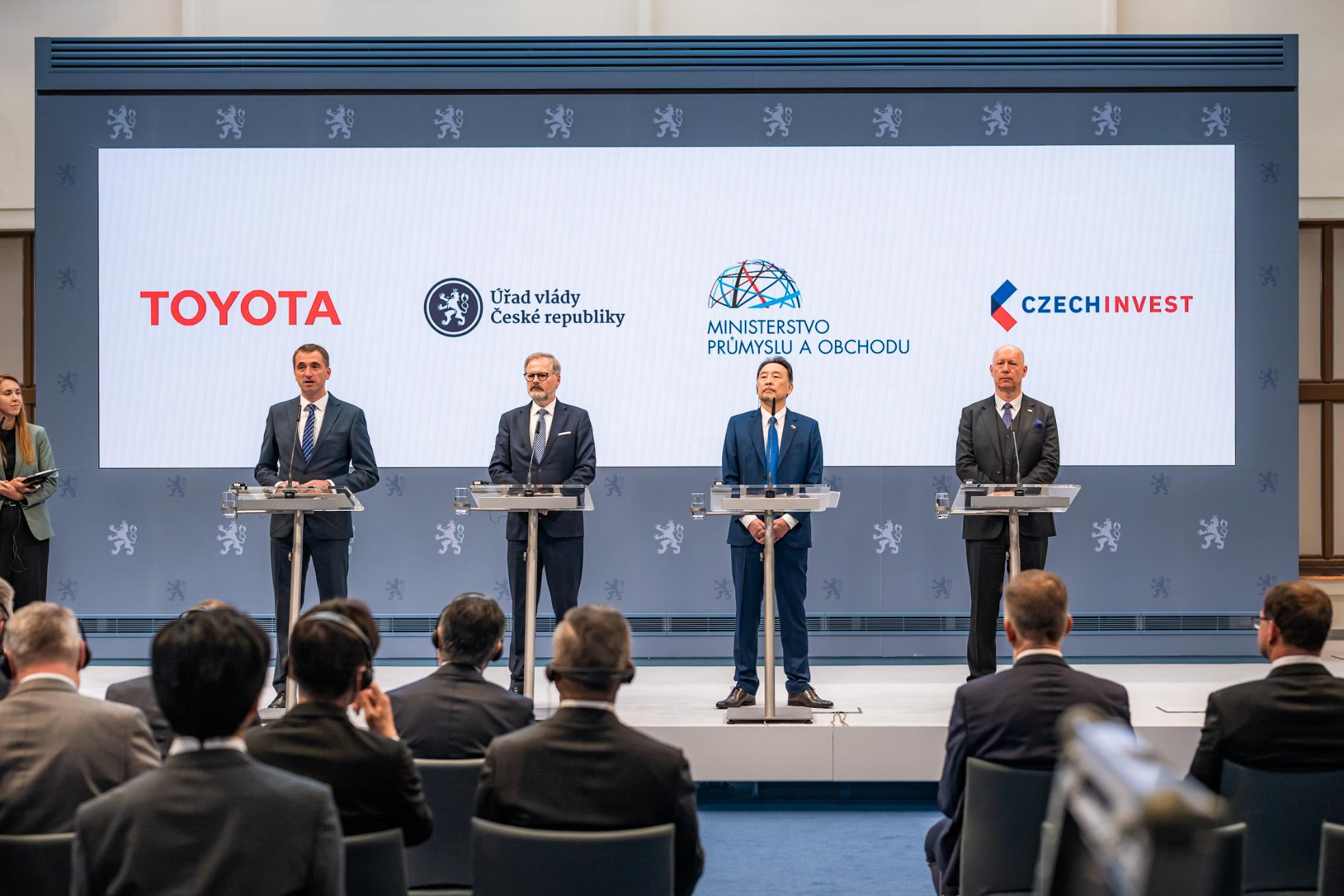
Toyota said on Wednesday it will produce its first fully electric vehicle in Europe at its factory in Kolin, Czech Republic, alongside plans to add a new battery assembly facility. The investment, valued at around €680 million ($796 million), will expand the site and introduce new production capabilities.
The project will enlarge Toyota Motor Manufacturing Czech Republic’s plant from 152,000 to 173,000 square metres to accommodate the new vehicle and battery lines, along with new paint and welding shops. Funding will come from Toyota’s capital expenditures, with up to €64 million provided by the Czech government toward the battery unit. The investment forms part of Toyota’s multi-pathway strategy, aimed at achieving carbon neutrality in Europe by 2040.
Czech Prime Minister Petr Fiala welcomed the decision, saying it underscored the country’s competitiveness as a hub for automotive manufacturing. “Toyota’s decision to build an EV in Kolin was a key step toward keeping car manufacturing in our country,” he said, adding that the project would also create 245 jobs. Industry Minister Lukáš Vlček said the agreement was the result of extensive negotiations in Europe and Japan, calling Toyota’s investment “crucial for the future of the Czech Republic automotive industry, as well as for transitioning our economy to higher added value.”
Toyota Motor Europe President Yoshihiro Nakata said the investment reflected both the company’s long-term vision and the support of Czech authorities. “This new battery electric vehicle production is testament to the dedication of our employees and the vision shared with the Czech Government to advance sustainable mobility and innovation,” he said.
Toyota has been more cautious in its approach to fully electric vehicles compared to some rivals, benefiting instead from strong demand for its hybrid lineup. The company has said it will launch nine fully electric models in Europe under the Toyota and Lexus brands in 2025 and 2026. Its Czech plant currently builds the Aygo X and Yaris Hybrid, with annual capacity of about 220,000 vehicles.