
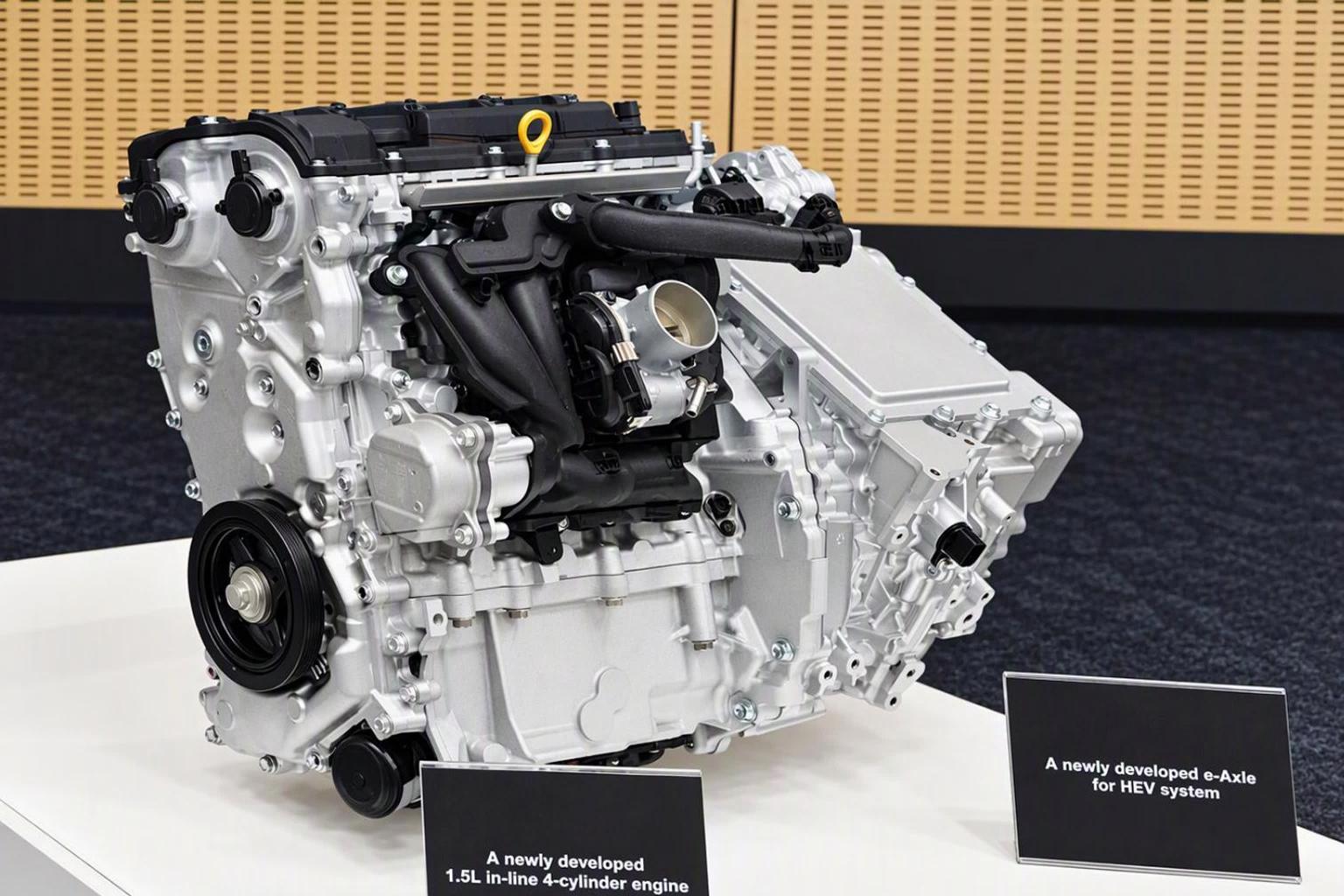
Toyota is developing a new hybrid powertrain based on four-cylinder 1.5-litre engines, with the company targeting a fuel economy improvement of more than 15% compared with its existing systems. The powertrain will be available in naturally aspirated and turbocharged configurations and is intended for future multi-pathway vehicle platforms.
The system combines the new engines with smaller, lighter electric motors, power control units and inverters. Toyota is developing the components as an integrated powertrain, with the aim of reducing energy losses and improving packaging efficiency.
The company has not disclosed a production timeline or specific fuel consumption figures for vehicles using the new system.
New Engines Designed for Hybrid Applications
Toyota said the new 1.5-litre engines were developed specifically for electrified powertrains rather than adapted from existing combustion engines. The naturally aspirated version is intended to cover performance requirements currently served by Toyota’s 1.8-litre engine and its existing 1.5-litre three-cylinder engine.
The engines will operate alongside electric motors and power electronics designed to reduce the size and weight of the overall system. Toyota expects improvements in mechanical friction, thermal management and electrical efficiency to contribute to the targeted fuel economy gains.
The company also identifies reduced aerodynamic drag as a factor in improving efficiency at the vehicle level.
Integration With Future Vehicle Platforms
The hybrid system is being developed for use in Toyota’s next-generation multi-pathway platform, which is also intended to accommodate battery-electric vehicles.
According to Toyota, the compact powertrain layout will allow hybrid and plug-in hybrid systems to be integrated into the same basic architecture without significantly affecting vehicle proportions, interior space or functionality.
The lower-profile engine and hybrid components could also provide more flexibility in vehicle design, including lower bonnet heights and changes to exterior styling.
Common Architecture for Multiple Powertrains
Toyota plans to use a shared basic vehicle architecture for hybrid, plug-in hybrid and battery-electric models. The approach is intended to increase commonality in vehicle development and manufacturing while allowing production volumes to be distributed across different powertrain types.
The company says this architecture could also help factories adjust their production mix in response to changes in customer demand.
Toyota’s multi-pathway strategy reflects differences in charging infrastructure, energy availability and consumer preferences across markets. The company plans to offer different electrified powertrains according to regional conditions rather than rely exclusively on one technology.
Hybrid Systems in Toyota’s Emissions Strategy
Toyota intends to continue developing hybrid technology alongside battery-electric and fuel-cell electric vehicles as part of its efforts to reduce vehicle emissions.
The company also plans to increase external sales of its new engine and hybrid technologies in the coming years. It is developing the powertrain for compatibility with renewable and carbon-neutral fuels, although the extent of potential emissions reductions will depend on fuel availability, vehicle configuration and operating conditions.