




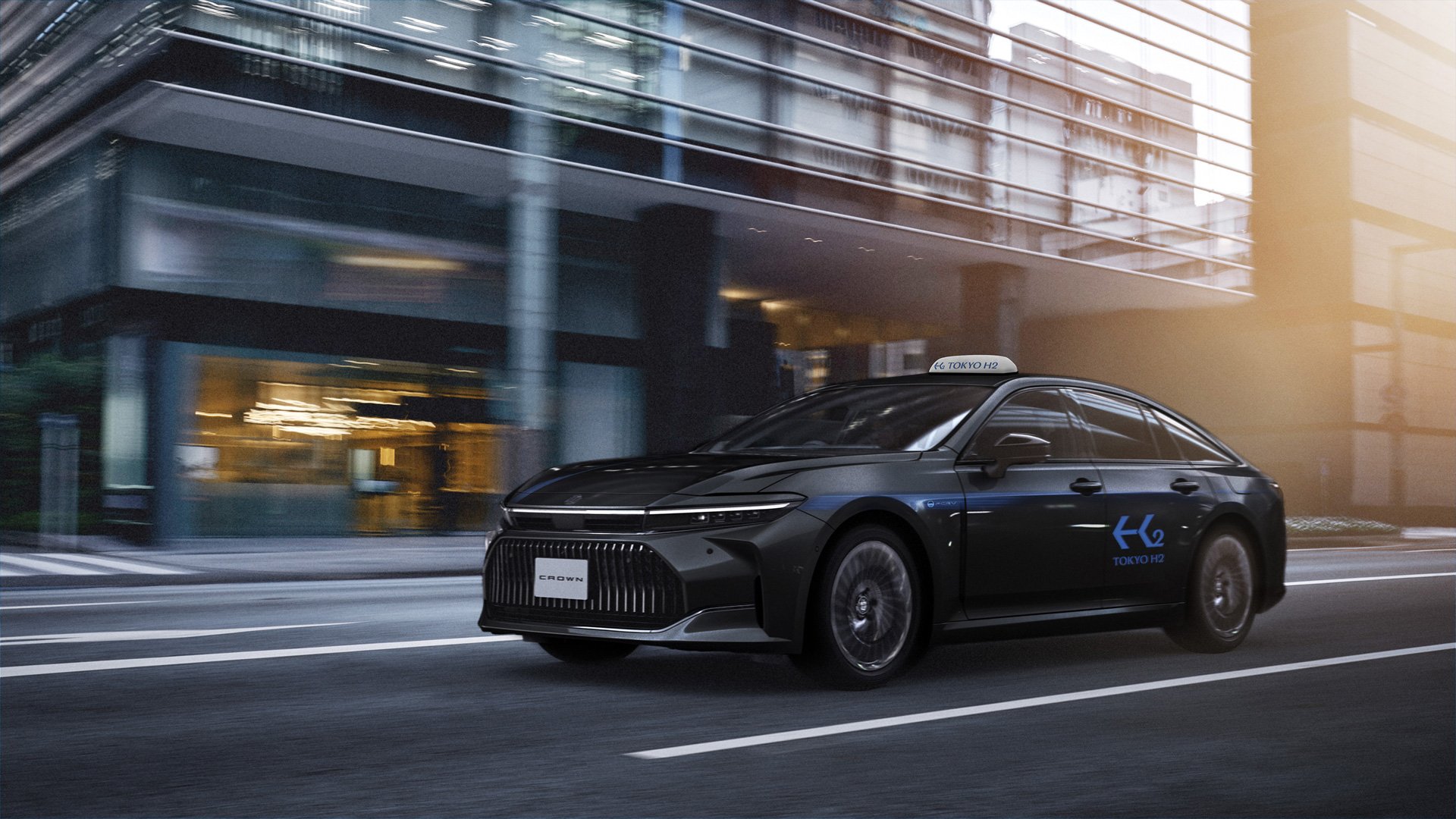
Toyota Motor Corporation has joined the Tokyo Metropolitan Government’s “TOKYO H2” project, integrating its Crown fuel cell vehicle (FCEV) into the city’s taxi fleet as part of a broader effort to promote hydrogen adoption and accelerate clean energy mobility. The initiative aims to position Tokyo as a global leader in hydrogen technology while supporting the development of related infrastructure and demand.
Under the project, Toyota plans to introduce 200 fuel cell taxis by fiscal year 2025, contributing to Tokyo’s goal of having approximately 600 hydrogen-powered taxis in operation by 2030. The Crown FCEV was selected for the program due to its premium features, including quiet operation, spacious rear seating, and ease of entry and exit, making it well-suited for high-quality taxi service.
In addition to the fleet expansion, Toyota has renovated and reopened its TOYOTA MIRAI Showroom in Minato City as the TOKYO H2 HUB. The facility will serve as a central point for collaboration among companies and organizations participating in the hydrogen project, providing information and support to advance the social implementation of hydrogen across Tokyo. The hub also aims to raise public awareness of hydrogen technologies and promote the development of a sustainable hydrogen supply chain, encompassing production, storage, transportation, and end-use.
The TOKYO H2 project encourages cooperative efforts between the public and private sectors, with an initial focus on commercial mobility, including taxis and trucks. Participating organizations are expected to implement a variety of hydrogen-related initiatives over time. By integrating hydrogen-powered vehicles into urban transportation, the project seeks to create a visible and practical demonstration of the technology’s potential, encouraging broader adoption among businesses and residents.


