



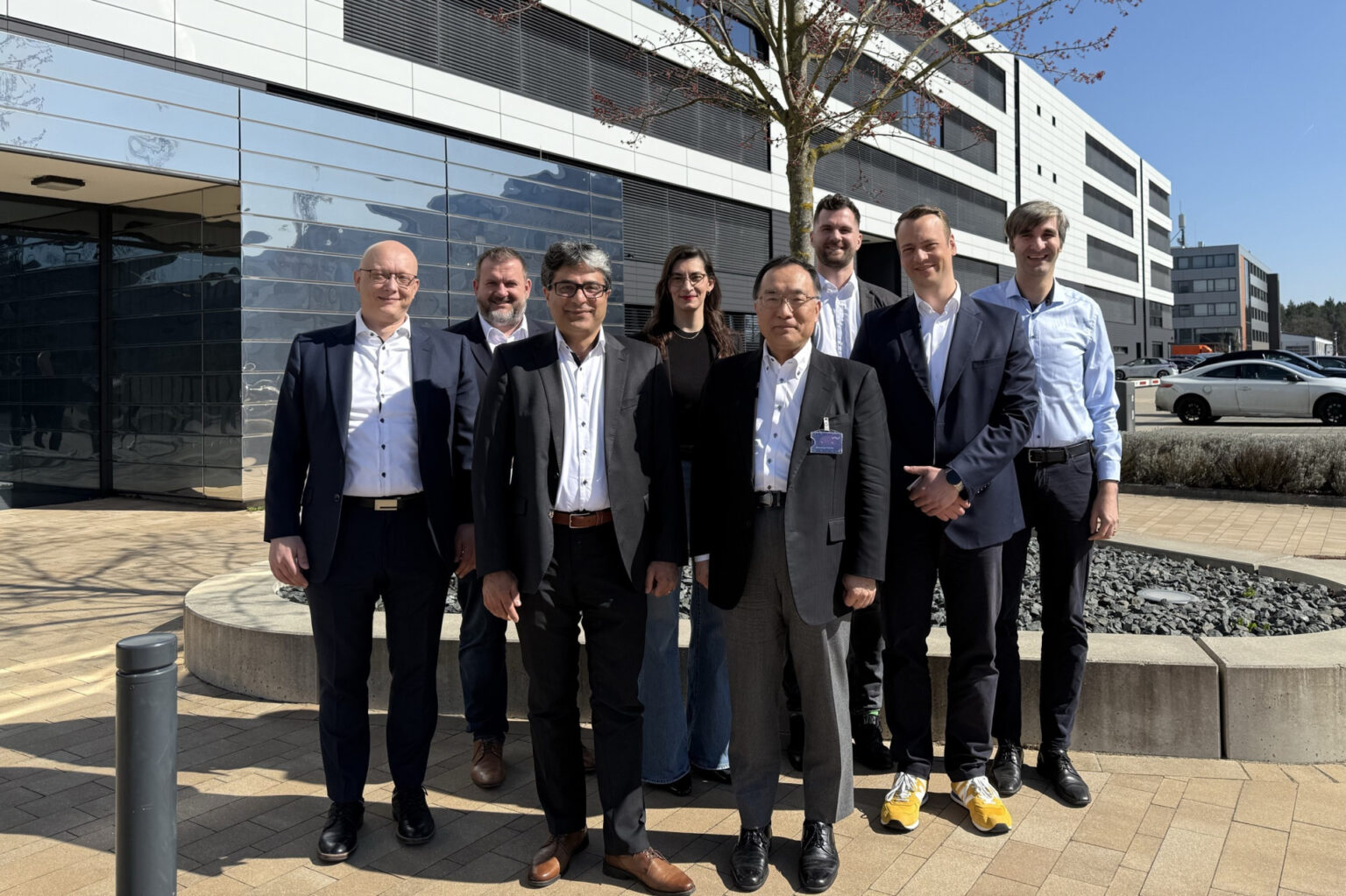
Toshiba Digital Solutions Corporation and IAV Group have formalized a strategic partnership to co-develop next-generation virtual validation services for highly automated driving systems, aiming to streamline the path to global certification and homologation for Level 3 and above autonomous vehicles.
As autonomous driving technology becomes more advanced, traditional validation methods struggle to meet the growing complexity and regulatory demands. The partnership will focus on integrating AI-generated test scenarios and distributed co-simulation technologies to enable scalable, realistic testing environments. Toshiba contributes its VenetDCP distributed co-simulation platform, while IAV brings its AI-driven scenario generation tools such as IAV Mela, both critical for developing a robust virtual homologation framework.
See also: Waymo, Toyota Sign Preliminary Deal to Explore Autonomous Vehicle Collaboration
“This partnership with Toshiba unites deep expertise and a shared vision for automated driving’s future, delivering scalable, safe, and globally relevant validation solutions,” said Carsten Rinka, Chief Sales Officer at IAV GmbH.
Takehiro Kai, Director at Toshiba Digital Solutions Corporation, added, “By formalizing our prior collaboration, we’re accelerating the development and adoption of next-generation virtual homologation for the automotive industry.”
See also: U.S. Moves to Ease Safety Rules for Self-Driving Vehicles in Bid to Boost Innovation
The two companies will present their joint work at the prostep IVIP symposium 2025 in Berlin, in a session titled “AI-supported virtual validation and homologation of AD/ADAS systems utilizing distributed co-simulation” scheduled for May 14. Their collaborative approach aims not only to reduce development time but also to ensure regulatory alignment across international markets, helping manufacturers bring safer autonomous systems to roads worldwide.


