




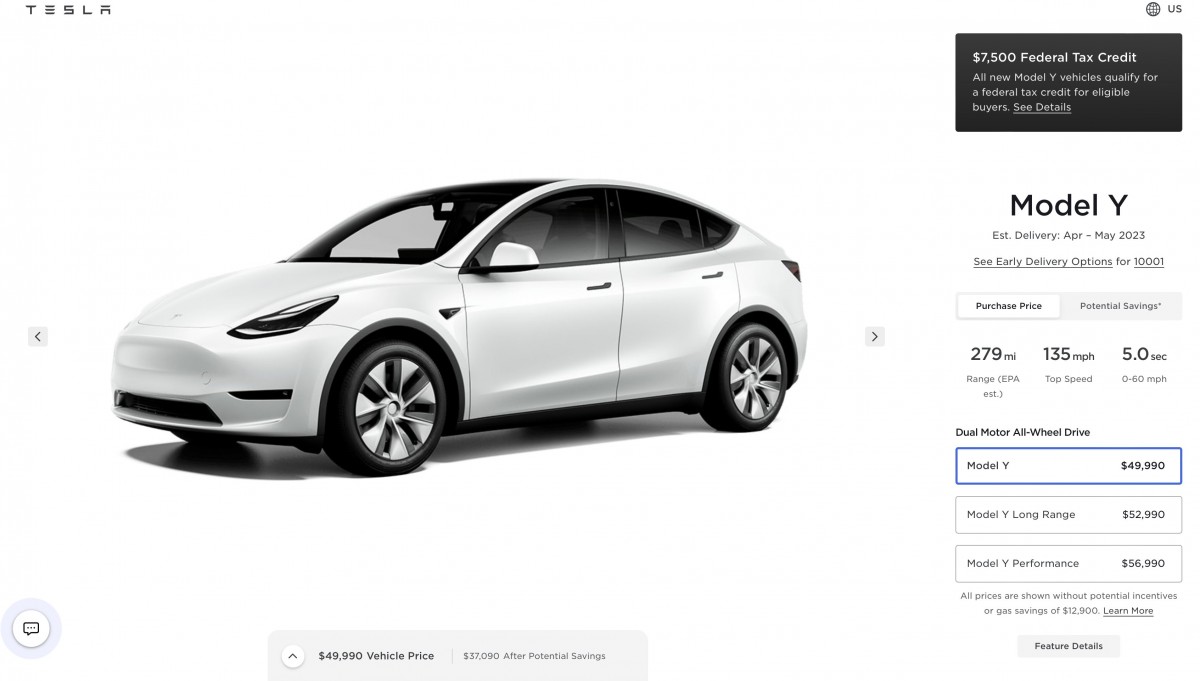
Tesla has just made a surprise addition to its lineup, quietly announcing a new version of the Model Y on its website for US customers. Unlike the previously available Model Y Long Range and Model Y Performance, this new variant is simply called “Model Y” and comes with a lower price tag, starting at $49,990 before subsidies. What’s more, the new model qualifies for the $7,500 federal tax credit.
The new Model Y comes with impressive specs, including a 0-60 mph time of 5 seconds, a top speed of 135 mph, and an estimated EPA range of 269 to 279 miles. These numbers are achieved with a dual-motor all-wheel drive EV, although the specifics of the powertrain have not been disclosed yet.
See also: Renault Trucks announcing two new electric truck by 2023
Customers can choose from five color options, including Pearl White Multi-Coat, Midnight Silver Metallic, Deep Blue Metallic, Solid Black, and Red Multi-Coat. In addition, buyers can opt for Enhanced Autopilot for $6,000 or Full Self-Driving Capability for a hefty $15,000.
If you place an order now, Tesla estimates that the new Model Y will be delivered either this month or in May. Some industry experts speculate that this version could be using the much-anticipated 4680 battery cells.
This latest addition to the Tesla family is sure to excite EV enthusiasts and those in the market for a new electric vehicle. With a lower price point and impressive specs, the new Model Y offers a compelling option for those looking to make the switch to electric. As always, Tesla continues to push the boundaries of what’s possible in the world of sustainable transportation.
See also: New Model Y version appears on EPA website with range of 279 miles and AWD powertrain
In the words of Elon Musk, “At Tesla, we’re all about creating a sustainable future. We want to make electric vehicles accessible to everyone, and the new Model Y is another step in that direction.


