



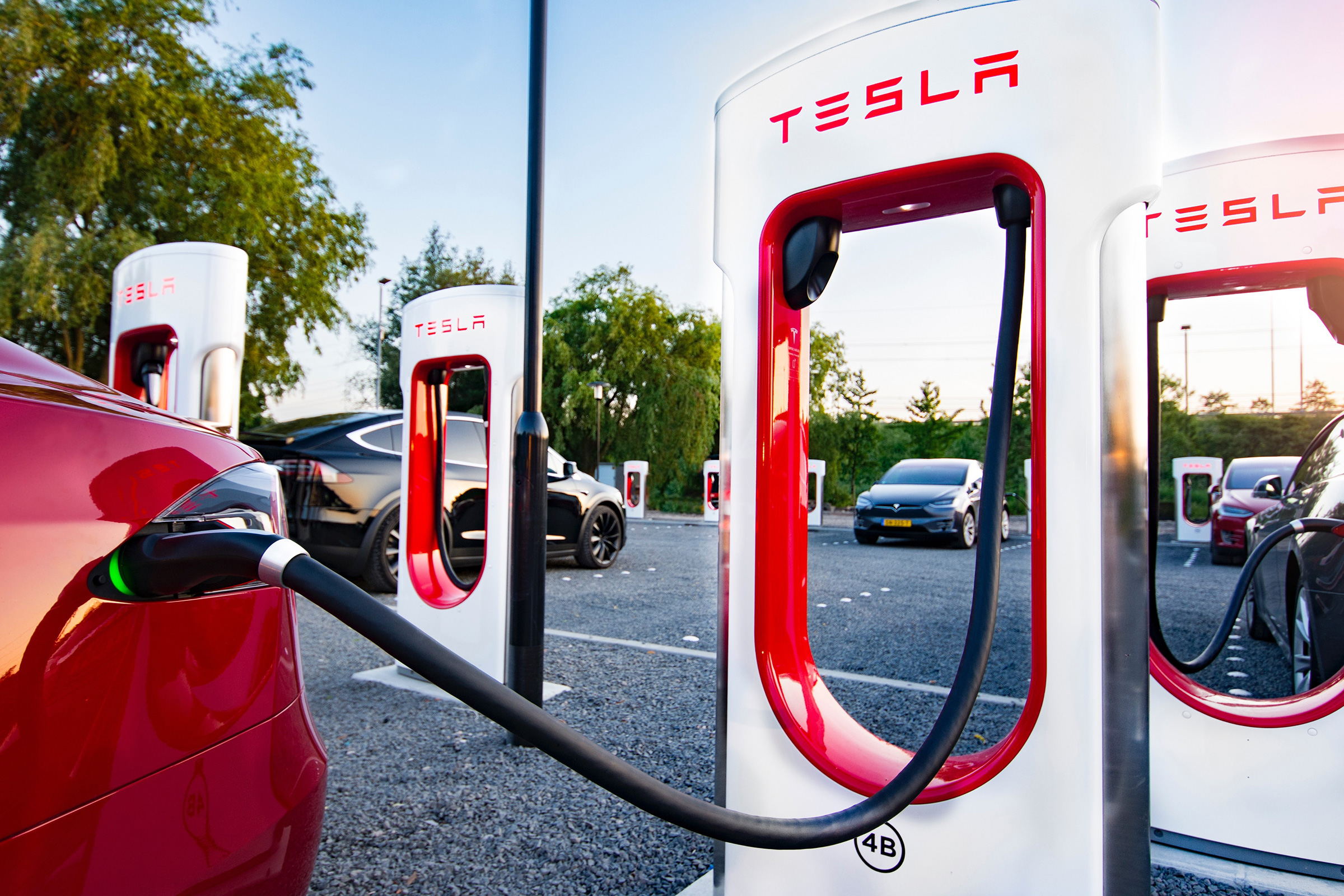
U.S. electric vehicle maker Tesla has begun allowing non-Tesla electric vehicles to use selected Supercharger stations in Malaysia, marking an expansion of its charging network access in the country.
The company has opened four Supercharger locations in and around Kuala Lumpur to EVs equipped with CCS charging ports, according to charging network updates.
One of the sites is located at Pavilion Kuala Lumpur, where Tesla operates eight Superchargers capable of delivering up to 250 kW of charging power.
Another station is available at i-City Finance Avenue in Shah Alam, about 26 kilometres southwest of Kuala Lumpur. The location includes four Superchargers, each with up to 250 kW output.
Tesla has also opened its Supercharger installation at IOI City Mall in Putrajaya, about 35 kilometres south of Kuala Lumpur, offering four chargers with a peak output of 250 kW.
The fourth location is situated in Gamuda Cove in Dengkil, roughly 42 kilometres south of the capital, where Tesla operates six Superchargers with similar charging capacity.
Tesla charges 0.93 ringgit (€0.20) per kWh for charging its own vehicles through Superchargers in Malaysia. For non-Tesla vehicles, the company has set a higher rate of 1.80 ringgit (€0.39) per kWh.
Drivers are also subject to a congestion fee of 2 ringgit (€0.44) per minute if the vehicle remains connected after charging is complete or continues charging beyond 80% state of charge.
To reduce charging costs, Tesla offers a subscription membership for non-Tesla EV users who frequently use the network. The plan costs $12.99 per month and provides discounted charging rates of 0.99 to 1.08 ringgit per kWh, depending on location and charging time.
The expansion not only allows Tesla to increase utilisation of its charging infrastructure but also helps the company meet commitments tied to Malaysia’s EV market entry. Under the BEV Global Leaders Programme, Tesla was allowed to sell fully imported vehicles directly in the country, subject to certain conditions.
These conditions include installing at least 50 fast chargers with a minimum output of 180 kW and ensuring that at least 30% of the network remains open to the public regardless of vehicle brand.
Source: autobuzz.my


