
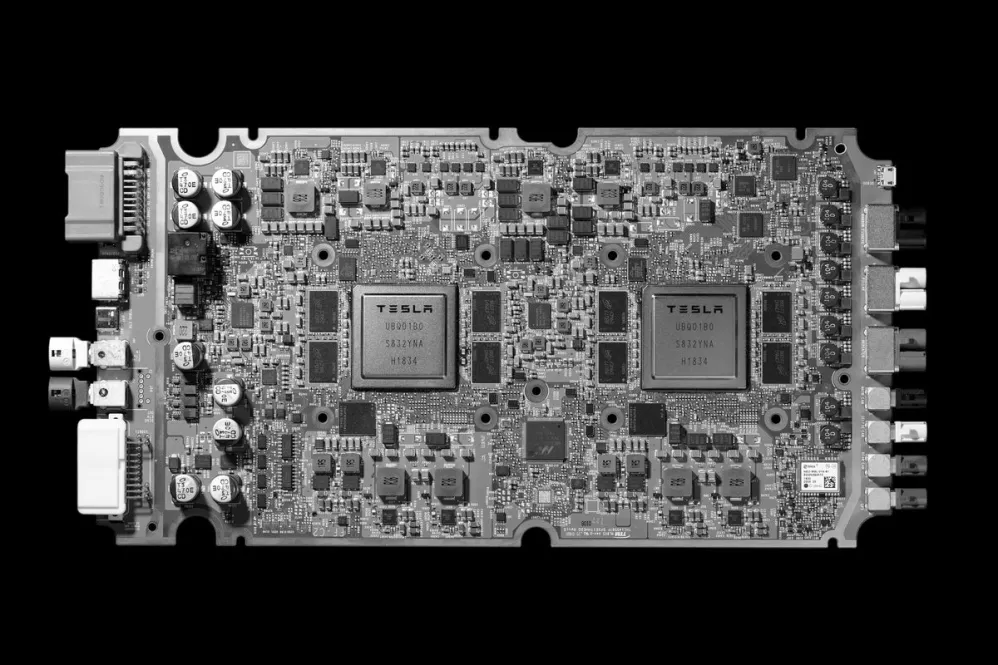
Tesla has delayed its planned hardware upgrades for vehicles equipped with older Full Self-Driving (FSD) systems, stating that retrofits for HW3-equipped models will not begin until after the launch of FSD Unsupervised on newer hardware.
The update, provided during Tesla’s second-quarter 2025 earnings call, comes as a setback for owners of vehicles with the HW3 or AI3 self-driving computers, many of whom had expected upgrades following earlier comments from CEO Elon Musk.
“What we want to do is get unsupervised [FSD] done on HW4 first,” Tesla Chief Financial Officer Vaibhav Taneja said. “Once it’s done, then we will go back and look at what we need to do with the HW3 cars.”
The company had previously raised hopes of an upgrade path when Musk confirmed in January that retrofitting older vehicles would be “painful and difficult,” but feasible. That optimism has now been tempered by Tesla’s renewed focus on advancing its next-generation autonomous driving system before committing to backward compatibility.
Tesla has not provided a timeline for the public release of FSD Unsupervised, which is designed to operate without driver supervision. While early robotaxi testing in Austin is ongoing, the company has yet to offer specifics on when the technology will reach broader commercial deployment.
Many HW3 vehicle owners, particularly early Model 3 customers whose vehicles are now 8 to 9 years old, may face prolonged delays in accessing new FSD capabilities. Tesla has occasionally allowed FSD software transfers to newer vehicles, but such offers have remained temporary.
Adding to the uncertainty, the company acknowledged that future hardware generations may also face upgrade demands. Tesla expects its next-generation self-driving computer, HW5/AI5, to begin rolling out in vehicles by late 2026.