
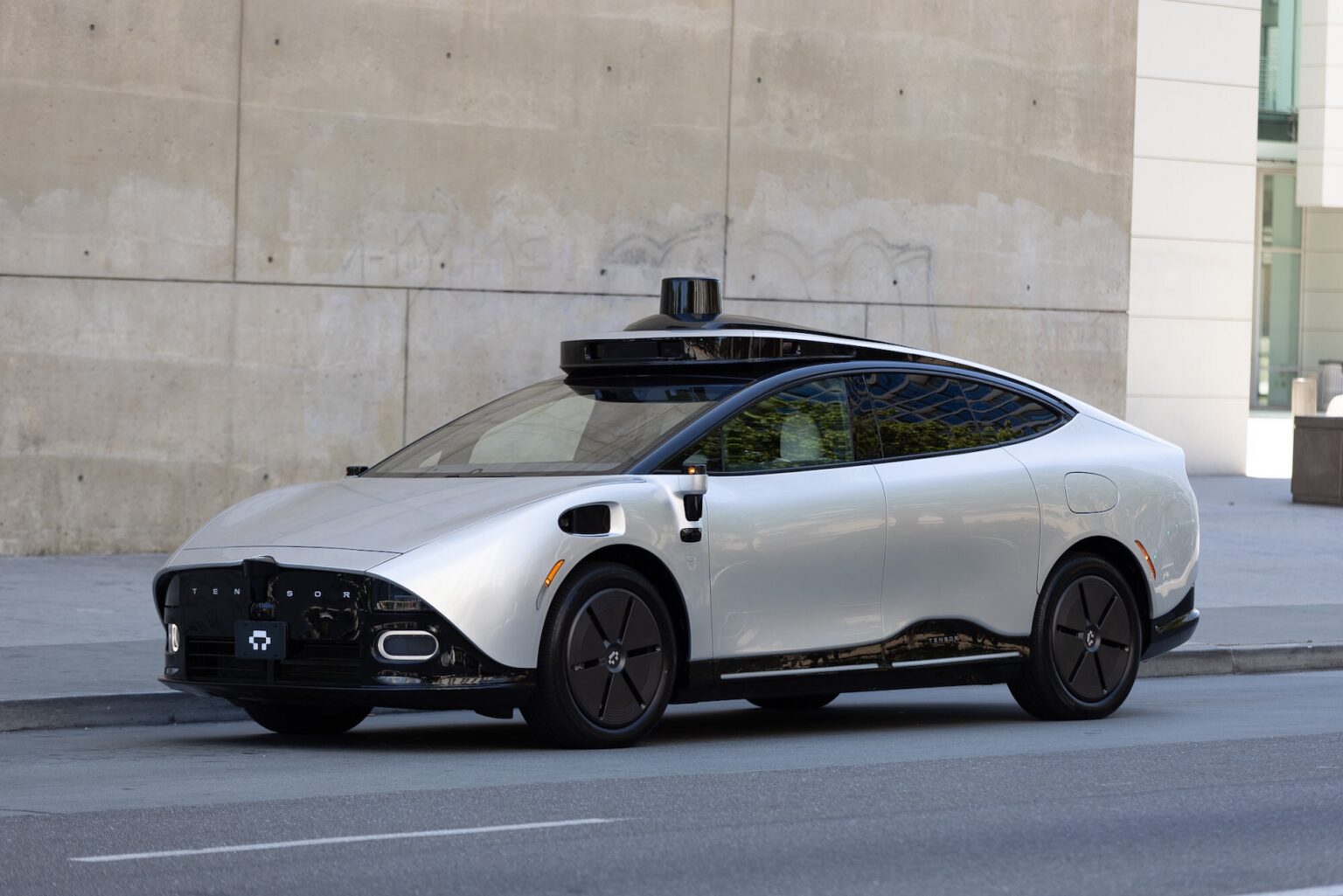
Tensor and Arm have announced a multi-year collaboration to develop the computing architecture for what the companies describe as a personal autonomous vehicle, or “Robocar,” designed to support Level 4 autonomous driving.
Under the partnership, each vehicle will integrate 433 Arm-based processor cores distributed across multiple computing systems responsible for artificial intelligence processing, safety functions, drive-by-wire systems and low-power subsystem management.
The companies said the architecture will form the backbone of Tensor’s planned autonomous vehicle platform, which is expected to launch commercially in 2026 across the United States, the European Union and parts of the Middle East.
The Robocar is designed around an AI-first vehicle architecture rather than adapting autonomous capabilities onto an existing automotive platform. According to the companies, the approach distributes intelligence across vehicle systems, from the onboard computing platform down to individual sensors.
The vehicle’s sensor array includes 37 cameras, five lidar units, 11 radar sensors and 22 microphones, along with ultrasonic sensors, inertial measurement units, positioning systems and other environmental sensors intended to support continuous perception in varied operating conditions.
The 433 Arm-based cores are distributed across several processor families, including Neoverse AE processors for high-performance AI workloads, Cortex-X processors for vehicle control and cabin functions, Cortex-A processors for general compute and sensor processing, Cortex-R processors for safety-critical systems and Cortex-M processors for low-power subsystems.
The system will also incorporate AI acceleration hardware from NVIDIA to support Tensor’s autonomous driving software stack.
Drew Henry said autonomous vehicles represent an example of artificial intelligence expanding into real-world applications.
He said the partnership aims to deliver a computing foundation capable of handling the performance, safety and energy-efficiency requirements of autonomous vehicles.
Jewel Li said large-scale deployment of personal autonomous vehicles requires high levels of safety, redundancy and energy efficiency.
She said Arm’s computing technology helps move the Robocar concept closer to real-world deployment.
Tensor’s supply chain strategy includes partnerships with automotive and semiconductor companies such as Autoliv, ZF Group, Continental, AMD, Qualcomm, Samsung and Oracle.