
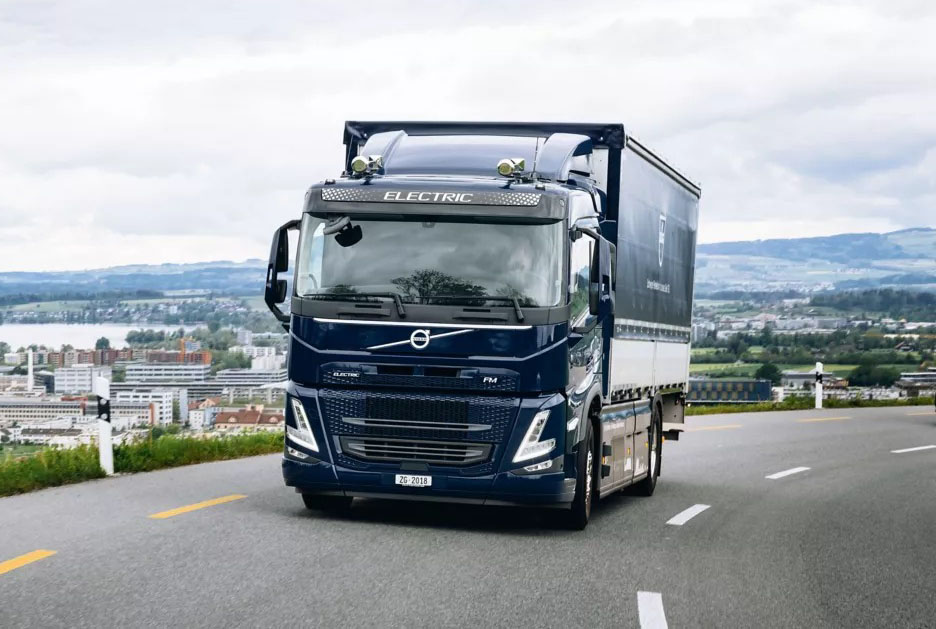
Two initiatives in Switzerland are launching shared charging networks for electric trucks as logistics operators seek to improve charging infrastructure utilisation and reduce operating costs.
The projects, named Utopia and ASTAG Charge, both rely on the DepotCharge system developed by Munich-based Evolve Energy.
The platforms are designed to allow logistics companies to share access to depot charging stations with other fleet operators.
Under the Utopia initiative, Swiss energy and grid operator Repower is working together with DPD Switzerland and G. Leclerc Transport to create an open shared charging network for heavy-duty electric vehicles.
At the same time, the ASTAG is introducing ASTAG Charge, a closed charging network available exclusively to association members.
According to Evolve Energy, DepotCharge allows operators with unused charging capacity to offer access to other logistics companies through a shared reservation and billing system.
“DepotCharge connects site operators with available charging capacity to fleet operators who need cost-effective charging away from their own depots,” the company said in a statement.
The platform became operational in Switzerland earlier this month and allows companies to register either as charging infrastructure providers or as charging users.
Evolve Energy said the Swiss rollout is supported by the Utopia consortium and forms part of the Swiss Federal Office of Energy’s “Electromobility 2030” roadmap.
Switzerland has emerged as one of Europe’s fastest-growing markets for electric heavy-duty vehicles.
According to figures cited by Evolve Energy from the European Automobile Manufacturers’ Association, Switzerland registered 218 new electric heavy trucks above 16 tonnes during the first quarter of 2026, an increase of 137% from a year earlier.
The company said electric trucks accounted for 25% of new registrations in that segment, the highest share in Europe.
Evolve Energy argued that charging depots are often underutilised while fleet operators continue relying on more expensive public charging infrastructure.
Under the system, charging site operators can define pricing and access times individually, while DepotCharge manages reservations, access control and automated billing.
The company said the platform can generally be integrated into existing charging systems within one to two weeks without requiring hardware or software modifications.
According to ASTAG, its members collectively operate around 30,000 commercial vehicles across Switzerland.
The association said members opening their charging infrastructure through ASTAG Charge could potentially generate additional revenue from unused charging capacity, while fleet operators could lower charging costs compared with public charging stations.
“Repower has been supporting the development of charging hubs for the Swiss heavy goods sector for years,” Cornelia Eltrich, marketing and communications manager for e-mobility at Repower, said in a statement.
“To ensure these investments are economically viable, the available capacity must be utilised as effectively as possible,” Eltrich added.
Ville Heimgartner, senior project and sustainability manager at DPD Switzerland, said charging costs and route reliability remain key priorities for logistics operators.
“With DepotCharge, we gain access to charging points along our routes at significantly more favourable conditions than on the public network,” Heimgartner said.