



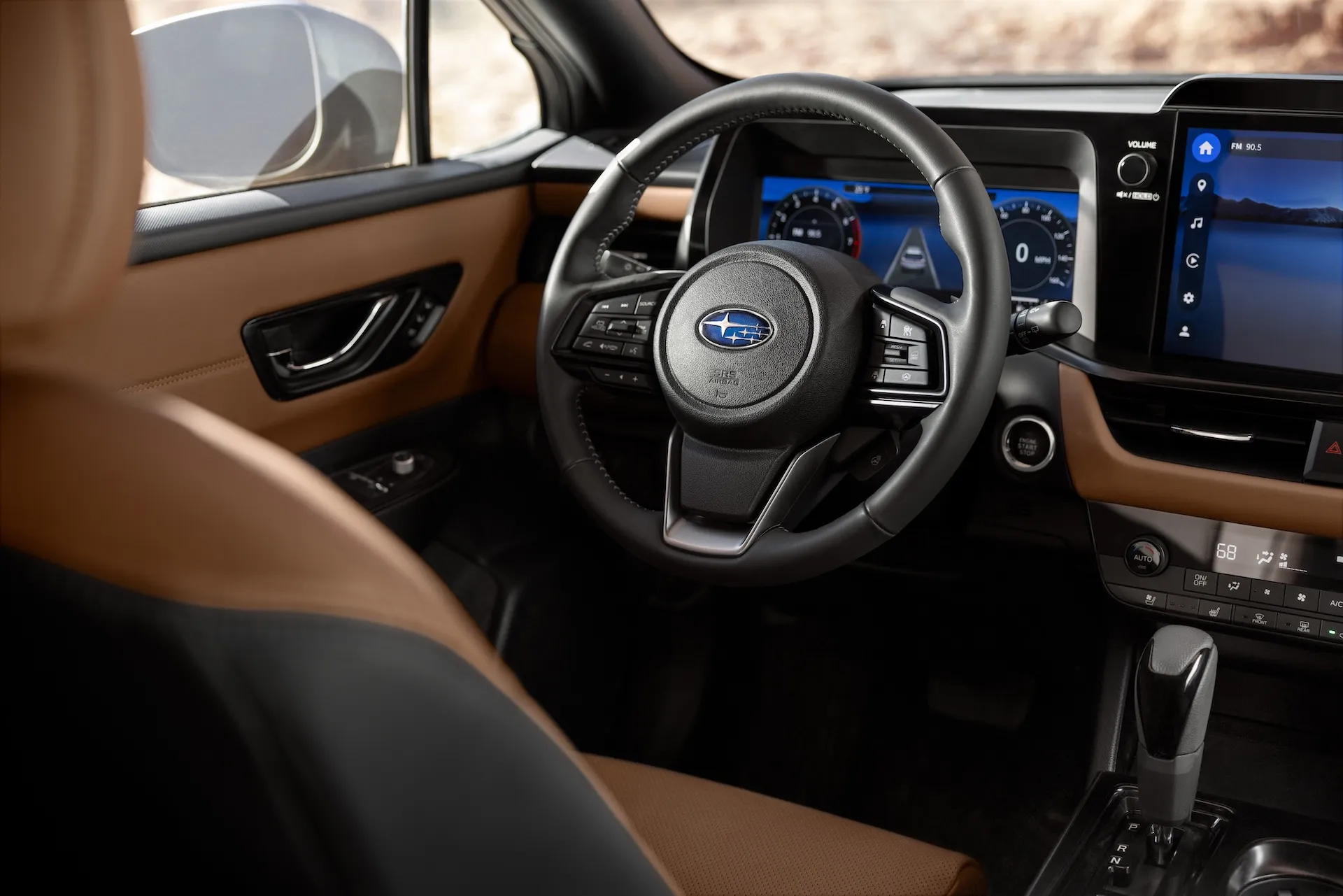
Subaru has introduced hands-free highway driving capability in the 2026 Subaru Outback Touring and 2026 Subaru Outback Touring XT, marking the first time the automaker has offered a hands-free driving system on one of its vehicles.
The feature, called EyeSight Highway Hands-Free Assist, allows limited hands-free driving at speeds of up to 85 mph on most interstate highways in the United States.
According to Subaru, the system is available as a standard feature on Outback Touring models produced after January 19, 2026. Owners of compatible vehicles produced earlier can activate the function through a free software update.
The system operates when adaptive cruise control is engaged on highways with at least two lanes. Once activated, it can maintain lane position and vehicle speed while allowing the driver to remove their hands from the steering wheel under certain conditions.
Visual indicators on the digital instrument cluster show the operating status, with green icons indicating hands-on assist and blue icons confirming hands-free operation.
The system incorporates several automated driving functions, including lane change assistance, automatic cruise resume in traffic, pre-curve speed adjustment and an emergency stop feature designed to safely slow the vehicle if the driver becomes unresponsive.
Subaru said the hands-free system relies on an expanded version of its EyeSight driver assistance platform, which combines multiple technologies including GPS positioning, 3D high-definition mapping data, millimeter-wave radar and camera-based perception.
The sensor fusion approach is intended to improve lane-centering accuracy and vehicle control across different highway environments.
During development, Subaru engineers conducted nearly 100,000 miles of real-world testing to refine the system’s performance and driver monitoring features.
The updated system also includes a second-generation version of Subaru’s DriverFocus distraction mitigation technology.
DriverFocus uses a camera and infrared sensors to monitor driver attention, tracking eye movement and head position even when the driver is wearing sunglasses. If the system detects that the driver is not paying attention, it will prompt the driver to resume control.
The technology can also store personalized profiles for up to five drivers, automatically adjusting seat position, mirrors and climate settings when a recognized driver enters the vehicle.


