
Electric vehicles produce fewer greenhouse gas emissions over their lifetime than any other vehicle type in every county across the contiguous United States, according to new research from the University of Michigan.
The study, published in the journal Environmental Science & Technology, compared emissions across 35 combinations of vehicle classes and powertrains, from conventional gasoline pickups to fully electric sedans. It factored in not only driving but also vehicle production and disposal.
“Vehicle electrification is a key strategy for climate action. Transportation accounts for 28% of greenhouse gas emissions and we need to reduce those to limit future climate impacts such as flooding, wildfires and drought events, which are increasing in intensity and frequency,” said Greg Keoleian, senior author of the study and professor at the School for Environment and Sustainability.
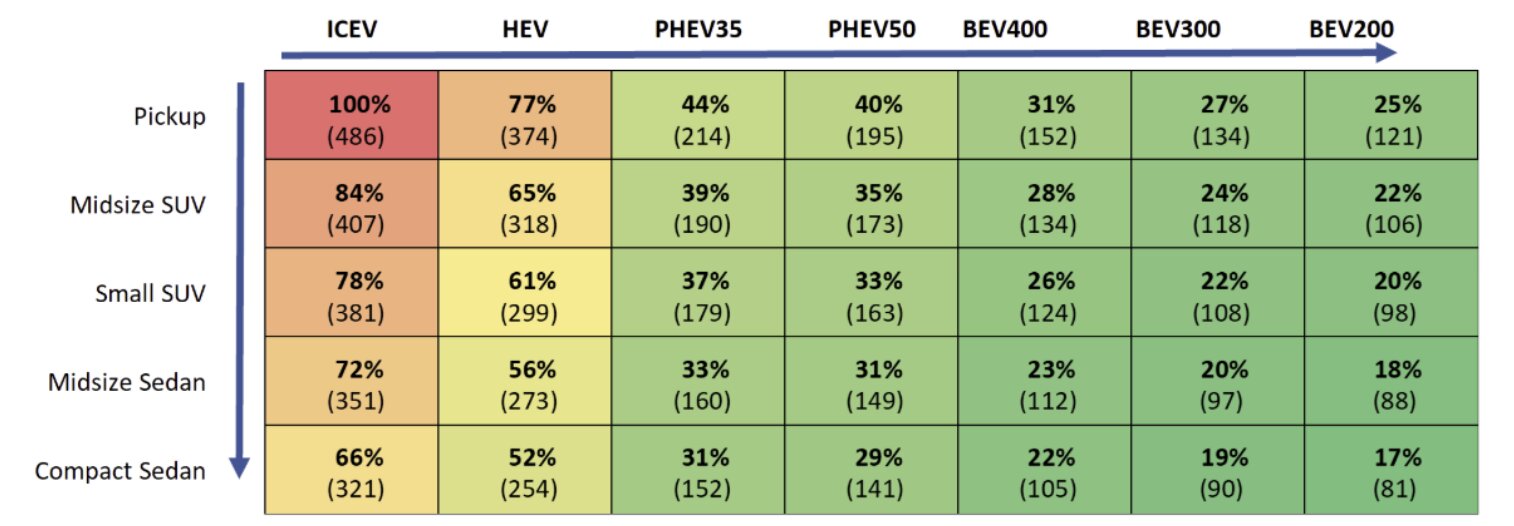
The analysis showed that while gasoline-powered pickup trucks were the highest emitters at 486 grams of carbon dioxide equivalent per mile, switching to a hybrid reduced emissions by 23% and moving to a fully electric pickup cut emissions by 75%. Compact sedan EVs emitted the least at 81 grams per mile, less than 20% of a gas-powered pickup.
The findings were consistent across the country, despite differences in power grid cleanliness and local temperatures that affect fuel efficiency and EV range. “Our purpose here was to evaluate the cradle-to-grave greenhouse gas reduction from the electrification of vehicles compared with a baseline of gasoline-powered vehicles,” Keoleian said.
To support consumer decision-making, the team developed an online calculator that allows drivers to estimate their emissions based on vehicle type, driving habits and location. The tool is free to use and open to the public.
Keoleian said the results are also relevant for automakers and policymakers, even as federal support for EVs has waned. “The government is backing off incentives, like the electric vehicle tax credit, but the original equipment manufacturers are heavily invested and focused on the technology and affordability of EVs,” he said. “EVs are becoming the dominant powertrain in other parts of the world and manufacturers recognize that is the future for the U.S.”
The research team included specialists and postdoctoral fellows from the Center for Sustainable Systems, along with collaborators from Ford Motor and the university’s Electric Vehicle Center. Lead author Elizabeth Smith completed the work as a master’s student before graduating in May.