



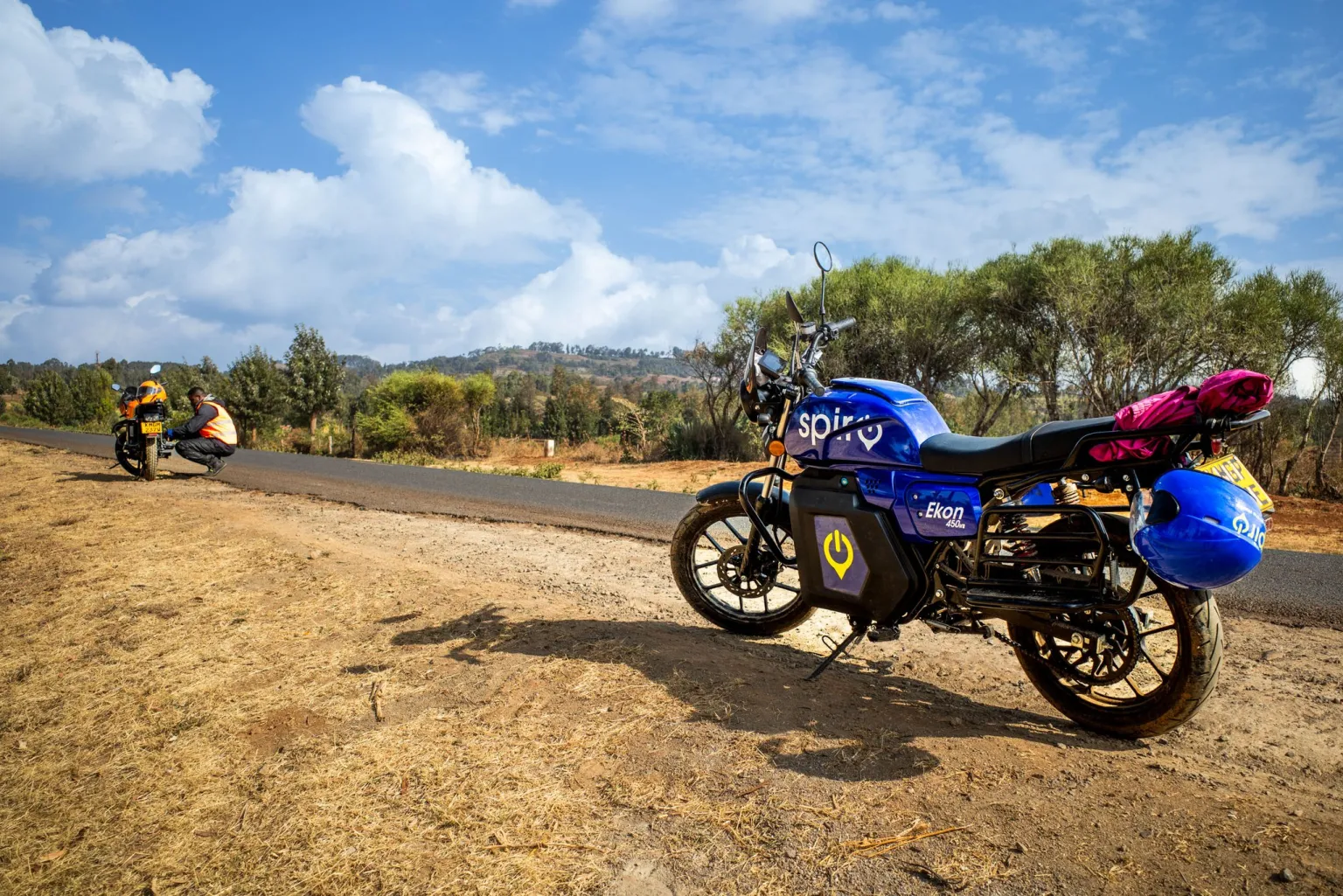
Spiro, a Dubai-headquartered electric mobility startup, has raised $100 million in fresh funding led by the Fund for Export Development in Africa (FEDA), the development arm of Afreximbank. The investment marks the largest-ever financing round for an electric mobility company on the African continent and will support the expansion of Spiro’s electric motorbike and battery-swapping network.
The company plans to deploy more than 100,000 electric motorbikes across Africa by the end of 2025, up from about 60,000 today. Since its establishment in 2022, Spiro has expanded operations from Benin and Togo to six markets including Kenya, Nigeria, Rwanda, and Uganda. The company has built 1,500 battery-swapping stations across these countries, allowing riders to exchange depleted batteries for charged ones.
See also: Mirova Provides $10 Million Loan to Kenya’s ARC Ride to Expand Battery-Swapping Network
Chief Executive Officer Kaushik Burman, who joined from Taiwan-based Gogoro, said Spiro’s model is tailored to Africa’s transportation needs. “These drivers spend 10 to 12 hours on the road every day, covering 150 to 200 kilometers while paying high fuel costs. At the end of each day, most barely save anything,” Burman said. He added that the battery-swapping model allows riders to cut downtime and reduce expenses compared with fuel-powered motorcycles.
Spiro’s electric motorbikes are priced around 40% lower than gasoline models, costing roughly $800 in markets such as Kenya and Rwanda. According to the company, the total cost per kilometer is also about 30% lower since swapping batteries is less expensive than refueling. The company earns revenue through both vehicle sales and its swap network, charging riders a fee based on energy usage.
See also: GreenWay Secures Over €50 Million Investment from Mirova to Expand Charging Network
The latest funding round — including $75 million from FEDA and the rest from strategic investors — follows more than $180 million previously raised through a mix of debt and equity. The new capital will be used to expand Spiro’s manufacturing capacity, enhance R&D, and roll out new pilots in Cameroon and Tanzania.
To meet rising demand, Spiro has established assembly and manufacturing facilities in Kenya, Nigeria, Rwanda, and Uganda. The company aims to boost local sourcing from 30% to 70% within two years, including components such as plastics, helmets, and brake parts.
See also: Zero Motorcycles Shifts Global Headquarters to the Netherlands Amid Strong European Growth
Burman said Spiro’s primary competition remains the gasoline motorbike market, which dominates Africa’s transportation sector. “Our competition is the gasoline bike segment, both first and secondhand, and the millions of potential riders who don’t yet own a bike,” he said.
Africa currently has around 25 million motorbikes, compared with 320 million in India, highlighting what Spiro sees as significant room for growth in affordable and sustainable mobility.


