

Scout Motors is moving closer to finalising the production design of its upcoming vehicles as the brand advances global testing and prepares for pre-production targeted for late 2026, according to executives speaking to Automotive News. The design of the production models remains largely consistent with the early promotional vehicles unveiled last year, with only minor adjustments made for manufacturing feasibility.
Cody Thacker, vice president of commercial operations at Scout Motors, said the company’s test program has expanded rapidly across multiple regions. “We’re very quickly getting to something that looks and feels like real production vehicles,” Thacker said, as several generations of prototypes accumulate test mileage across continents.
See also: Scout Motors Invests $300 Million in Supplier Park to Boost South Carolina Manufacturing
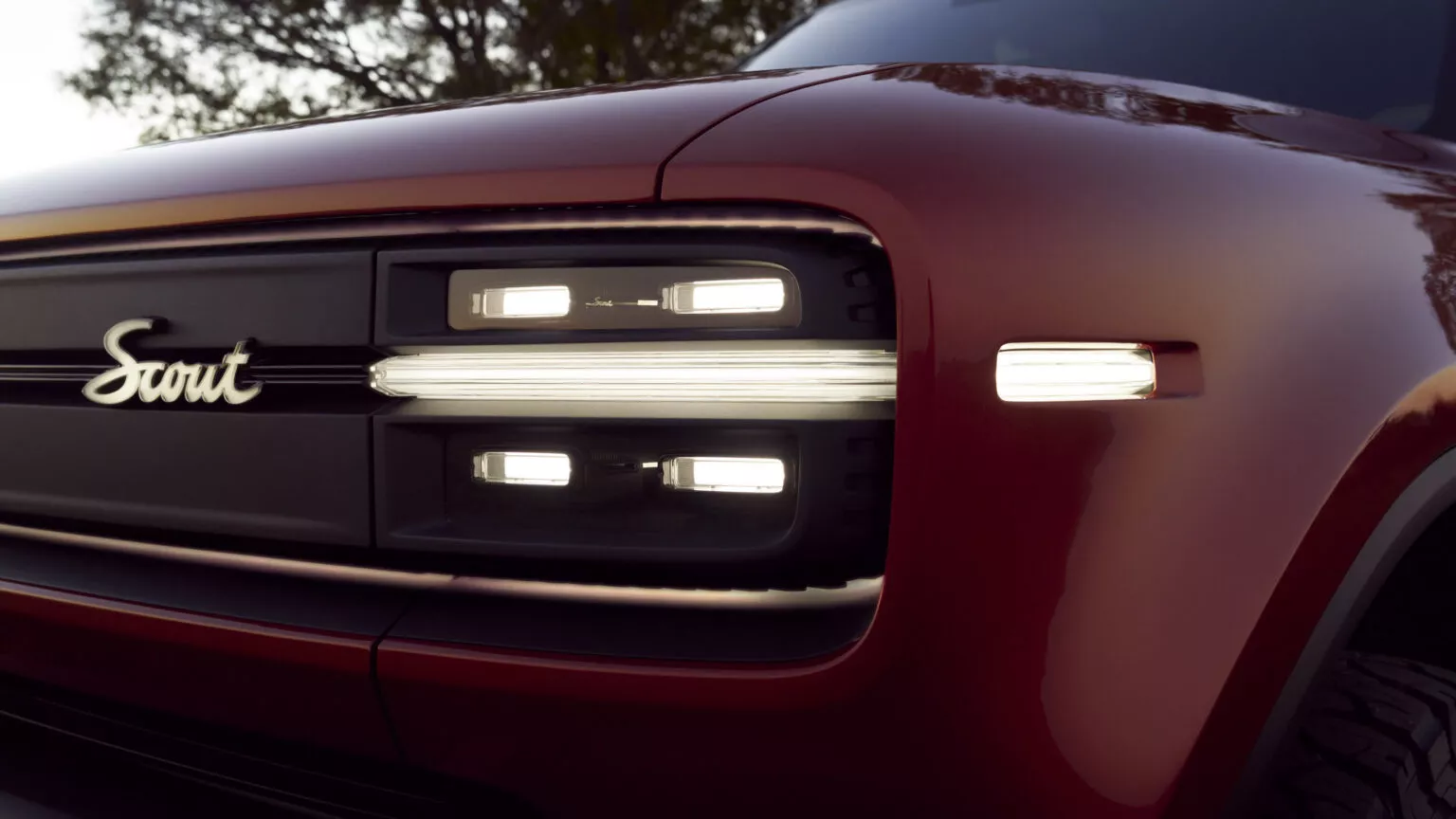
The company has already completed a first round of cold-weather testing in Sweden and is preparing for additional winter validation. From a design perspective, Chief Design Officer Chris Benjamin said one key change involved simplifying the daytime running light treatment. While the early prototypes featured lights blended directly into the metal body panels, the final production models will replace that with an insert to reduce complexity and cost. “That execution proved too intricate, too expensive, and too complex to stamp at scale,” Benjamin said.
Scout is maintaining its dual powertrain strategy, offering both battery-electric and extended-range electric vehicle (EREV) versions. By not committing exclusively to a single drivetrain at launch, the company has retained the flexibility to prioritise EREV production if near-term EV demand softens. Customer deliveries are currently targeted for 2027, with Scout indicating that EV output could be adjusted based on market conditions at that time.
See also: Scout Motors Seizes Opportunity to Recruit Rivian Talent Amid Job Cuts
The vehicles will ride on a platform derived from the Volkswagen Group and Rivian joint venture, using Rivian’s electrical architecture combined with Scout’s off-road-focused hardware. Battery supply is expected to come from Volkswagen Group’s PowerCo network.
Scout has previously said it is aiming for a starting price below $60,000, though final pricing will depend on raw material costs and the eventual mix of powertrains. The timing of the full production launch and whether the Traveler and Terra models will enter the market simultaneously have not yet been confirmed.