




Rivian Automotive reported a wider net loss for the third quarter of 2025, as the U.S. electric vehicle manufacturer continues to pour resources into its next-generation R2 platform, production expansion, and autonomous driving development. The company reaffirmed its full-year guidance and confirmed that the R2 compact SUV remains on schedule for a 2026 launch.
Rivian’s net loss attributable to common stockholders widened to $1.17 billion in the third quarter, compared with $1.1 billion a year earlier. Total revenue rose 78 percent year-on-year to $1.56 billion, driven by higher vehicle deliveries and strong growth in software and services revenue.
See also: Rivian to Pay $250 Million to Settle Investor Lawsuit Over 2021 IPO Pricing

Automotive revenue climbed 47 percent to $1.14 billion, while software and services revenue surged to $416 million, more than tripling from a year ago. About $214 million of this came from Rivian’s joint venture with Volkswagen Group to co-develop vehicle electrical architectures and software systems. The company also achieved a gross profit of $24 million, compared with a $392 million loss in the third quarter of 2024.
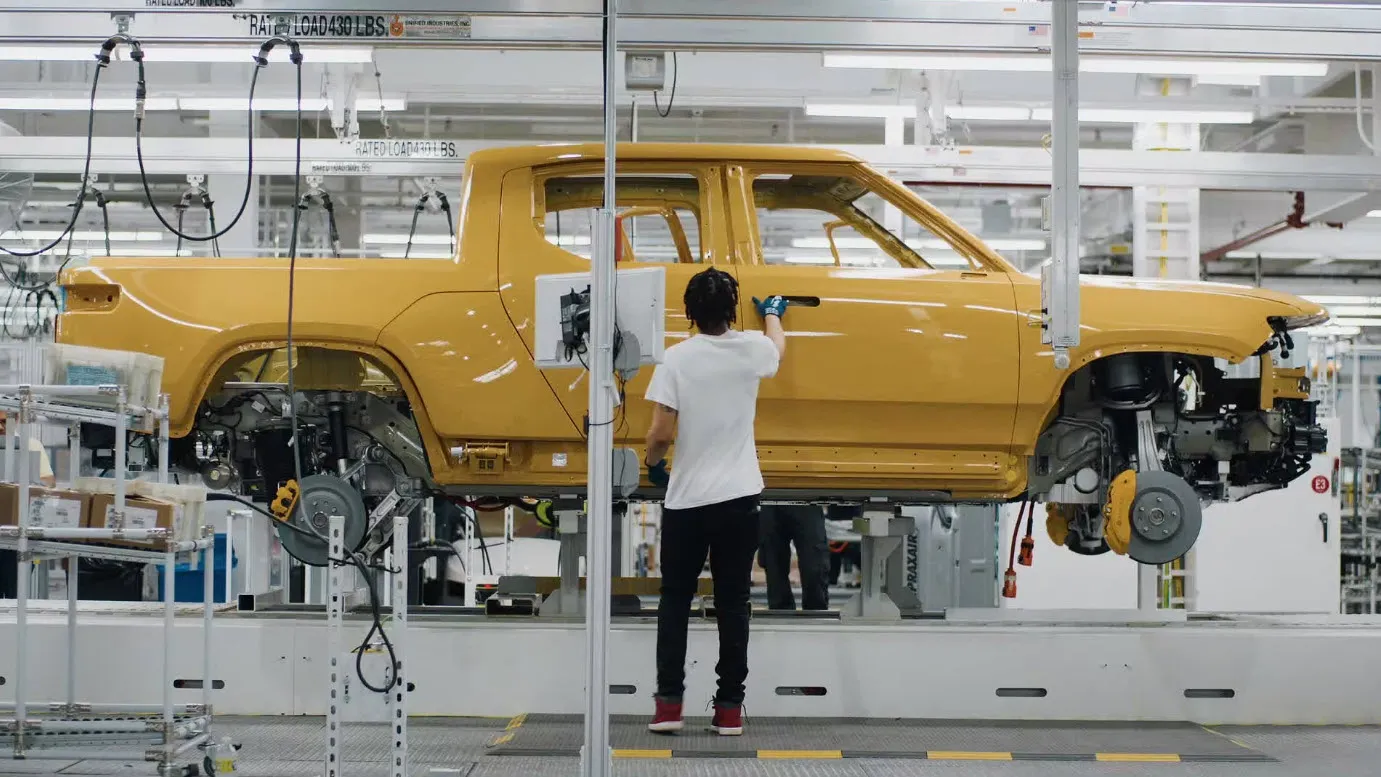
Between July and September, Rivian produced 10,720 vehicles and delivered 13,201, including its first Amazon delivery vans for Canada. For 2025, Rivian expects 41,500 to 43,500 deliveries, narrowing its previous guidance of 40,000 to 46,000. The automaker reaffirmed its adjusted EBITDA forecast of minus $2.0 to $2.25 billion and capital expenditure guidance of $1.8 to $1.9 billion.
See also: Rivian CEO RJ Scaringe Takes on Interim Marketing Role Amid Company Restructuring and Layoffs

“We continue to make significant progress across our strategic priorities including preparation for the launch of R2 and development of our technology roadmap including autonomy and our vertically integrated hardware and software,” Rivian said. “While we face near-term uncertainty from trade, tariffs, and regulatory policy, we remain focused on long-term growth and value creation.”
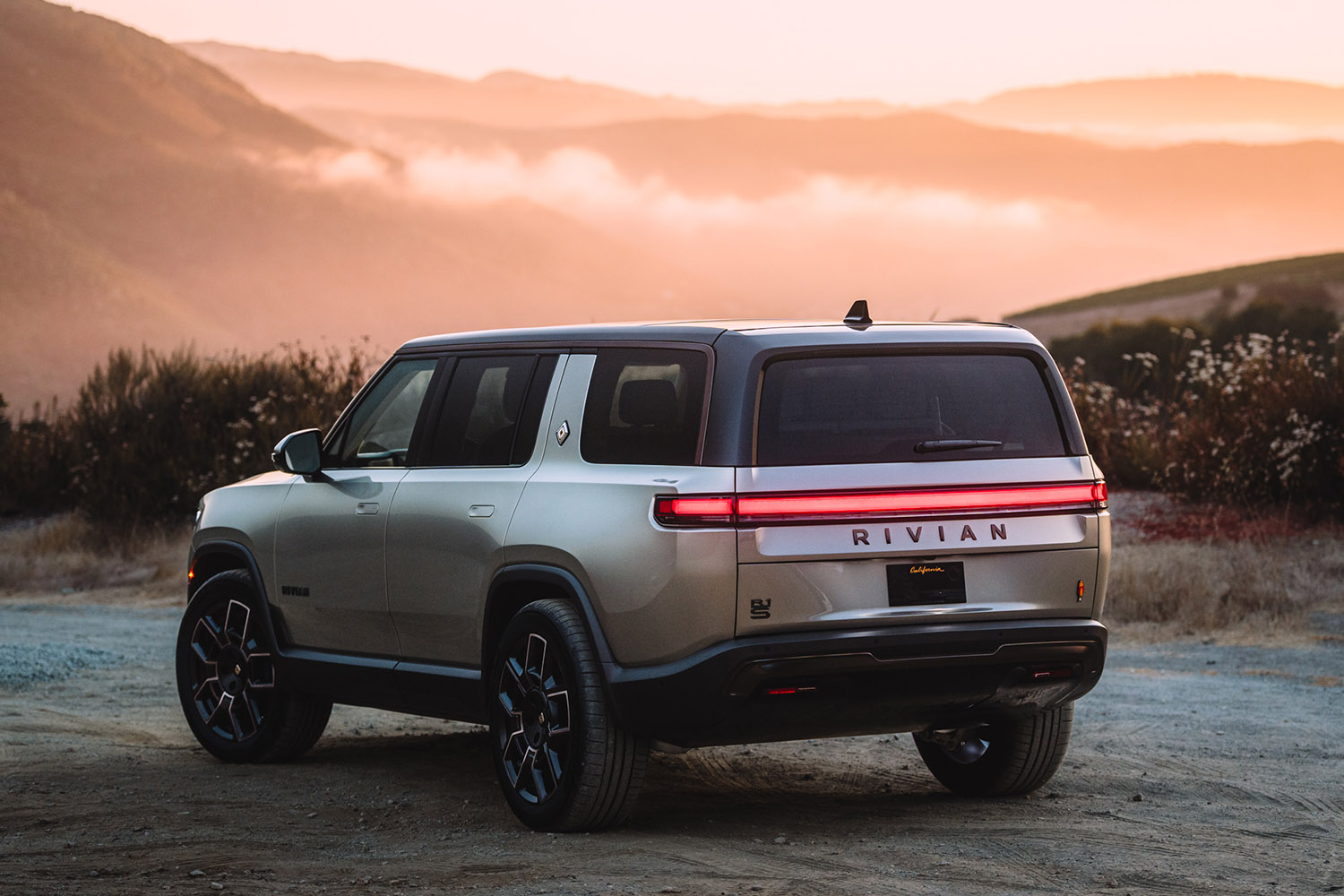
The R2 compact SUV is expected to serve as Rivian’s first high-volume product, with production slated to begin in the first half of 2026 at its Normal, Illinois, plant, which will have a capacity of up to 155,000 R2 units annually. Construction has also begun on Rivian’s second manufacturing site in Georgia, which will eventually add another 400,000 units of annual production capacity.
See also: Rivian Delays Release of Kick Turn and RAD Tuner Features for R1T and R1S Quad Models

As of September 30, cash and equivalents stood at $7.09 billion, with total liquidity of $7.69 billion. Operating cash flow turned positive at $26 million, compared with an $876 million outflow a year earlier. Free cash flow improved to minus $421 million, from minus $1.15 billion in the prior-year period.
“We believe the future car parc will be fully electric, autonomous, and software-defined,” Rivian said in its shareholder letter. “We remain confident in the opportunity ahead for Rivian.”


