



Rivian has confirmed another round of layoffs affecting several hundred employees as the electric vehicle manufacturer continues efforts to reduce losses and move toward long-term profitability.
The company said the workforce reduction will impact less than 2% of its total employee base and primarily affect teams within its service and customer operations departments.
Cost-Cutting Continues
The latest restructuring comes as Rivian intensifies its focus on operational efficiency despite recent product launches and growing software revenue.
“We recently restructured a handful of teams within Rivian as we work to profitably scale our business,” the company said in a statement.
At the end of 2025, Rivian employed 15,232 people globally. Based on that figure, the latest workforce reduction is expected to affect several hundred employees.
The layoffs represent at least the fourth workforce reduction undertaken by Rivian since the beginning of 2024.
R2 Seen as Key Growth Driver
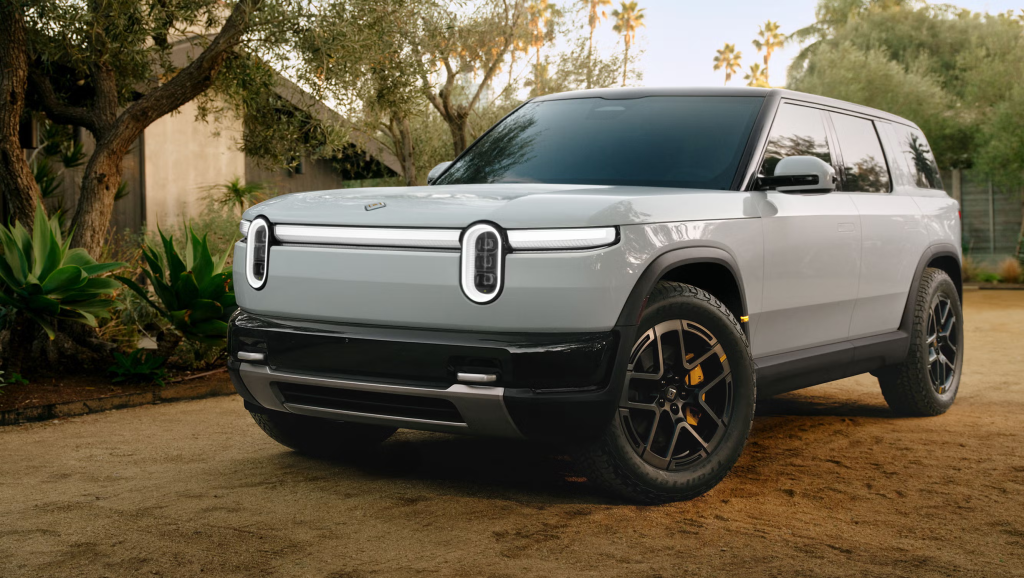
The announcement comes only days after Rivian began deliveries of its highly anticipated R2 electric SUV.
The model is widely viewed as a critical product for Rivian’s future growth because it targets a significantly broader customer base than the company’s existing R1T pickup and R1S SUV.
The R2 Launch Edition is currently priced from $57,990, while additional versions are expected to arrive later with starting prices around $45,000.
Rivian hopes the more affordable vehicle will help boost sales volumes and improve economies of scale.
Losses Narrow Despite Lower Vehicle Revenue
Rivian reported a net loss of $3.6 billion in 2025, an improvement compared with the $4.75 billion loss recorded in 2024.
However, the reduction in losses did not come from higher vehicle sales.
Revenue from Rivian’s automotive business declined by 15% during the year, reflecting ongoing challenges in the competitive EV market.
The company’s strongest growth came from its Software and Services division, where revenue surged 222% to $1.56 billion.
Volkswagen Partnership Driving Software Growth
Much of the software revenue increase is linked to Rivian’s partnership with Volkswagen.
The two companies established a joint venture in 2024 focused on electrical architecture and software development.
Volkswagen currently owns a 15.9% stake in Rivian, making the German automaker the company’s largest shareholder.
The partnership is expected to provide Rivian with an important source of recurring revenue while helping Volkswagen accelerate its own software and EV development efforts.
Strategic Investors Remain Important
In addition to Volkswagen, Amazon remains one of Rivian’s most significant strategic partners.
The e-commerce giant continues to deploy Rivian’s electric delivery vans as part of its broader logistics electrification strategy.
Both partnerships are viewed as key pillars supporting Rivian’s long-term business model beyond vehicle sales alone.
Challenging EV Market Conditions
The latest layoffs highlight the pressure many electric vehicle manufacturers continue to face despite growing adoption of EVs globally.
Rivian’s previous workforce reduction occurred in October 2025, when the company eliminated approximately 4.5% of its workforce, affecting around 600 employees.
At the time, management cited changing market conditions, including the expiration of the federal $7,500 EV tax credit in the United States.
As Rivian scales production of the R2 and expands software-related revenue streams, the company is seeking to balance growth investments with tighter cost controls in an effort to achieve sustainable profitability.


