
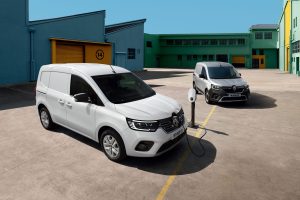


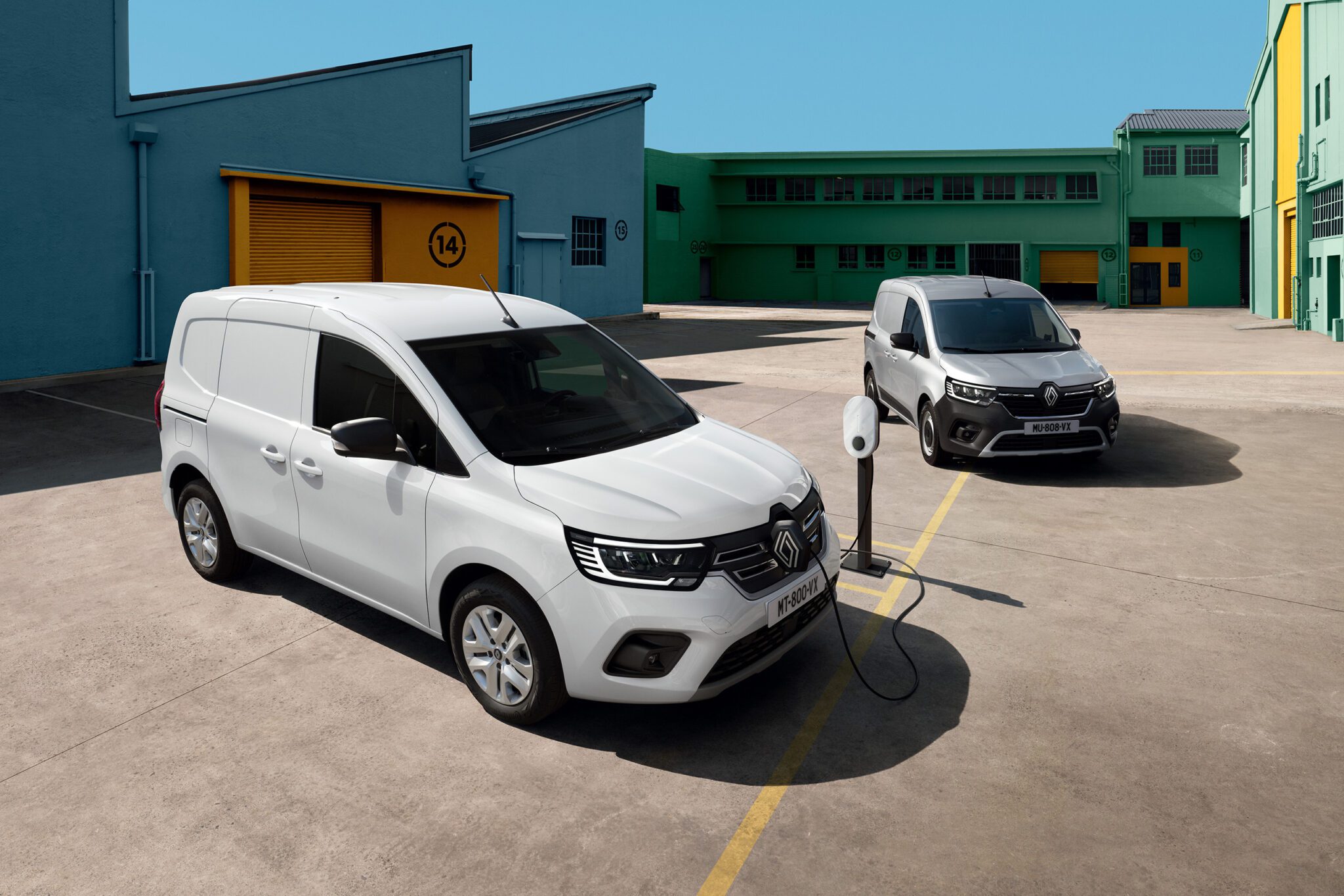
Renault has announced a series of updates for the Kangoo Van E-Tech electric and Kangoo E-Tech electric passenger model, including a larger battery, two electric motor options, faster DC charging and an updated multimedia system. The revised models use battery and motor technology also found in the Renault 5 and Renault 4 E-Tech electric.
Battery capacity increases from 45 kWh to 52 kWh, with Renault targeting a maximum WLTP driving range of 354 kilometres, subject to homologation. Maximum DC charging power rises from 80 kW to 100 kW, while the updated models receive a 10-inch touchscreen across the range.
Renault has not yet announced prices for the updated electric models, with details expected in the coming weeks.
Larger Battery and Faster Charging
The new 52 kWh nickel manganese cobalt (NMC) battery replaces the previous 45 kWh unit. Renault says the increased capacity extends the vehicles’ potential range, depending on the model and body configuration.
DC fast charging power increases to 100 kW from 80 kW. Renault estimates that charging from 15% to 80% takes approximately 30 minutes, compared with 40 minutes previously. The company says a 30-minute charging session can add up to 240 km of range, compared with 179 km for the previous version.
AC charging options include 11 kW and 22 kW, depending on the model. Renault states that charging from 15% to 80% takes approximately three hours and 30 minutes using an 11 kW wallbox, or one hour and 45 minutes with a 22 kW charger.
The vehicles retain a heat pump for cabin comfort and energy management. New electric-driving functions include an EV Route Planner and battery preconditioning, which can prepare the battery for charging before arrival at a charging station. Drivers can also manage cabin preconditioning and schedule charging remotely.
Two Electric Motor Options
The updated Kangoo E-Tech electric range introduces two motor outputs in place of the previous single 90 kW powertrain.
The first option produces 100 kW (135 hp) and 270 Nm of torque. The second delivers 115 kW (155 hp) and 300 Nm.
The 135 hp version offers Eco and Normal driving modes. The 155 hp version adds a Perfo mode intended for situations such as driving with a full load.
Regenerative braking settings increase from three levels to four, with steering-wheel paddles allowing drivers to adjust energy recovery and deceleration. A new dashboard-mounted electronic gear selector replaces the previous gear lever and incorporates Auto Hold.
The electric models also gain Vehicle-to-Load (V2L) functionality, allowing the traction battery to supply power to compatible external equipment, including tools and an air compressor.
Updated Multimedia and Connectivity
All versions of the Kangoo Van and Kangoo receive a redesigned digital interface with a 10-inch touchscreen, replacing the previous 8-inch display. Renault says the new screen offers improved display quality and response speeds approximately twice as fast as before.
The system uses OpenR Link and is available in configurations with smartphone mirroring through Apple CarPlay and Android Auto. A version with integrated navigation and app access is also available, using HERE mapping instead of the previous TomTom solution.
On electric models, the interface brings together functions related to charging and electric driving, including the EV Route Planner.
Connectivity updates include USB-C ports across the range, with additional ports available as options on some configurations. The passenger model also gains USB-C ports for rear occupants. The inductive smartphone charger increases its output from 15 W to 25 W and adds magnetic attachment and MagSafe compatibility.
Renault has also introduced a new emergency-call button and a telecommunications unit compatible with 4G and 5G eCall.
Multiple Configurations Across the Range
The Kangoo lineup continues to offer electric, petrol and diesel powertrains, depending on the model and configuration.
The Kangoo Van is available with a TCe 130 petrol engine, Blue dCi 95 and 115 diesel engines, and the E-Tech electric powertrain. Body configurations include panel van, crew cab and platform cab, with two or three front seats depending on the version.
The passenger Kangoo range includes Evolution and Techno trims, while the Grand Kangoo provides a longer body and seating for up to seven people in selected configurations.
Both the van and passenger models are available in two lengths: 4.49 metres and 4.91 metres. Renault also highlights the wide sliding side doors on the L2 versions, which provide access for loading larger items or accommodating rear passengers.
The company says the Kangoo Van ranks first in France among light commercial vehicles across combustion-engine and electric versions. In Europe, Renault places the electric van among the leading models in its class.
Production Remains in France
Renault will continue manufacturing the Kangoo Van and Kangoo at its Maubeuge plant in the Hauts-de-France region, where the model has been produced since its introduction in 1997.
The updated electric versions use components manufactured at several French facilities. The 52 kWh NMC battery is produced in Douai, the electric motor in Cléon in Normandy, and the running-gear modules in Le Mans.
Renault’s electric Kangoo history dates back to the Kangoo Z.E., introduced in 2011. In 2025, the Maubeuge plant produced its 100,000th electric Kangoo.
The latest update applies battery, motor and charging developments from Renault’s electric passenger-car programme to its van and passenger-vehicle range. Final homologated range figures and pricing for the revised Kangoo E-Tech electric models are still to be confirmed.


