



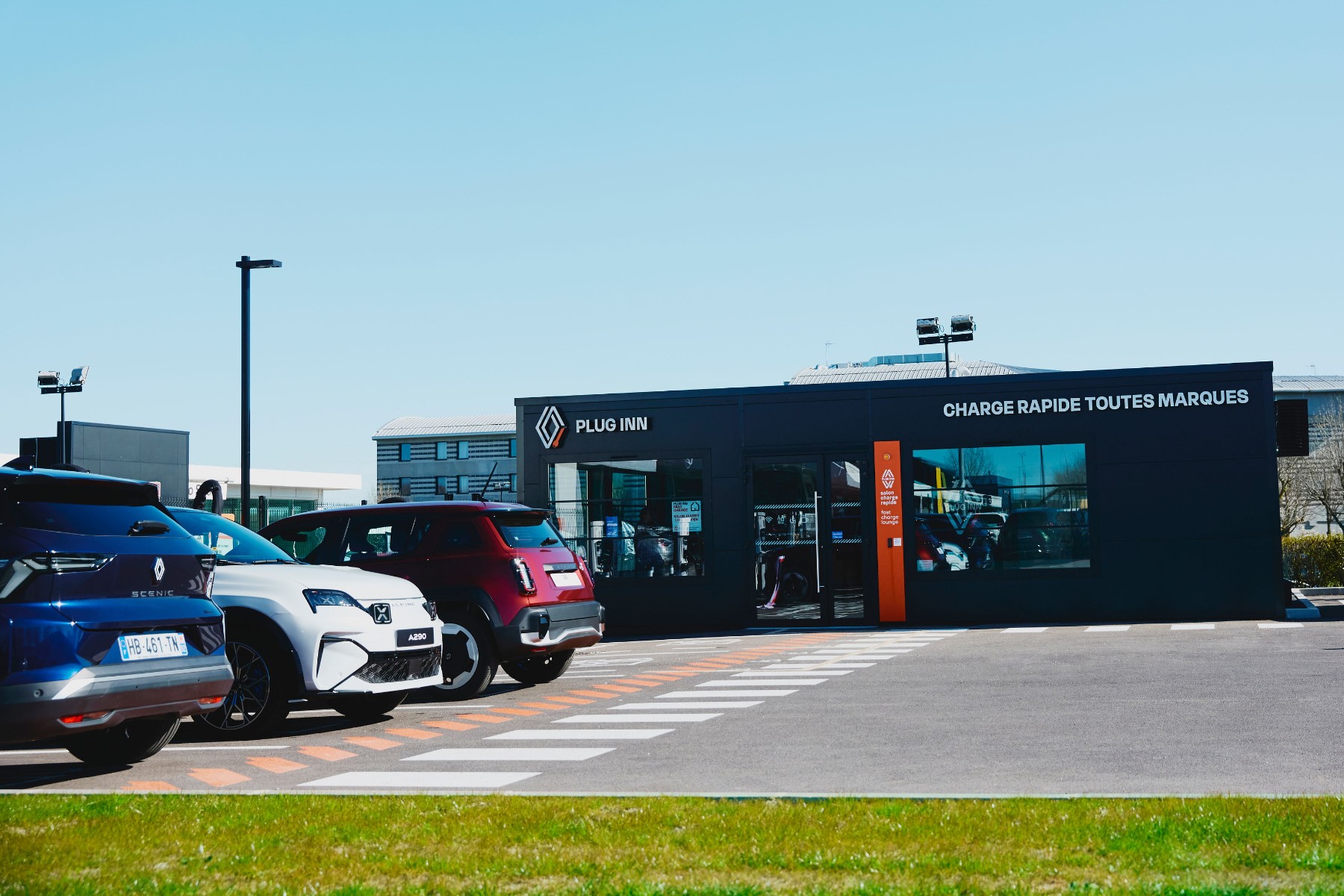
Renault Group has integrated its electric vehicle charging solutions—previously operated under Mobilize Beyond Automotive—directly into its core business, while rebranding the activities under a new identity, “Plug Inn,” the company said.
The move forms part of a broader restructuring programme initiated in 2025, aimed at streamlining operations and focusing on core activities. As part of this transition, Renault had already integrated its charging and energy services into its main business in December and discontinued its e-carsharing operations.
Under the new branding, Renault will unify its charging ecosystem, renaming key services to reflect the Plug Inn identity. The bidirectional charging solution with vehicle-to-grid capability will be marketed as “Plug Inn Powerbox,” while the public charging service previously known as Mobilize Charge Pass will become “Plug Inn Charge Pass.” The company’s fast-charging network has already adopted the name “Plug Inn Fast Charge.”
Renault said the rebranding is intended to improve operational efficiency and enhance clarity for customers, with “Plug” referring to EV charging and “Inn” evoking comfort and service. The company did not disclose detailed plans for all services but confirmed that the renaming process will be completed by the end of the year.
Regarding its fast-charging network, Renault emphasized a focus on user experience over rapid expansion. “[Our] ambition that remains unchanged: to offer the best fast-charging experience in France,” the company said, highlighting reliability and service quality as priorities.
Launched in 2023, the network is open to all EV brands and is primarily located at Renault dealerships along major routes. Selected sites offer additional amenities such as lounges, Wi-Fi, restrooms, coffee, and workspaces.
However, Renault has significantly scaled back its earlier expansion targets. The group had initially planned to deploy 650 high-power charging sites across Europe by 2028 but revised this goal in December 2025 to around 100 sites in France and more than 100 in Italy by the end of this year. It now refers only to a target of 93 operational sites in France by year-end, with no updated plans for Italy and previously announced projects in Belgium and Spain dropped.
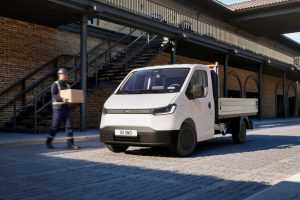
The restructuring also reflects a strategic shift away from non-core mobility services developed under Mobilize, which was launched in 2021 by then-CEO Luca de Meo. The unit had focused on carsharing, charging solutions, and specialized electric vehicles, including the Duo and a ride-hailing limousine project that was discontinued in 2023.
Following an internal review, current leadership under François Provost decided at the end of 2025 to halt further investment in carsharing services and fast-charging infrastructure, citing financial pressures and increasing competition from other charging providers.
Despite the scaled-back expansion, Renault executives said the Plug Inn initiative is central to its long-term electrification strategy. Jérôme Faton expressed confidence in the new approach.
“Our priority is to simplify every step of the electric experience for our customers by offering them a reliable, clear and scalable charging ecosystem. With Plug Inn, we are setting a structuring milestone: an infrastructure designed to support, on a large scale, the ramp-up of zero-emission mobility in Europe,” said Jérôme Faton, VP of Customer Experience & Energy at Renault Group.
“Beyond a change of name, Plug Inn embodies a strong industrial and technological ambition: to create a reference standard, harmonise the charging experience, and support the acceleration of electric vehicles by focusing on service quality, transparency and trust. This is how we will help make the transition to all-electric mobility a simple, seamless and accessible reality for everyone,” he added.


