




The EU-backed Recirculate project has completed the first phase of developing an automated system for dismantling electric vehicle batteries, addressing what researchers describe as one of the industry’s most pressing bottlenecks.
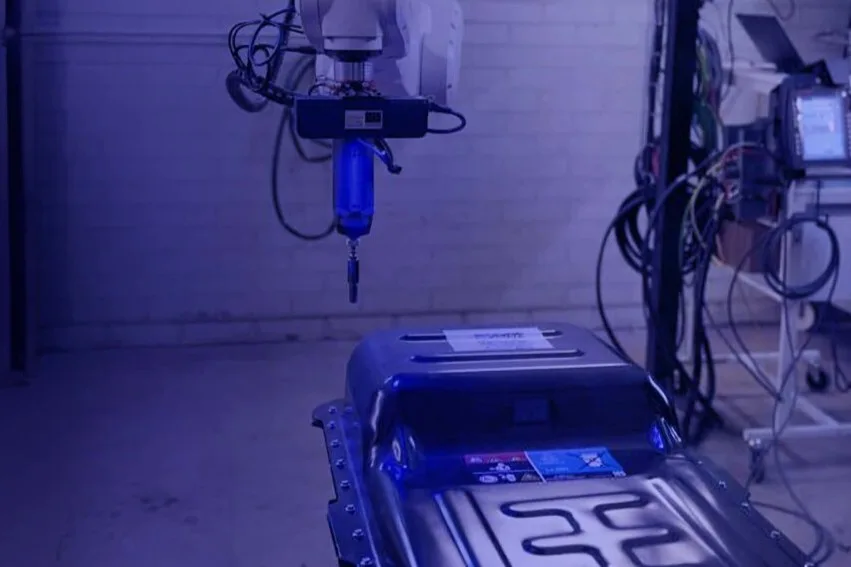
Led by Centria University of Applied Sciences in Finland, the project combines robotics and machine learning to disassemble battery packs down to the cell level. The team has built a robotic cell using a KUKA KR10 industrial robot on a mobile linear track, equipped with customised tools and a depth camera to detect and remove components from high-voltage packs.
“There are approximately 50 screws on the lid alone,” said Tomi Pitkäaho, Principal Lecturer in Research at Centria. “We’ve trained a machine learning model to locate and identify each screw, extract their exact coordinates, and send this data to the robot.”
The system can identify battery types, including those from Ford and Tesla, even without digital product passports, enabling automated selection of disassembly programmes. Researchers say the project marks one of the first real-world demonstrations of battery disassembly using artificial intelligence and robotics.
Recirculate, launched in 2023 with €4.9 million in EU funding, aims to establish new business models for repair, reuse and recycling of second-life batteries. Eleven companies are involved, including Ford Otosan, DHL, Probot, Eco Stor and Minespider. Ford Otosan is contributing batteries and supporting labelling system development, while DHL manages safe transport and storage.


