



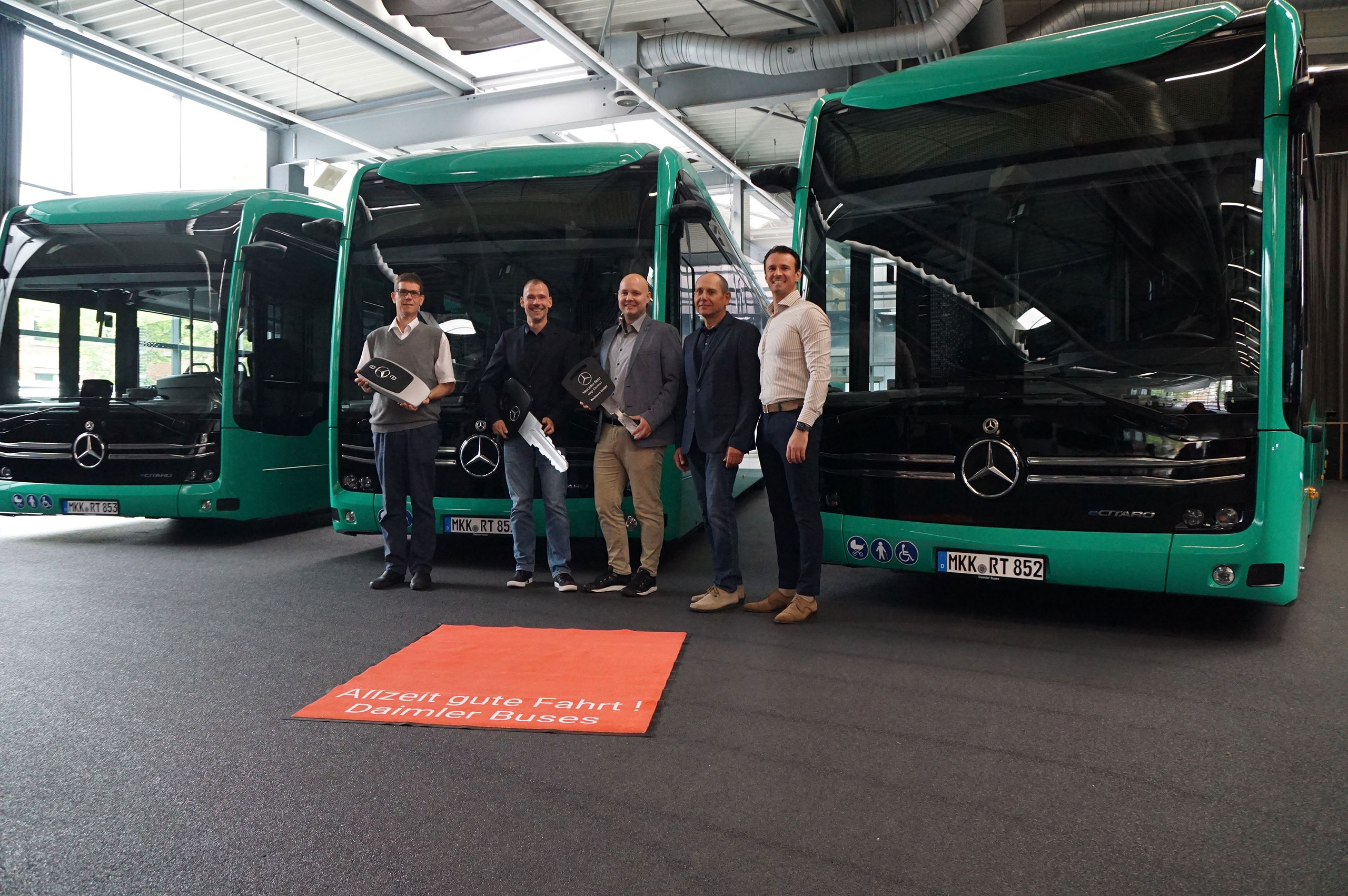
Racktours GmbH & Co. KG has taken delivery of three Mercedes-Benz eCitaro electric buses, becoming one of the first privately operated bus companies in the German state of Hessen to place the model into scheduled passenger service.
The battery-electric buses will operate in the Main-Kinzig district on behalf of KVG Main-Kinzig mbH and represent the first electric vehicles in the company’s fleet.
First Step Into Battery-Electric Operations
The three 12-meter Mercedes-Benz eCitaro buses are equipped with NMC 4 high-voltage battery technology in two different configurations.
Two of the vehicles feature five battery packs with a combined energy capacity of 555 kWh, while the third bus is fitted with six battery packs providing a total capacity of 666 kWh.
Each vehicle is equipped with two charging sockets to support operational flexibility.
The buses are finished in green exterior paint and feature blue seat upholstery for passengers.
Driver Assistance and Safety Systems
The vehicles incorporate a range of driver assistance and safety technologies designed to support daily route operations.
These include the digital MirrorCam system, full interior video monitoring, Sideguard Assist 2, Frontguard Assist, Traffic Sign Assist and Attention Assist 2 equipped with an infrared camera.
The systems are intended to enhance driver awareness and improve safety for passengers, pedestrians and cyclists.
Long-Term Daimler Buses Customer
Racktours said the purchase continues a long-standing relationship with Daimler Buses.
Over the past five years, the company has ordered more than 21 buses from Daimler Buses, most of them Mercedes-Benz models.
The operator cited Daimler Buses’ service and support network as one of the factors influencing its decision to select the eCitaro.
Expanding Sustainable Public Transport
Founded in 1945, Racktours currently employs 114 people and operates a fleet of 45 city buses and five touring coaches.
The introduction of the three eCitaro buses marks the company’s first move into battery-electric public transport and reflects the broader transition toward zero-emission mobility in Germany’s regional bus sector.
The vehicles will be used on regular passenger services in the Main-Kinzig district as operators continue to expand the deployment of electric buses in public transportation networks.


