



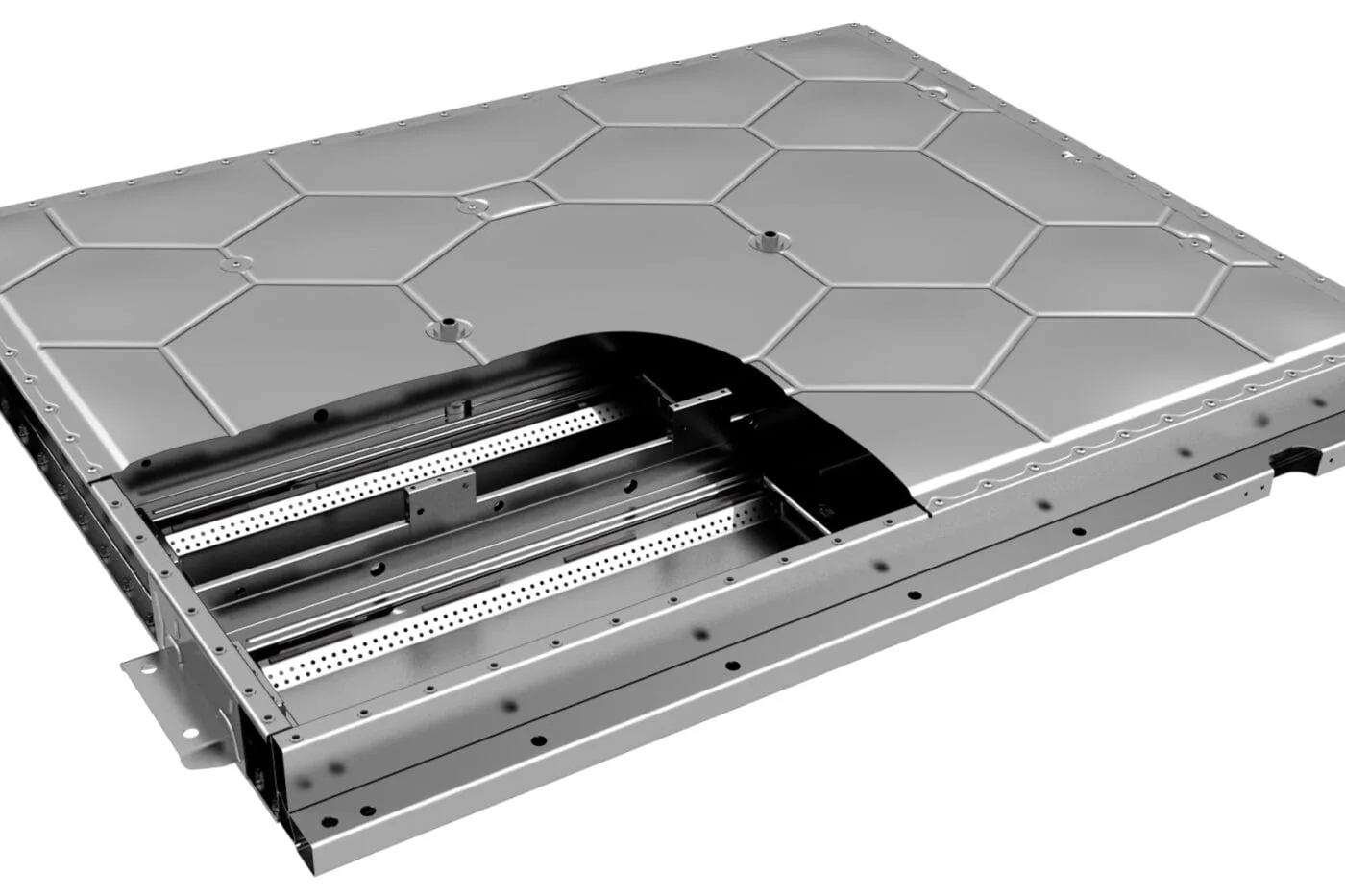
Purem by Eberspächer has unveiled a new steel-based concept for electric vehicle battery housings, promoting it as a more economical and sustainable alternative to aluminium, which remains the dominant material in most electric and hybrid vehicles.
The company argues that its design reverses the traditional preference for aluminium by leveraging the strength and recyclability of steel. “Compared to aluminium, steel offers greater strength and makes lighter battery housings possible thanks to the use of thinner walls,” Purem by Eberspächer said in a statement. “Every gram counts, especially for high-performance batteries with a long operating scope — and is therefore an important competitive factor.”
See also: BMZ Group Files for Insolvency for German Units After Losing Major Energy Storage Customer
Aluminium is widely used due to its low weight, but its production involves higher energy demand and processing costs, leading to a greater carbon footprint. Purem by Eberspächer said steel allows for thinner components while maintaining strength, potentially reducing production emissions and improving recyclability. The company did not provide detailed data comparing the two materials in terms of cost, weight, or CO₂ output.
The Esslingen-based firm said it does not plan to offer standardised battery housings but will develop customised designs based on individual customer specifications. “The design is customised to accommodate the necessary ventilation ducts, the cable routing of the high-voltage connections, or the arrangement of the individual battery modules,” it said.
See also: Volkswagen’s PowerCo Delays Battery Production Start in Spain to 2027
Safety remains a key design priority, with the company emphasising that the housing must protect the battery cells and vehicle occupants during collisions or battery malfunctions. “Thanks to this material’s high strength and the corresponding design, the housing protects the battery in the event of a collision or from being hit by foreign objects,” the company added, noting that “precisely placed weld seams and special sealing solutions” ensure reliable insulation.
The use of steel in EV battery housings is not new. In 2021, engineering firm IAV introduced a steel-based concept with a focus on recyclability, while Bertrandt and Voestalpine presented a steel housing platform the same year. More recently, researchers at TU Graz revealed a hybrid wood-steel design concept.
See also: LG Energy Solution Advances Dry Electrode Battery Technology to Boost Efficiency and Cut Costs
Purem by Eberspächer said it plans to offer its steel battery housings for both battery-electric and plug-in hybrid vehicles. Although its main business lies in exhaust aftertreatment systems and acoustic solutions, the company said its experience in material processing and welding technologies supports its move into electric mobility components.
The Purem division employs about 7,500 people worldwide and reported sales of roughly 4.7 billion euros in 2024 within the Eberspächer Group.


