


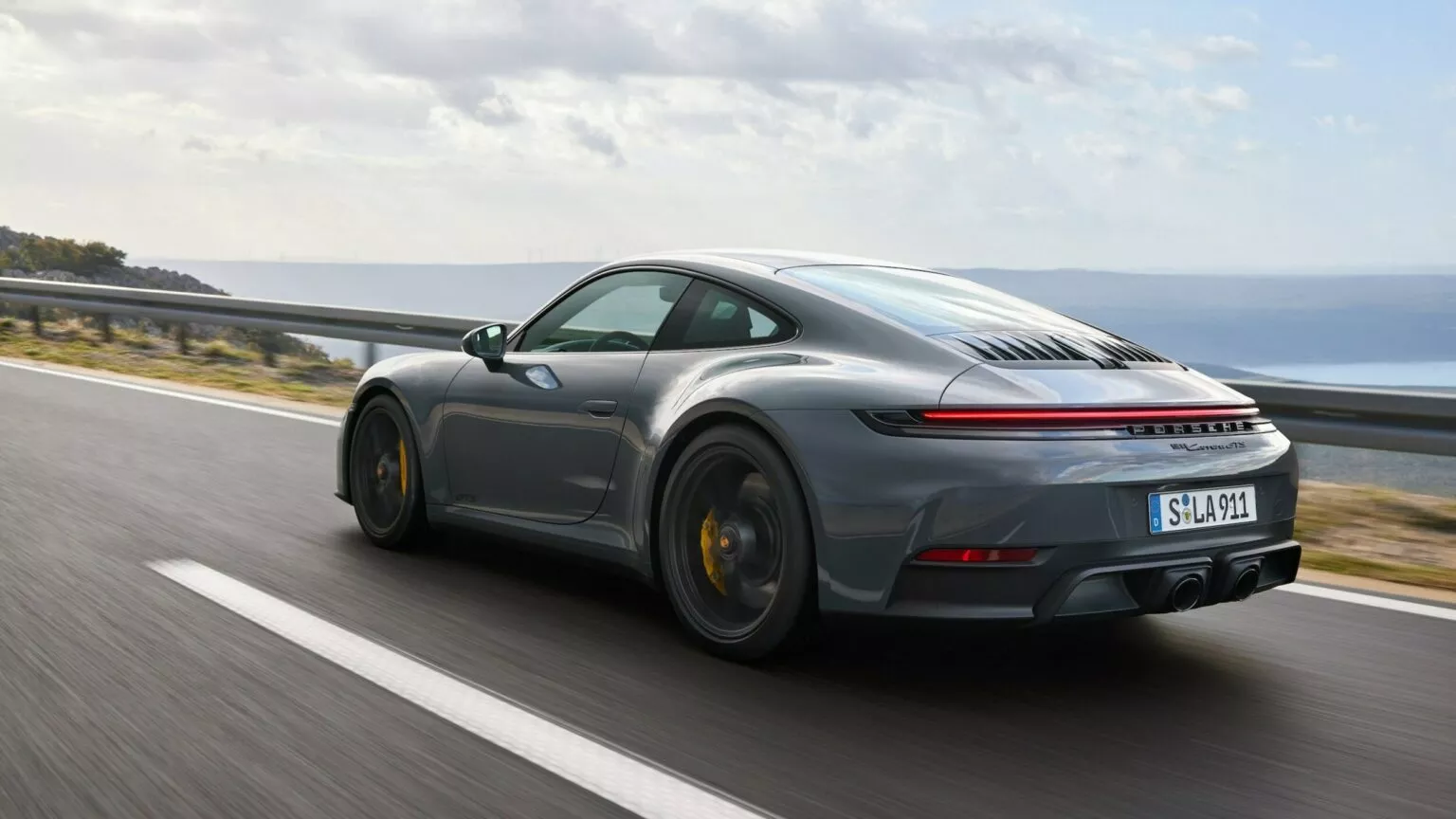
German sports car manufacturer Porsche has no immediate plans to develop a fully electric version of its 911 sports car, according to comments from a company executive, as the automaker continues to balance combustion, hybrid and electric vehicle technologies across its lineup.
Daniel Schmollinger, chief executive officer of Porsche Cars Australia, said the company intends to preserve the 911’s existing identity while advancing electrification in other sports car models.
“We will go with the 718 electric as the first two-door electric sports car,” Schmollinger told Australian automotive publication CarSales.
“The 911 for the moment stays what it is. With the T-hybrid technology, it shows what is possible without a full battery but still making use of this amazing technology,” he added.
Porsche is continuing development of next-generation electric versions of the 718 Cayman and Boxster, which are expected to be sold alongside higher-positioned combustion-engine variants.
The company has previously positioned the 911 as one of the final combustion-powered models in its portfolio even as it expands electrification across other vehicle segments.
Porsche’s current T-Hybrid system, introduced in the 992.2-generation 911 GTS and Turbo S models, combines electrification technologies with internal combustion powertrains to improve performance while avoiding the additional weight associated with fully battery-electric systems.
The company is expected to apply similar hybrid technologies across more models while maintaining non-hybrid powertrains for certain performance-focused vehicles such as the GT3 RS.
Schmollinger also commented on the performance of the electric Macan, acknowledging that initial sales volumes have not yet matched those of the outgoing gasoline-powered version.
Porsche plans to continue supplying petrol-powered Macan inventory in certain markets as production in Germany gradually phases out.
According to Schmollinger, lower consumer adoption of the electric Macan reflects broader market readiness for EV technology rather than concerns specific to the vehicle itself.
“It’s not a decision against the car, or the Macan as such, it’s a decision against not being ready for electric,” he said.
“That’s totally fine. Everyone needs to choose the technology and the car they’re comfortable with.”
Porsche is also maintaining a multi-powertrain strategy across its wider lineup. The Cayenne is currently offered with gasoline, plug-in hybrid and battery-electric powertrains, while a hybrid version of the next-generation Macan is also under development to operate alongside the fully electric variant.
The automaker continues to invest in synthetic fuel development as part of its broader decarbonisation strategy, although Schmollinger described the technology as still “far from mainstream.”