




Pony.ai has introduced a new generation of autonomous trucks that the company says will sharply reduce production and operating costs, expanding its presence in China’s commercial self-driving sector.
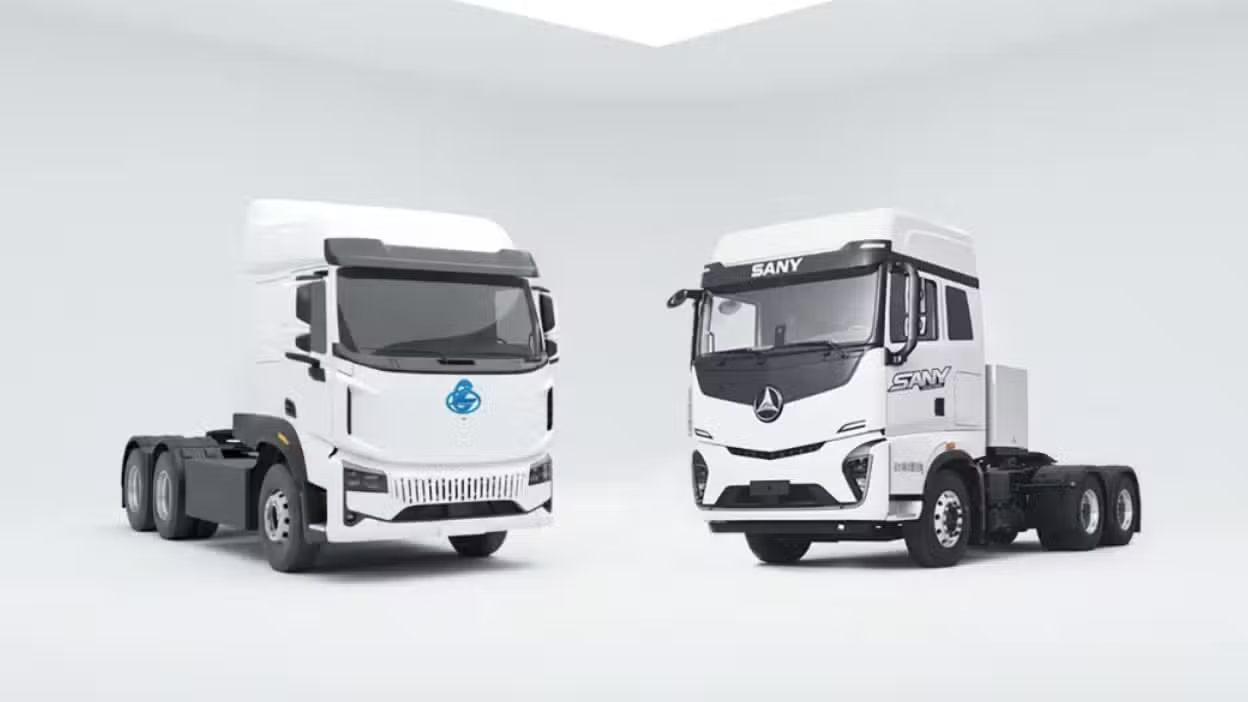
The Chinese autonomous driving startup on Monday launched its fourth-generation autonomous truck product line, developed jointly with Sany Truck and Dongfeng Liuzhou Motor.
The system uses fully automotive-grade components and lowers the bill of materials per vehicle by roughly 70 percent from the previous generation. “The system extensively incorporates components from the latest-generation robotaxi solution,” Pony.ai said, noting that the design supports a service life of up to 20,000 hours and up to 1 million kilometers of freight operation.
See also: Pony.ai Deploys Seventh-Generation Robotaxi with 70% Cost Reduction and Expanded Operations in China
The first two models will be based on battery electric vehicle (BEV) platforms and are intended for mass production at the thousand-unit scale. According to the company, deployment is targeted for 2026. Pony.ai said the new platform is expected to help logistics operators lower freight expenses and raise efficiency across major freight corridors once the vehicles are in commercial service.
Under current testing conditions, the company’s “1+4” platooning setup — one human-driven lead truck followed by four autonomous trucks — is expected to cut freight costs per kilometer by 29 percent, while potentially boosting profit margins by 195 percent. The setup could also reduce per-vehicle carbon emissions by around 60 tons a year, according to Pony.ai.
See also: Pony.ai Granted Citywide Permit for Fully Driverless Robotaxis in Shenzhen
Pony.ai first entered the autonomous truck market in 2018 and now operates a fleet of about 200 vehicles, accumulating more than 1 billion ton-kilometers of freight mileage. Most of its business remains centered on robotaxis, and the company began deploying its seventh-generation robotaxi earlier this month in Guangzhou and Shenzhen. The new robotaxi model features a lifespan of 600,000 kilometers and a 70 percent reduction in the cost of its autonomous driving suite compared with the previous version.
The company operates more than 720 robotaxis and plans to expand that figure to 1,000 vehicles by the end of the year, it said on November 5.


