
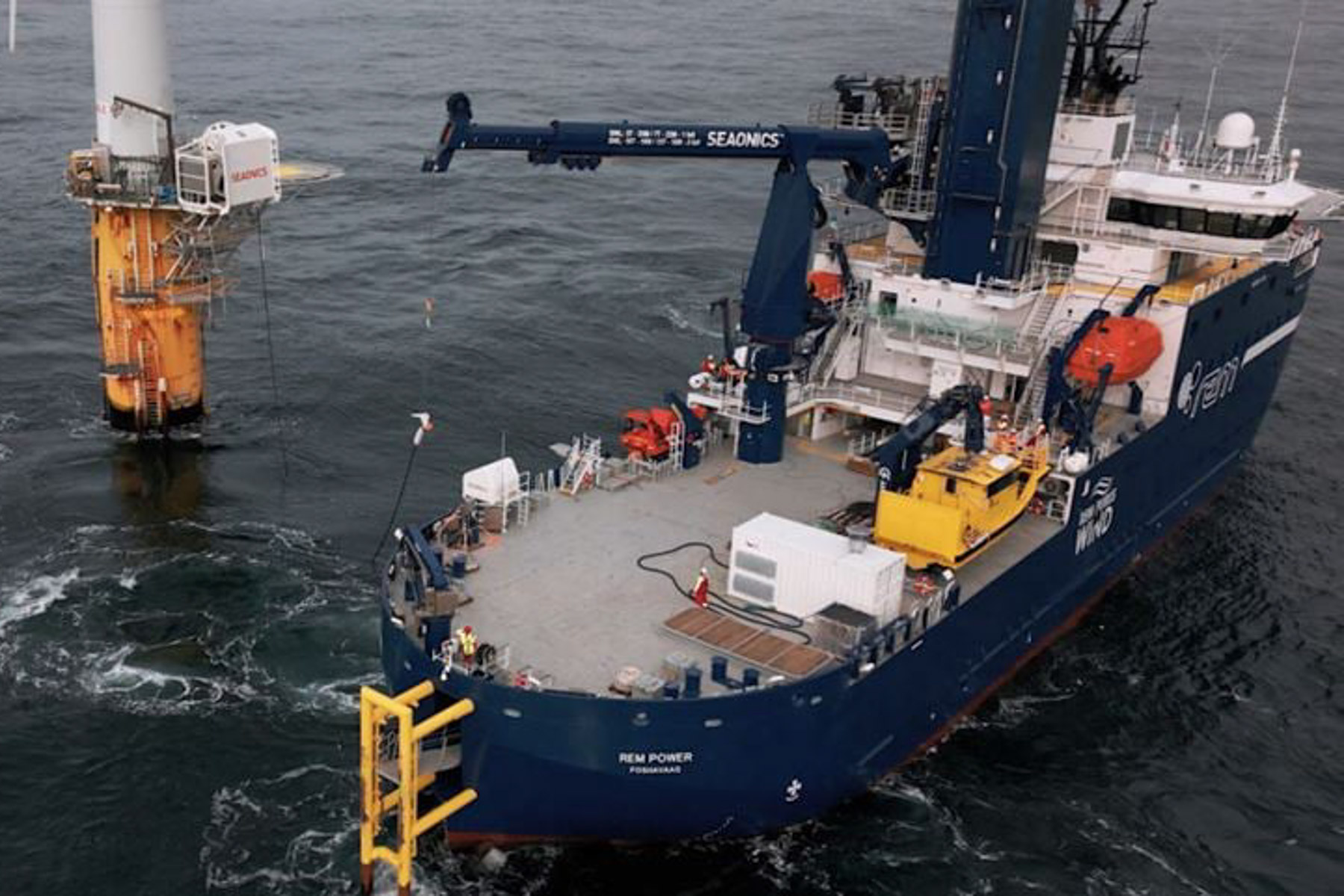
A Norwegian consortium led by SINTEF and shipbuilding company Vard is developing an inductive charging system designed to recharge battery-electric vessels at sea without using conventional charging cables.
The initiative, known as the Ocean Charger project, is focused on enabling electric service vessels operating at offshore wind farms to charge under harsh maritime conditions where cable-based systems can be difficult to use reliably.
Battery-electric service operation vessels, or SOVs, are increasingly being deployed in Europe to transport maintenance crews and equipment to offshore wind farms.
See also: Tharsis Secures EU Funding for Zero-Emission Container Ship Project
However, charging vessels offshore presents technical challenges due to saltwater exposure, corrosion and vessel movement in rough seas.
The Norwegian consortium said its solution uses wireless inductive charging technology to avoid direct electrical contact between charging components.
Although the system still relies on a mechanical docking mechanism, the current-carrying elements remain fully enclosed and protected from seawater and environmental exposure.
See also: DHL Expands Solar-Powered River Logistics in Berlin With Second Vessel
The developers compared the design to a “cup holder into which a cup is placed.” According to the project team, the charging coils on both the transmitting and receiving sides are encapsulated, reducing corrosion risks and lowering maintenance requirements.
The enclosed design is also intended to reduce the likelihood of physical damage if the charging connection is disrupted by heavy seas.
“We’ve looked at a lot of solutions here,” Giuseppe Guidi, senior research scientist at SINTEF, said in a statement.
See also: Boreal Orders 20 Candela Electric Hydrofoil Ferries for Norway Routes
“And we’ve tested a possible solution that works almost like a regular electrical contact,” Guidi added. “But we can avoid all the problems because we transfer the power inductively by encapsulating the plug itself in materials that can withstand just about anything.”
The charging system is currently in the laboratory testing phase. SINTEF and Vard said the existing prototype can transfer 50 kilowatts of power inductively, although the long-term goal is to scale the system to around five megawatts.
The developers said future versions of the charging interface would use a crane-like boom mechanism to establish the connection automatically.
See also: CATL Partners With COSL to Develop Electrified Offshore Support Vessels
The consortium believes the technology could eventually support a broader range of offshore applications beyond wind farm support vessels.
According to the researchers, offshore oil and gas platforms could also potentially use the charging technology to support electrified marine operations in the future.