


Morrow Batteries has initiated bankruptcy proceedings for itself and its subsidiaries, becoming the latest European battery manufacturer to struggle amid rising competition and financing pressures in the global battery sector.
The Norwegian company, which opened a lithium iron phosphate (LFP) battery cell facility in Arendal in 2024, said it would work with insolvency administrators to preserve parts of the business where possible.
Morrow Batteries had been among the relatively small number of companies producing battery cells in Europe before its insolvency filing. Industry observers have drawn comparisons with the collapse of Swedish battery manufacturer Northvolt, which also faced financing and production challenges.
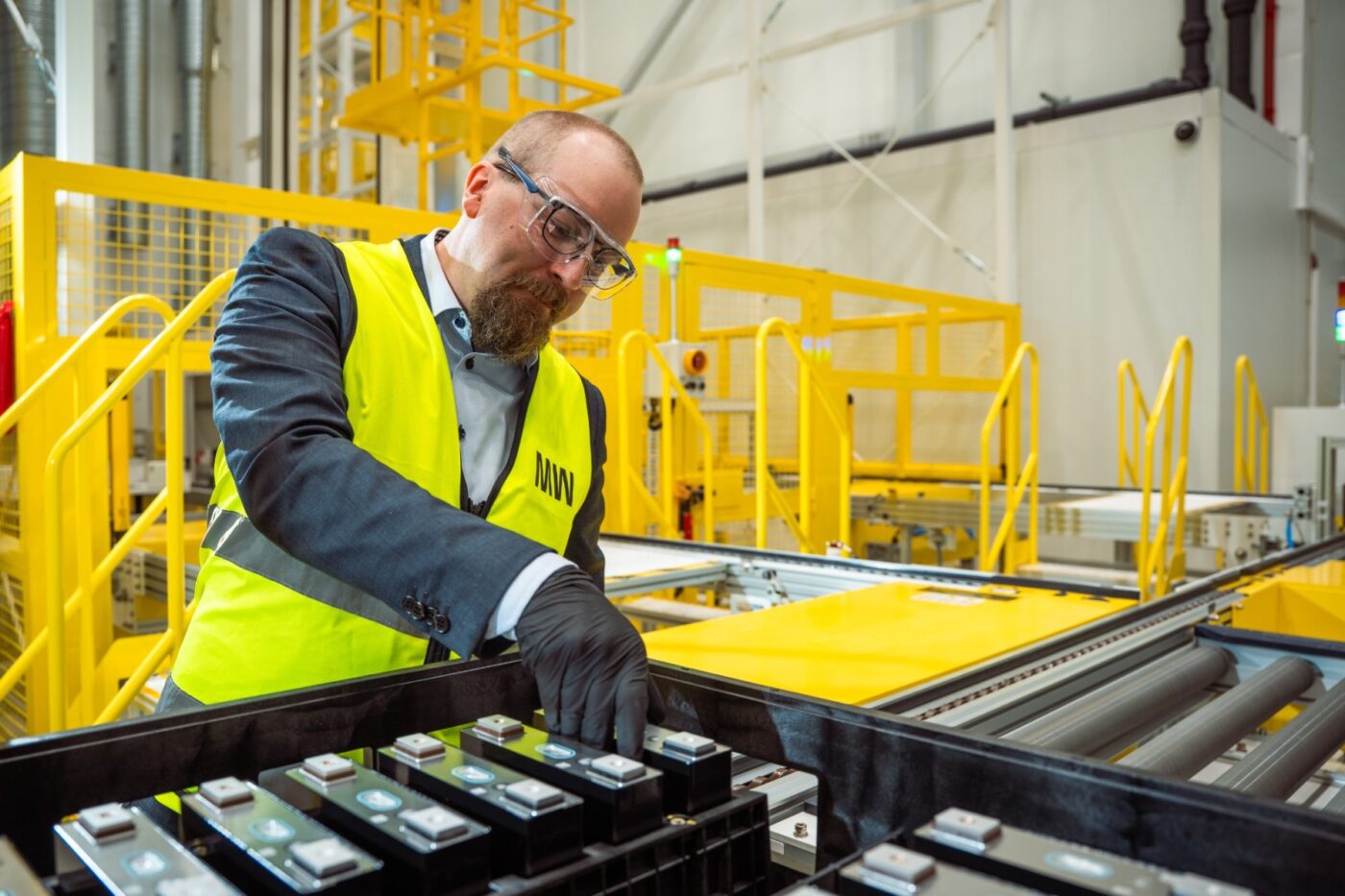
The Arendal factory produces prismatic LFP battery cells and has annual production capacity of around 1 GWh. That scale is significantly smaller than many large battery projects currently under development in Europe.
For comparison, PowerCo, the battery subsidiary of Volkswagen, has said its Salzgitter battery plant is expected to reach 20 GWh of annual capacity.
Morrow Batteries had originally planned to expand the Arendal site in four phases to a total capacity of 43 GWh. However, the company was unable to secure the financing required to execute those plans.
The manufacturer also faced difficulties increasing production at its existing facility, which reportedly had not reached full series production despite opening more than a year earlier.
In January 2026, the company stated it was prepared for series production and intended to pursue strategic partnerships and long-term investments to support technology validation and secure future supply agreements.
Explaining the insolvency filing, Morrow Batteries pointed to a combination of market and financial pressures.
“The company has been operating in an early and capital-intensive industrialization phase, while at the same time the global battery market has become more competitive with oversupply and resulting price pressure,” the company said.
It added that “increased capital costs, delays in the industrialization process, and a more restrained investment market have made it significantly more difficult to secure financing.”
Ann Christin Andersen, Chair of the Board of Directors at Morrow Batteries, said the company had attempted to secure a sustainable financial solution but was ultimately unsuccessful.
“Developments in the global battery market, combined with the capital requirements inherent in an early industrialization phase, have made this journey far more challenging than anticipated,” Andersen said.
“We have worked intensively to find a sustainable solution but have not succeeded in securing sufficient financing within the timeframe available,” she added.
The company said management will continue supporting the insolvency process and explore options that could allow parts of the business and technology operations to continue.
Morrow Batteries had previously received backing from industrial investors including Siemens as part of broader European efforts to establish a regional battery manufacturing industry capable of competing with Asian suppliers.