


Nissan has warned the British government that its Sunderland manufacturing plant could face closure if the United Kingdom is excluded from the European Union’s proposed “Made in Europe” industrial rules, according to a report by the Financial Times.
People familiar with the discussions told the newspaper that the Japanese carmaker has raised concerns that new EU requirements tied to the European Commission’s proposed Industrial Accelerator Act could threaten the viability of the UK facility. The legislation aims to strengthen EU industrial competitiveness and increase domestic value creation in strategic sectors including automotive manufacturing.
The Sunderland plant is one of the largest automotive manufacturing sites in the United Kingdom, employing around 6,000 workers directly. The broader supply chain connected to the facility supports approximately 30,000 additional jobs, according to the Financial Times.
The European Commission presented the Industrial Accelerator Act last week as part of a broader strategy to reduce reliance on external suppliers and strengthen the bloc’s industrial base amid geopolitical competition with the United States and China.
If adopted in its current form, the policy would require electric vehicles and other products to demonstrate a significant share of EU-based value creation in order to qualify for government subsidies or public procurement programs within EU member states.
The Commission has also proposed allowing participation from certain partner countries that maintain close economic ties or free trade agreements with the EU, provided that reciprocal market access is ensured for EU products. However, officials plan to assess such reciprocity on a sector-by-sector basis.
Nissan said it welcomed the Commission’s recognition of international partners within the European supply chain but raised concerns about aspects of the proposed framework.
“Using a different definition for corporate fleets and the small-car super credit creates confusion and adds unnecessary complexity for the industry,” the company said.
The UK government has previously lobbied against strict “Made in EU” requirements, emphasizing its close economic relationship with the bloc.
“The UK is a close and trusted European partner, committed to our shared security and economic co-operation. Now is the time to work together as like-minded partners to boost growth, resilience and economic security,” the government said.
The outcome of the EU’s sector review for the automotive industry could have significant implications for manufacturers that produce vehicles in the UK for export to the European market. Companies including Nissan, Jaguar Land Rover and Toyota rely heavily on the EU as their largest export destination.
Industry groups have warned that stricter value-content rules could pose serious challenges for UK-based manufacturing operations.
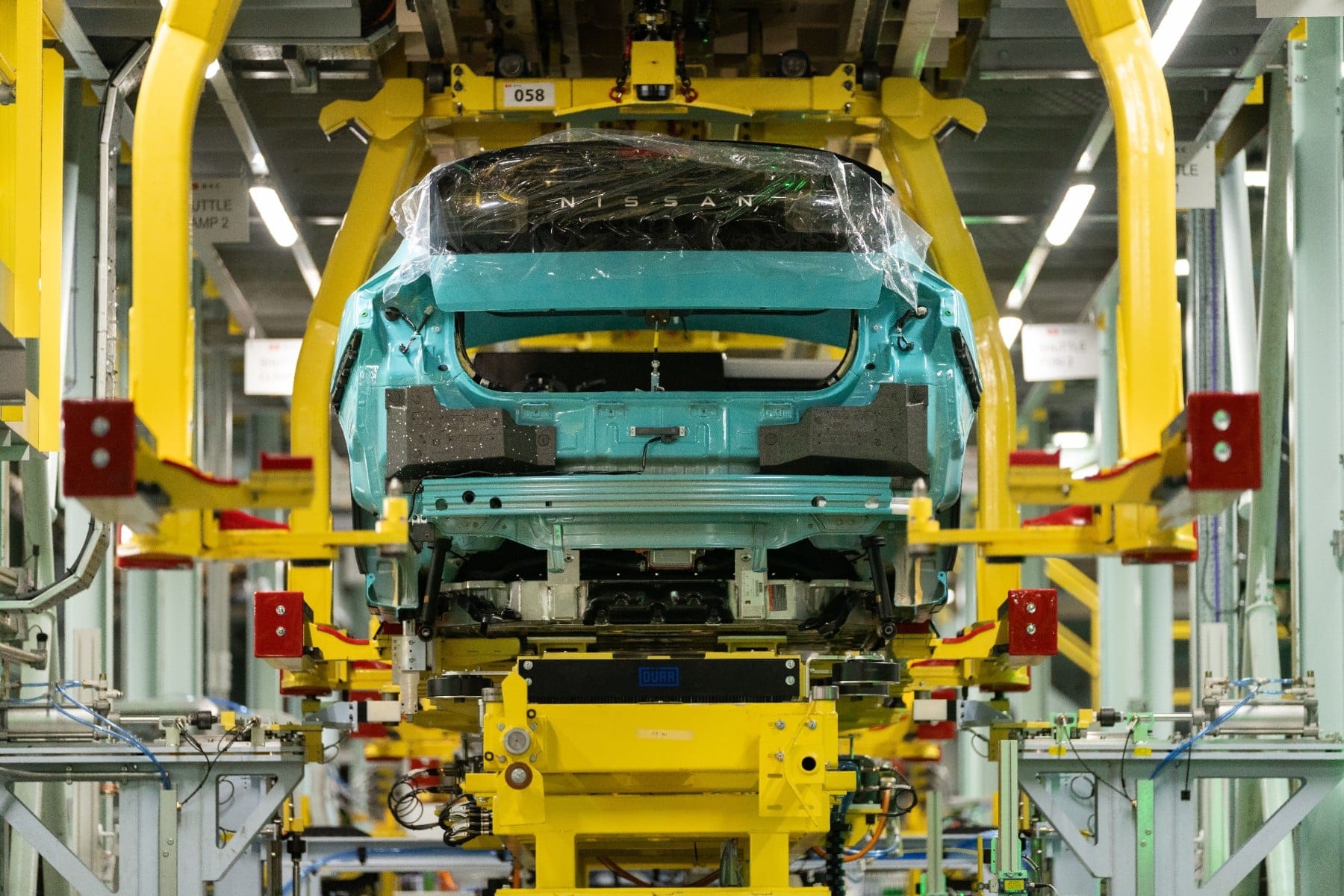
At its Sunderland facility, Nissan currently produces models including the Qashqai compact SUV and the next-generation version of its Leaf electric vehicle. The company has invested in upgrades to prepare the plant for future electric models, while battery supplier AESC has built a cell manufacturing facility nearby.
However, according to the Financial Times report, the plant is currently operating at roughly 30% capacity due to weaker vehicle demand.


