




Nio will fall short of its 2025 target for new battery swap stations in China as it reallocates resources toward a next-generation system, Chief Executive William Li said on Wednesday.
The company had originally aimed to install 2,000 new stations this year, later revising the goal to between 1,800 and 2,000. As of September 10, Nio had added 488 sites, or about 27% of its revised target.
“Mainly because we have to think about deploying the fifth-generation stations,” Li said, explaining that current fourth-generation stations cannot be upgraded to support the variety of battery sizes across Nio and its sub-brands, Onvo and Firefly.
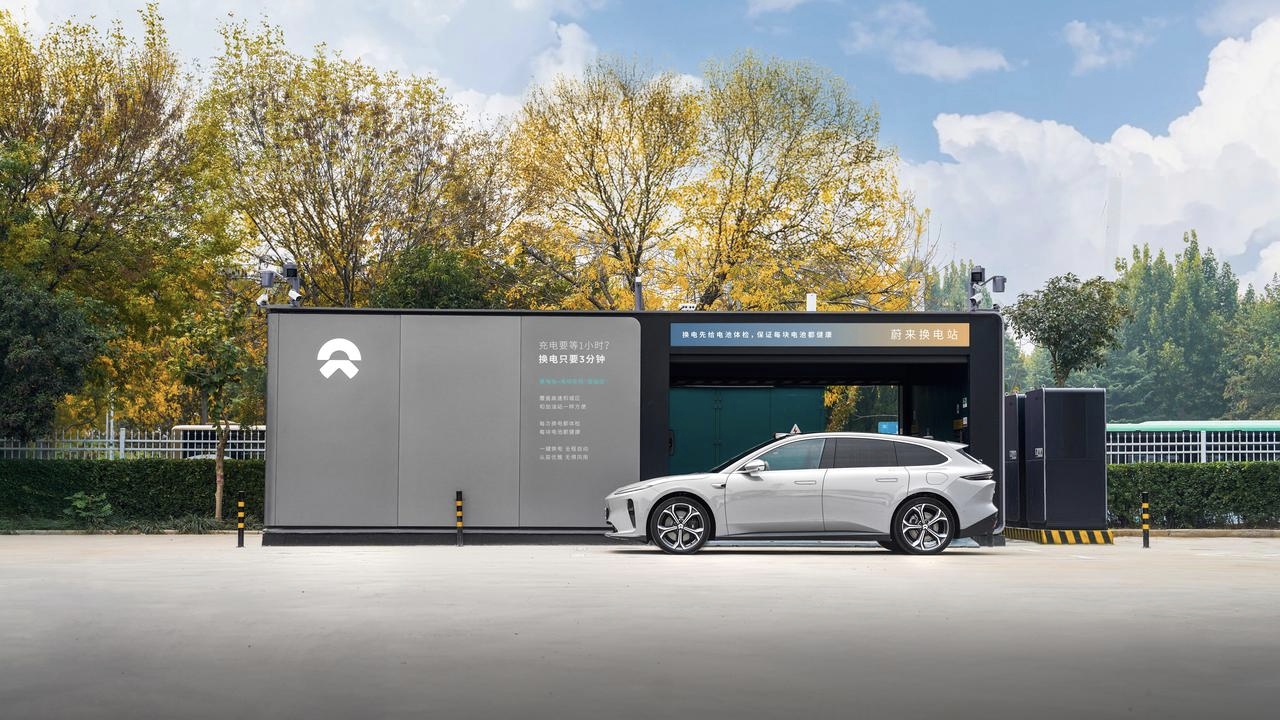
Nio’s fourth-generation swap stations can complete a battery swap in under three minutes, use LiDAR technology, store up to 23 battery packs, and provide up to 480 swaps per day. “Our fourth-generation stations cannot be modified to support different ones. The size of those battery packs is too different. So our fifth-generation station is a completely new design,” Li added.
The fifth-generation stations are expected to launch in the first quarter of next year and will be more flexible, store additional batteries, and complete swaps more quickly. Nio has also filed patents for modular stations that could expand capacity in high-density areas and has considered larger swap hubs in cities including Beijing, Shanghai, and Shenzhen.
Currently, Nio vehicles use 75, 100, 120, and 150 kWh packs, while Onvo EVs use 65 and 85 kWh batteries, and Firefly models use 42.1 kWh packs. “The fifth-generation battery swap station is a highly compatible and intelligent battery swap station, and it can be said to be the ultimate goal of our battery swap strategy,” said co-founder and president Lihong Qin at the Chengdu Auto Show.
Source: Eletric-vehicles.com


