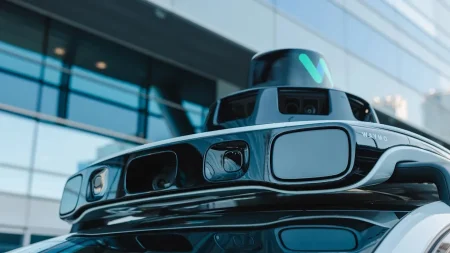





Nexar and remote driving company Vay have announced a partnership to integrate Nexar’s predictive artificial intelligence model, BADAS, into Vay’s remotely operated vehicle fleet, marking what the companies say is the first deployment of a real-world incident prediction system designed specifically for Remote Drivers.
Under the agreement, Nexar’s BADAS (Beyond ADAS) predictive model will be embedded into Vay’s remote driving platform. The system is designed to identify potential risks before incidents occur by analyzing real-world driving patterns using large-scale road data.
The integration will initially be deployed within Vay’s engineering fleet before expanding into commercial operations. Vay currently operates a remotely driven electric vehicle rental service in Las Vegas, where trained Remote Drivers control vehicles from a dedicated Remote Driving Center before handing control over to customers at their destination.
Traditional vehicle safety technologies typically respond after dangerous situations develop, the companies said. In contrast, BADAS aims to predict risk earlier by analyzing behavioral patterns captured from real-world traffic environments.
The model is trained using Nexar’s Real-World Data Engine, which collects more than 100 million miles of road data every month through a distributed network of connected vision sensors. This allows the system to identify emerging driving patterns and edge cases that may not appear in simulation-based datasets.
See also: Vay Teams Up with Bluedot to Support Charging for Remote-Driven EV Fleet
Nexar Chief Executive Officer Zach Greenberger said the system was designed to reflect real-world driving conditions.
“BADAS was built to understand how real people actually drive — not how simulations behave,” Greenberger said, adding that the partnership with Vay provides an opportunity to demonstrate predictive safety technologies in demanding real-world environments.
Vay Chief Executive Officer and co-founder Thomas von der Ohe said the integration supports the company’s safety-focused approach as its remote driving services expand.
“Safety is the foundation of everything we do,” von der Ohe said. He added that proactive technologies such as BADAS can help Remote Drivers better anticipate potential risks as the service grows.
See also: German Remote Driving Company Vay Expands Operations in Las Vegas
Vay’s operational model aims to address several factors commonly associated with traffic accidents. Remote Drivers operate from controlled environments designed to minimize distractions, while structured schedules reduce fatigue risks. Driving behavior is also continuously monitored within the system.
The partnership represents a new approach to road safety technology by applying predictive AI models to human-operated remote driving systems rather than fully autonomous vehicles.
Vay launched its remote driving service in Las Vegas in January 2024 and plans to expand the BADAS integration from its engineering fleet to commercial operations in future phases.