





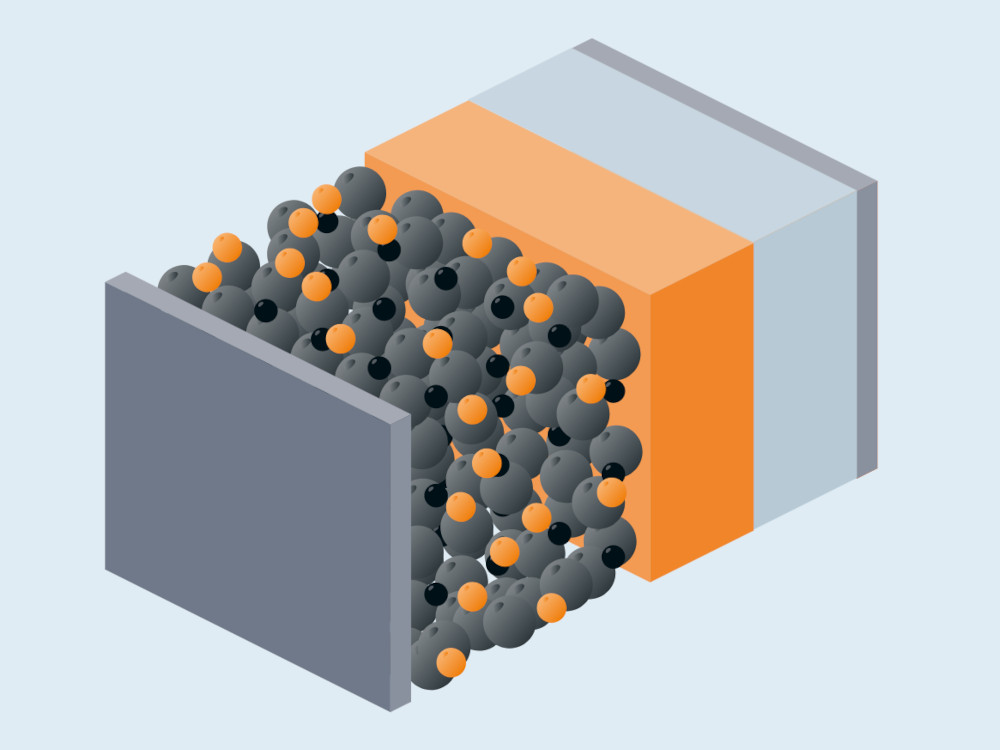
A collaboration between Chinese and German researchers has demonstrated the remarkable potential of solid-state lithium-sulfur batteries, showing superior electrical properties under laboratory conditions.
The innovative batteries promise to outperform current technologies, offering significant advancements in energy density, stability, and charging speed.
Unlike traditional lithium-ion batteries, solid-state lithium-sulfur batteries utilize a solid electrolyte composed of boron, sulfur, lithium, phosphorus, and iodine. This unique substance has a glass-like, non-crystalline structure with properties that mimic liquids.
This breakthrough design accelerates the chemical reactions in the battery, addressing the stability and slow electron exchange that have hindered the practical application of such technologies.
The research, conducted by teams from Peking University, the University of Giessen, and the Karlsruhe Institute of Technology, revealed impressive capabilities. The prototype battery achieved an energy density three times that of conventional lithium-ion cells and could endure up to 25,000 charge cycles, retaining nearly 80% capacity.
In optimal conditions, the battery could be charged in just 24 seconds without sacrificing energy density, while a 12-minute charging cycle extended its lifespan significantly. This durability translates to a daily charging capability of seven cycles for over a decade.
Despite these promising results, the technology remains in its experimental phase. The researchers emphasized that further development is required before the batteries can be scaled for commercial use and produced affordably. Nonetheless, the findings highlight the untapped potential in battery innovation, offering hope for more efficient and sustainable energy storage solutions in the future.
Source: Nature, ResearchGate


