




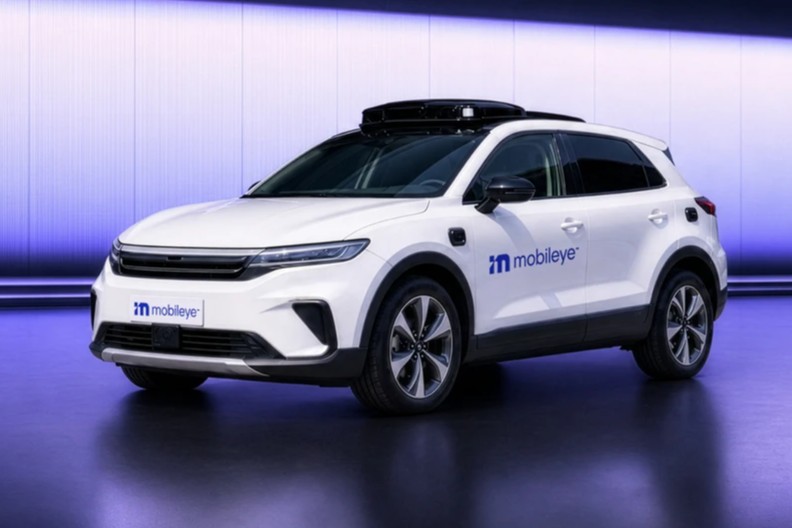
Mobileye has announced plans to establish a vertically integrated robotaxi business, marking a significant shift from its traditional role as a supplier of autonomous driving technology to becoming an operator of driverless mobility services.
The Israeli company said the new division will oversee the entire robotaxi value chain, including autonomous vehicle technology, fleet management, passenger services and mobility operations.
Expanding Beyond Technology Supply
Founded in 1999, Mobileye has become one of the world’s leading developers of autonomous driving systems.
The company’s technology is already used in several autonomous mobility projects, including the fully autonomous Volkswagen ID. Buzz AD deployed by MOIA and robotaxi initiatives involving Holon and Verne.
Until now, Mobileye’s business model has focused primarily on providing hardware and software platforms to automakers and mobility providers.
The new strategy will see the company move directly into operating autonomous ride-hailing services under its own brand.
First US Launch Planned for 2027
Mobileye plans to launch its first commercial robotaxi operation in a US city in 2027, although the company has not yet disclosed the location.
The service will combine Mobileye Drive, the company’s autonomous driving platform, with the mobility technology developed by its subsidiary Moovit.
The initial deployment will consist of approximately 100 autonomous vehicles.
According to the company, the fleet will be introduced gradually throughout the year to validate operations, customer experience and service performance under fully autonomous conditions.
Ambitious Expansion Targets
Following the pilot phase, Mobileye intends to rapidly scale the business.
The company has outlined plans to expand its autonomous fleet to approximately 17,000 vehicles over the next five years.
The expansion would position Mobileye among the largest robotaxi operators globally and place it in direct competition with established autonomous mobility providers.
Integrated Mobility Platform
Mobileye describes the initiative as a vertically integrated robotaxi platform.
Under this model, the company will manage vehicle architecture, sensor systems, autonomous driving software, mobility services and fleet operations within a single business structure.
The company believes this approach offers an alternative to existing robotaxi business models that often rely on multiple external technology and service providers.
“The robotaxi revolution has only just begun, and its potential for transforming how we travel around the world continues to increase,” said Amnon Shashua, founder and chief executive officer of Mobileye.
“As interest in autonomous mobility accelerates, the industry has become increasingly dependent on a small number of technology providers and business models. We believe there is an opportunity for a new approach—one built on deep autonomous-driving expertise, strong industry partnerships, and proven capabilities across the mobility ecosystem.”
Partnerships Remain Central
Although Mobileye will operate its own services, the company said it will continue collaborating with external partners across the autonomous mobility ecosystem.
These partnerships will include vehicle manufacturers, fleet operators, integration specialists and technology providers that support deployment and operations.
The company said this network of partners will help create a scalable platform for future autonomous transportation services.
Moovit Strengthens Mobility Offering
A key component of the strategy is Moovit, Mobileye’s mobility platform subsidiary.
Moovit currently helps users plan and access transportation services across more than 3,500 cities worldwide.
According to the company, the platform serves over 1.7 billion users across 112 countries and supports 45 languages.
By integrating Moovit with Mobileye Drive, the company aims to create a seamless user experience spanning trip planning, ride booking and autonomous transportation.
Growing Robotaxi Competition
The announcement reflects increasing competition within the autonomous mobility sector as technology providers seek to capture a larger share of the transportation value chain.
Rather than limiting itself to supplying autonomous driving technology, Mobileye is positioning itself as both a technology developer and a mobility operator.
The company believes the combination of autonomous driving expertise, mobility software and operational control can accelerate the deployment of commercial robotaxi services while creating new revenue opportunities beyond technology licensing.


