


Chinese autonomous driving technology company MINIEYE has signed a memorandum of understanding with ewpartners in Hong Kong to jointly enter the Middle East market, with initial plans focused on deploying autonomous logistics vehicles in Saudi Arabia, the company said.
The agreement marks MINIEYE’s first overseas expansion of its Level 4 autonomous driving business and its official entry into the Middle East. Under the partnership, the two sides plan to explore large-scale deployment of autonomous logistics vehicles, targeting up to 1,000 units across the region before 2030, according to a statement posted on MINIEYE’s WeChat account on Jan. 20.
See also: MINIEYE Partners With New Gonow Group to Develop 800 Autonomous Logistics Vehicles
The collaboration comes as Saudi Arabia accelerates investment in intelligent transport and logistics systems under its Vision 2030 economic diversification program. The partners said rising demand for automated and smart mobility solutions in the region has created favorable conditions for commercial deployment of autonomous vehicles.
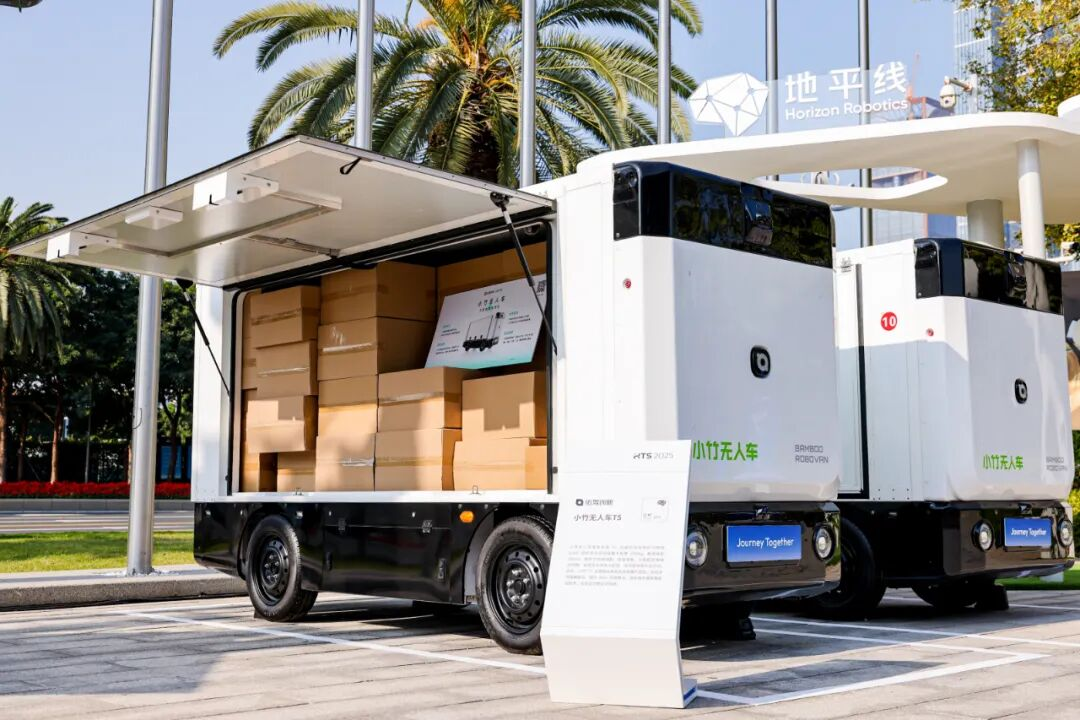
MINIEYE will contribute its fully self-developed Level 4 autonomous driving stack and introduce its Xiaozhu Robovan in phases to the Saudi market. The Robovan is designed for commercial applications such as urban parcel delivery and retail distribution and is based on the company’s experience in mass-produced, factory-installed intelligent driving systems for passenger vehicles.
See also: GAC AION And DiDi Deliver First Batch Of R2 Robotaxis, Clear Road Testing In Guangzhou
To address regional operating conditions, including extreme heat and frequent sandstorms, the companies said the vehicles will undergo targeted adaptations to ensure stable and reliable performance in Saudi Arabia’s environment.
ewpartners, an investment firm with experience in cross-border projects between China and Saudi Arabia, will support pilot projects and deployment by leveraging its local network and familiarity with regulatory and policy frameworks. The firm will also assist with compliance and localization to accelerate market entry.
The partnership is expected to cover a range of logistics and mobility use cases, with the two companies aiming to align autonomous technology deployment with local operational requirements to improve efficiency and service performance across the region.


