



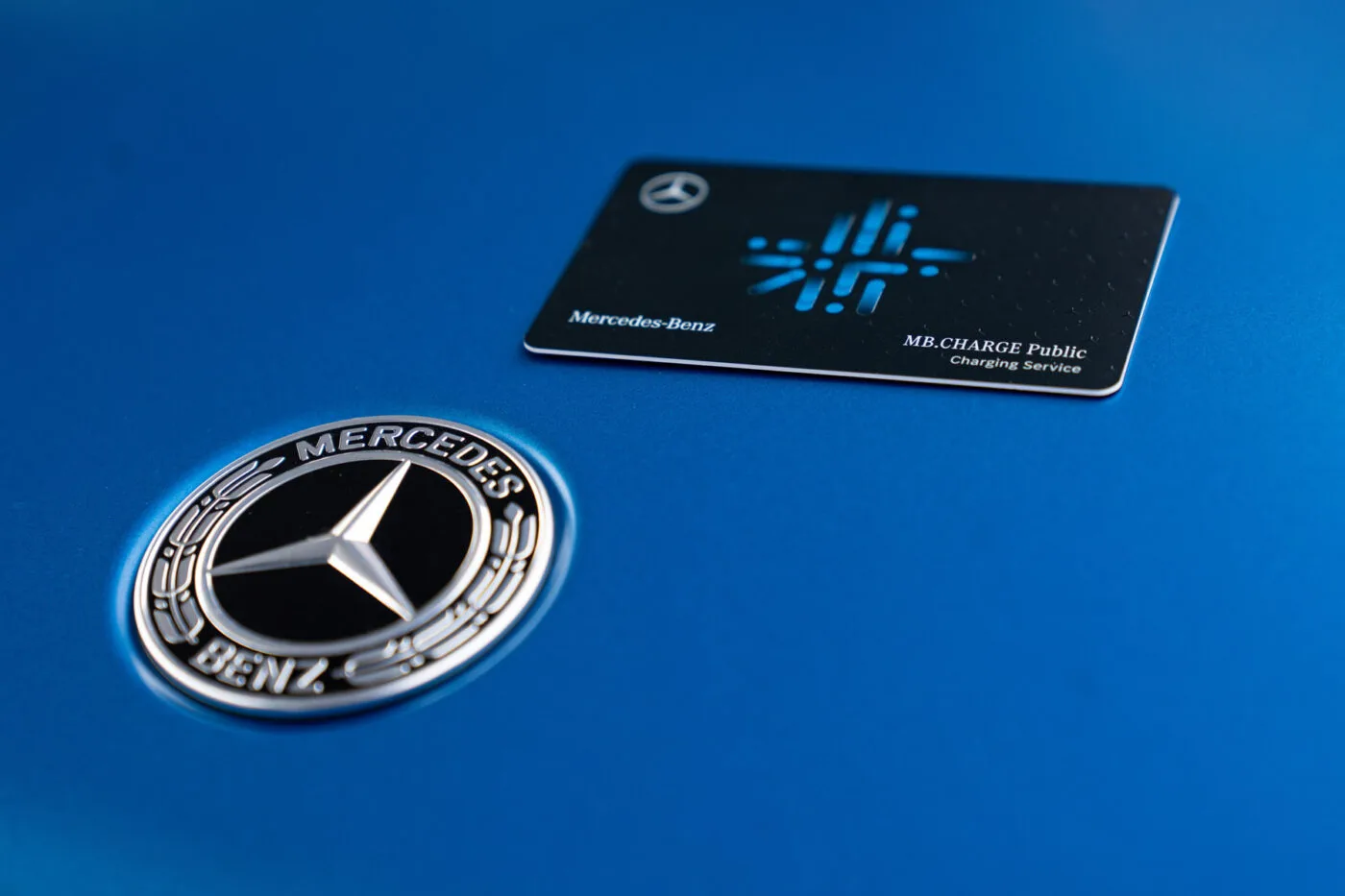
Mercedes-Benz will overhaul its MB.CHARGE Public service from December 1, 2025, replacing most fixed per-kilowatt-hour (kWh) tariffs with flexible, location-based pricing across Europe. The move aligns with a broader industry trend as manufacturers shift toward variable rates tied to individual charging point operators.
The company’s current M and L subscription plans — which offer fixed AC and DC rates in exchange for monthly fees — will transition to flexible pricing that varies by charging point. The existing fixed structure provided predictability for occasional and frequent users, but Mercedes says the revised model will introduce broader discounts and more partner networks. As noted in the original description of the changes, “customers will have to check the app or their vehicle before charging to find out exactly how much electricity will cost at that charging point.”
See also: Mercedes-Benz to Add 1,000 kW Chargers at New Hubs, First Rollout in 2026
Under the new structure, the M tariff will continue with a €4.90 monthly fee, while the L tariff will drop from €12.90 to €9.90 per month. Both plans will lose fixed AC/DC pricing and instead offer percentage-based discounts on the S tariff — 10% for M and 15% for L. Users will need to verify rates in advance to avoid unexpected price changes.
Some exceptions remain. Ionity, the fast-charging joint venture, will retain fixed pricing within MB.CHARGE. Rates will fall to €0.49/kWh for M-tier customers and €0.44/kWh for L-tier customers, compared with the current €0.59/kWh and €0.49/kWh respectively. Rates within the Mercedes-Benz Charging Network will stay at €0.39/kWh.
Mercedes will also introduce a new “Preferred Partner Network,” featuring major European operators selected for charging capacity and reliability. Charging at these stations will cost €0.55/kWh under the M plan and €0.49/kWh under the L plan, plus a €0.05-per-minute fee after 90 minutes. The service is built on Digital Charging Solutions’ (DCS) white-label platform, and Mercedes is expected to extend DCS’s “Preferred Partner Program” across its charging ecosystem.
See also: Mercedes-Benz to Launch Bidirectional Charging Service from 2026
Access issues persist in Germany, where MB.CHARGE remains unavailable at municipal utility charging points. The standoff stems from a contractual dispute between DCS and Smartlab, which manages access for more than 300 municipal utilities under the “ladenetz.de” consortium. DCS has described Smartlab’s offer as “economically unacceptable,” leaving a significant portion of the German public network off-limits for now.


