

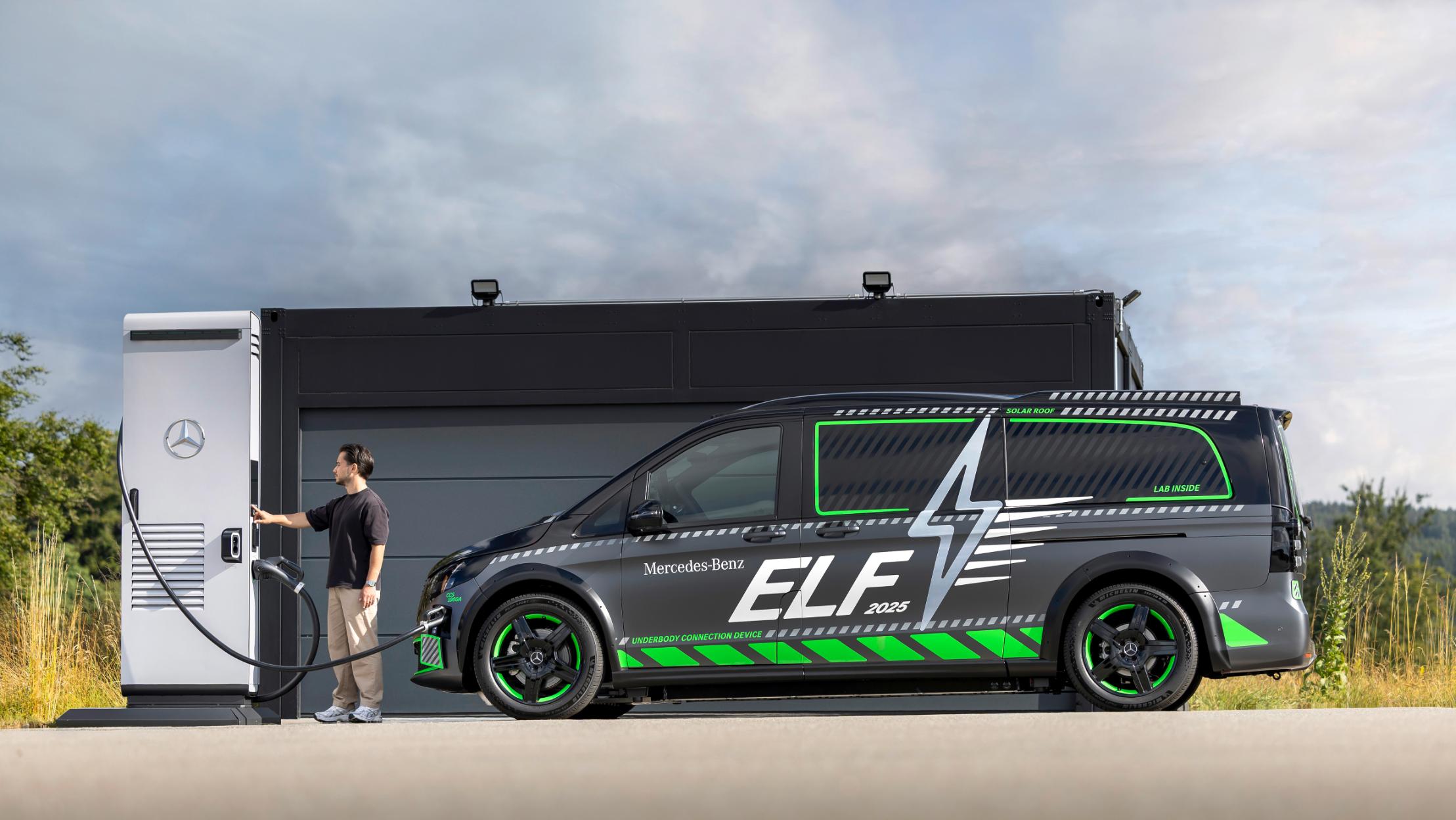
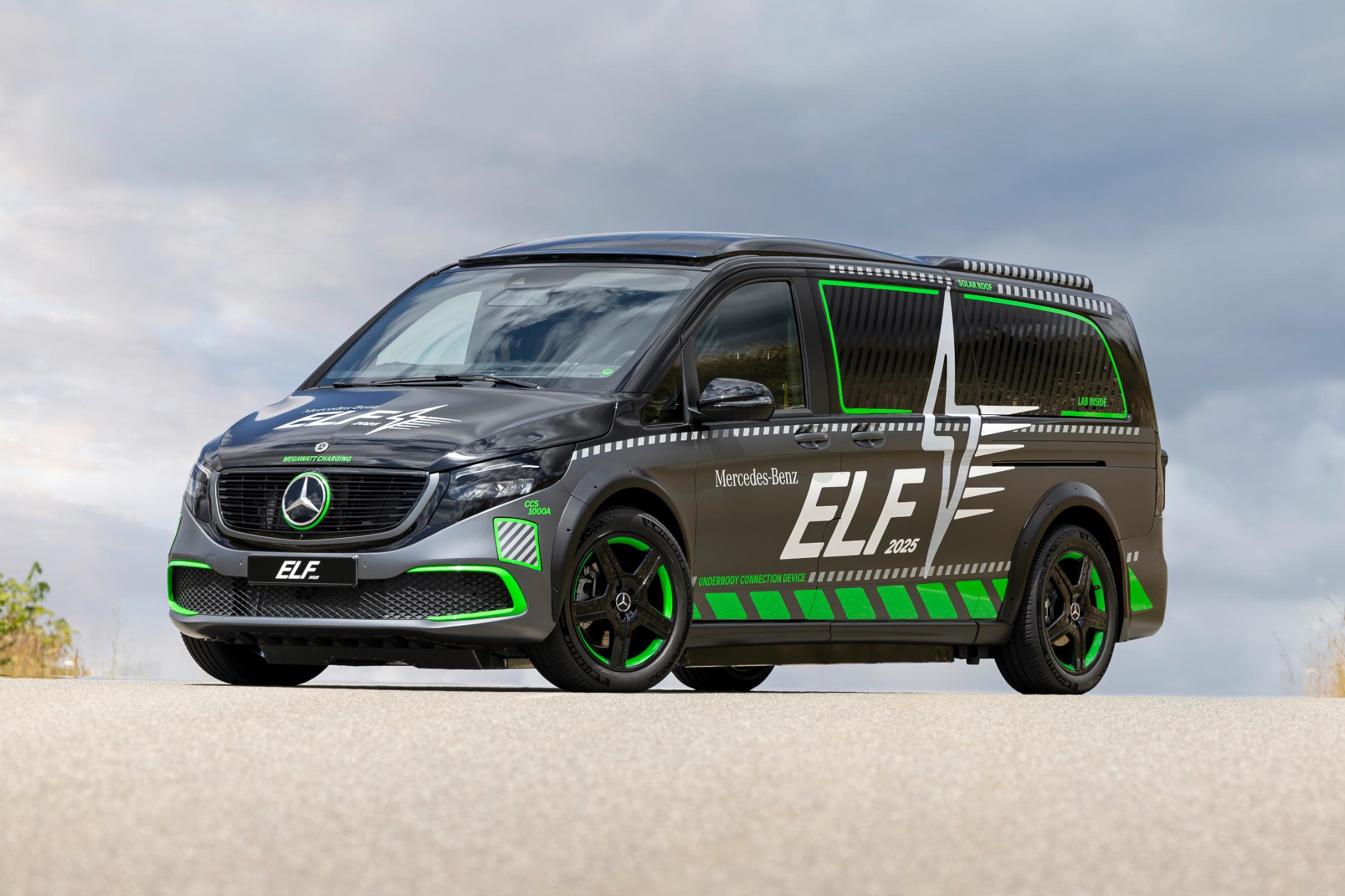
Mercedes-Benz is testing an experimental charging vehicle, dubbed ELF, designed to explore next-generation electric vehicle (EV) charging technologies ranging from ultra-fast and bidirectional systems to inductive and automated conductive charging. The prototype electric van serves as a mobile testing platform combining vehicle innovation with infrastructure development to create a seamless and intelligent charging experience.
The ELF experimental van integrates nearly every emerging charging technology currently under industry discussion, including Combined Charging System (CCS), Megawatt Charging System (MCS), bidirectional AC and DC charging, as well as cable-free inductive and automated conductive charging. Mercedes-Benz said the project aims to redefine the limits of EV charging capabilities while preparing for future commercial applications.

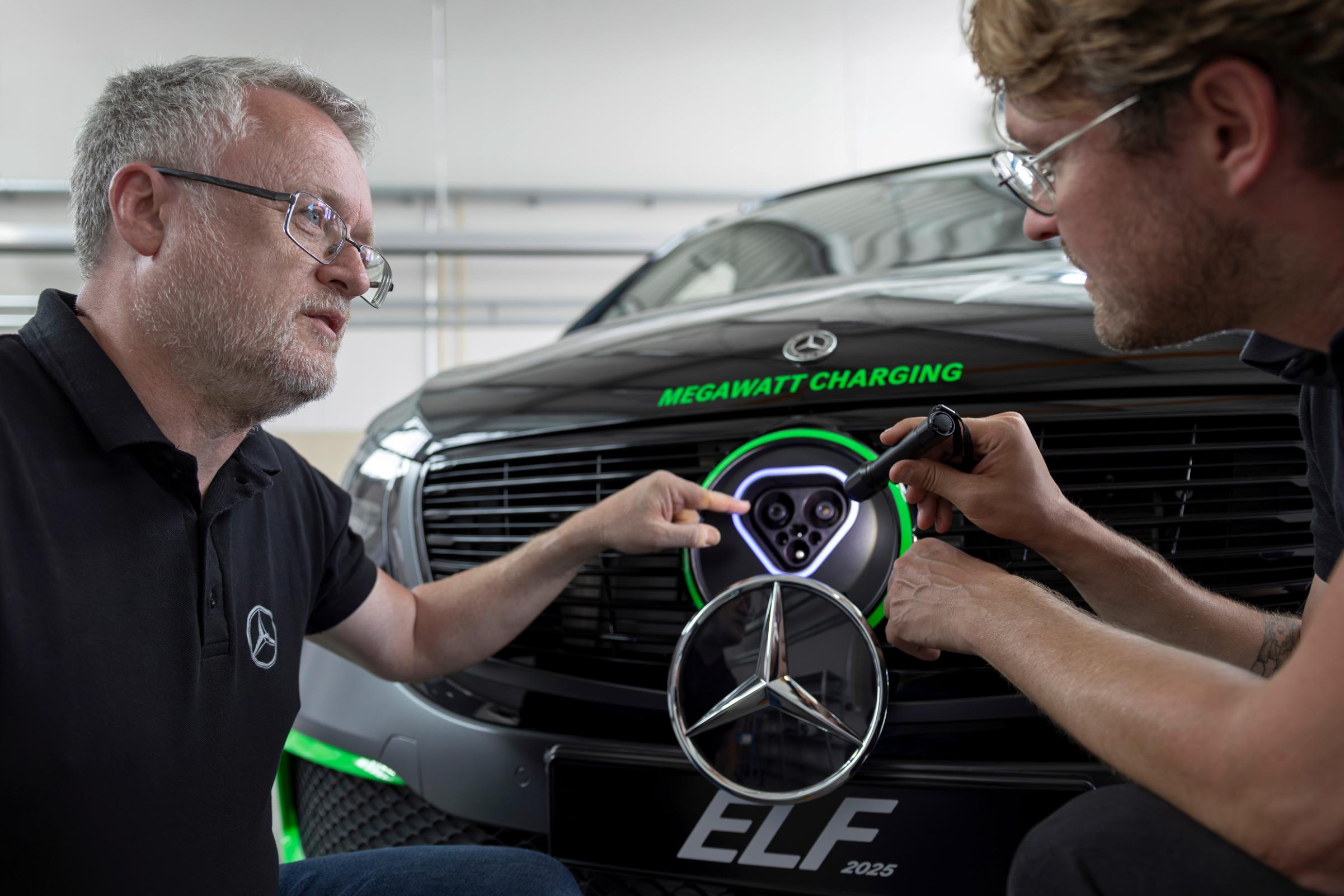
“With ELF, we are bringing together every major charging concept — from megawatt-level performance to bidirectional energy management — into one real-world test vehicle,” a Mercedes-Benz spokesperson said. “This allows us to better understand how next-generation technologies can be integrated efficiently and safely into future electric vehicles.”
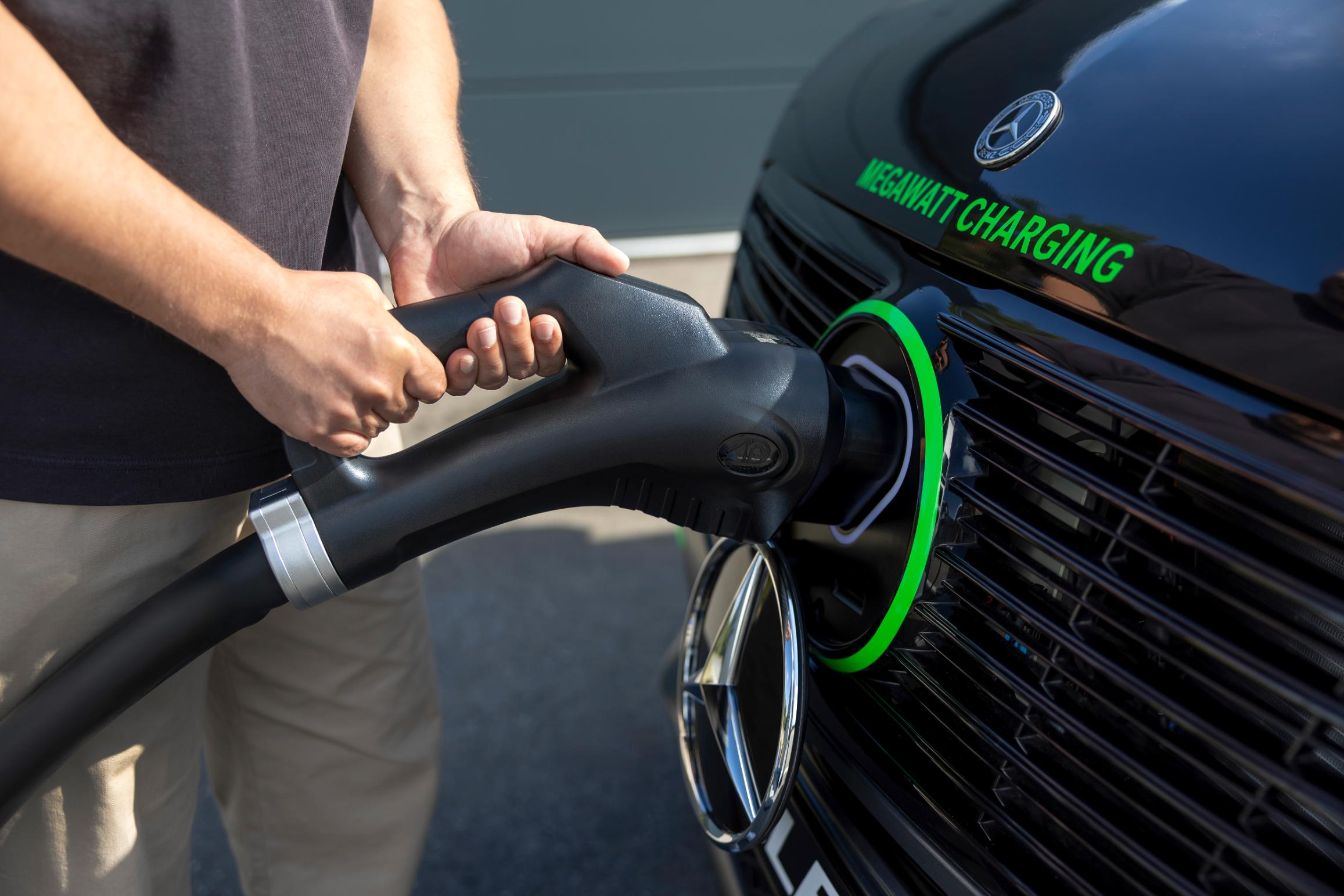
The ELF van’s CCS system, developed in cooperation with Alpitronic, can reach a charging capacity of up to 900 kW — more than double the output of today’s fastest public chargers. During testing, the vehicle charged a 100 kWh battery in about ten minutes using a prototype system capable of transmitting currents of up to 1,000 amps through a specially cooled CCS cable. Mercedes-Benz said the components used, including the battery, charge control, and hardware, are already close to production readiness.
See also: Mercedes-Benz Partners With Athos Silicon to Advance Chiplet Technology for Autonomous Driving

In parallel, the project also evaluates the Megawatt Charging System, originally designed for electric trucks and buses. While not intended for immediate use in passenger vehicles, MCS testing provides data on the thermal and performance limits of high-voltage components under extreme conditions, offering insights for future long-distance electric transport solutions.
Another major focus of ELF is bidirectional charging, which allows the vehicle to feed energy back into the grid or a home network. Unlike current production models that typically support either AC or DC bidirectional operation, ELF can perform both. This dual-mode capability enables applications such as vehicle-to-home (V2H) energy sharing and vehicle-to-grid (V2G) support, enhancing flexibility for energy management. Mercedes-Benz plans to roll out its first bidirectional charging services in Germany, France, and the United Kingdom.
See also: Mercedes-Benz Taps Low-Carbon Aluminium to Cut EV Production Emissions

The automaker is also experimenting with wireless inductive charging, which transfers power through a pad embedded in the ground. With a current capacity of 11 kW AC, the technology could simplify charging for private users, fleets, and autonomous vehicles. Alongside this, Mercedes-Benz is testing automated conductive charging, which uses an underbody connector and ground plate to establish a direct physical connection — offering the same 11 kW AC output without requiring manual cable handling.
By combining these systems within the ELF platform, Mercedes-Benz seeks to identify the most efficient and user-friendly charging technologies for future electric vehicles. The company said findings from the project will contribute to upcoming production models and its broader electrification strategy across passenger and commercial segments.