
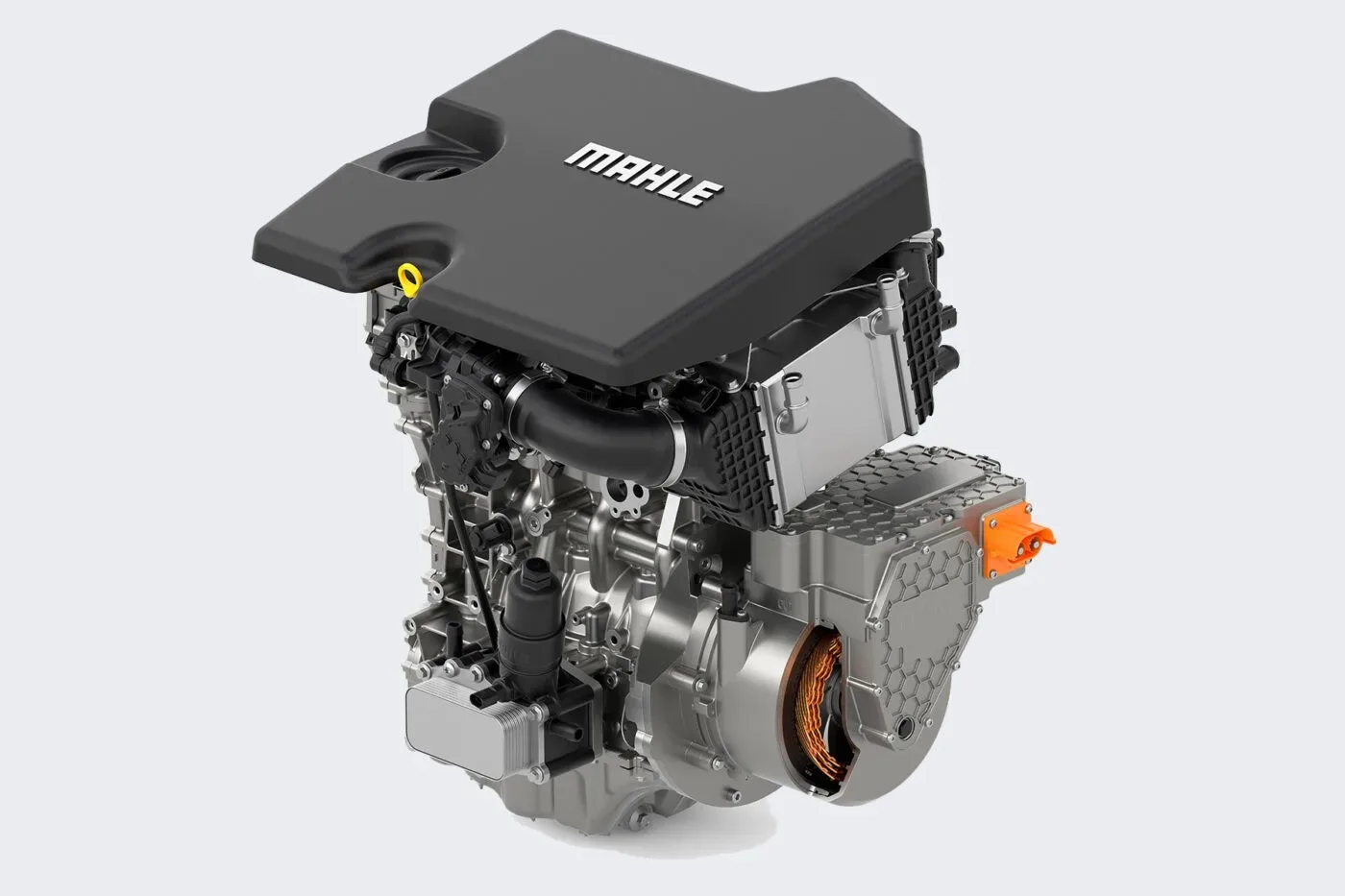
German automotive supplier Mahle has introduced a new range extender system with a rated continuous output of 85 kilowatts, ahead of its official debut at the IAA Mobility show in September. The system combines a high-voltage generator and compact combustion engine, aiming to enhance electric vehicle range while extending the viability of internal combustion technologies.
The 800-volt generator, a permanently excited electric machine with integrated cooling, achieves a peak efficiency of more than 97% and a power density exceeding 50 kW per litre. According to Mahle, these figures pertain to the electric generator, while the accompanying petrol engine achieves 42% thermal efficiency. The company says the system could allow vehicles to reach up to 1,350 kilometres of WLTP range, depending on model and battery configuration.
“It is small, lightweight, easy to integrate and conserves resources – Mahle’s range extender is a convincingly compact, efficient power pack for drive systems,” said Marco Warth, Head of Corporate Research and Advanced Engineering.
In addition to the range extender, Mahle will present a new thermal management module designed to improve energy efficiency in EVs. The compact module incorporates an integrated heat pump and is engineered to support both current refrigerant R1234yf and future-compatible R290 (propane) with minimal system adjustments. It reduces the number of required coolant pumps from four to three and aims to maintain optimal temperatures across drivetrain components and the cabin.
Mahle’s broader strategy, titled “Efficiency³,” includes innovations across three focus areas: electrified drive systems, sustainable combustion technologies, and thermal management. CEO Arnd Franz has called for more policy flexibility in Europe to ensure continued innovation across all propulsion types, including hybrid and range extender systems.
“We have a clear commitment to climate protection. And to e-mobility. We are ready,” Franz said, advocating for technology neutrality and a more inclusive approach to future CO₂ regulations in the region.