

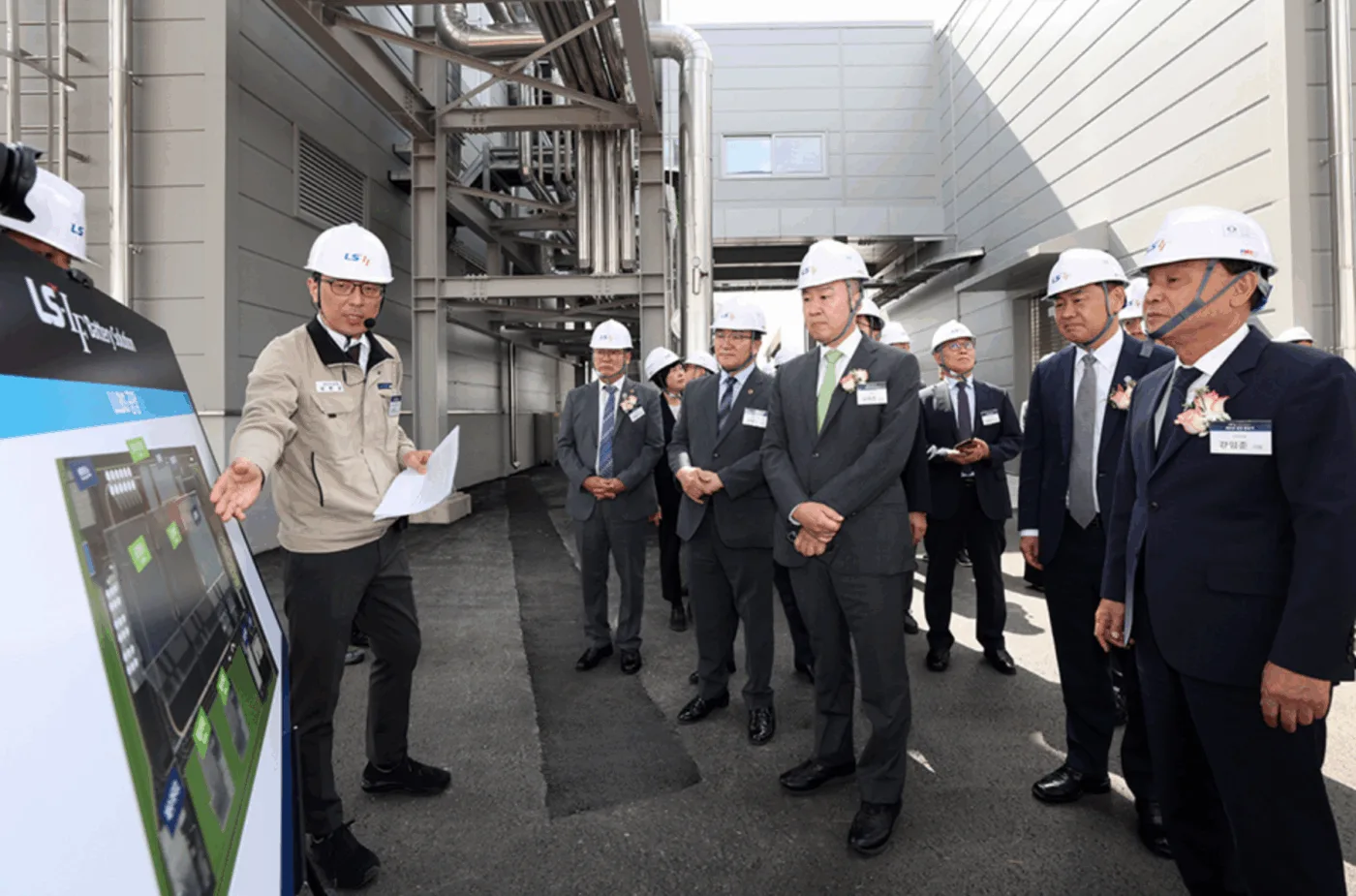
LS-L&F Battery Solutions (LLBS), a joint venture between LS Group and L&F, has completed construction of its battery precursor material plant in Gunsan, South Korea, marking a key step toward reducing the nation’s reliance on Chinese battery materials. Trial production has begun at the new facility located in the Saemangeum National Industrial Complex in North Jeolla Province.
The plant will produce precursors — intermediate compounds made from nickel, cobalt, manganese, and aluminium — used to manufacture cathode materials for electric vehicle batteries. According to LLBS, the new facility completes a domestic value chain for battery materials, enabling production “from nickel sulfate to precursor to cathode material using purely domestic technology.”
See also: CATL Expands Global Partnership with Maersk to Boost Supply Chain Efficiency and Electrification
The development is part of a broader ecosystem led by LS Group. Its affiliate, LS MnM, is currently constructing a nickel sulfate plant in Saemangeum, expected to produce 62,000 tons annually from 2029. LS MnM’s output will feed LLBS’s precursor production, which will in turn supply cathode manufacturer L&F — a key Tesla supplier.
LS Group Chairman Koo Ja-eun highlighted the strategic importance of the project, stating: “Our aim is to reduce reliance on China for the precursor market, which accounts for 80% of the global total, and to lead the global supply chain with purely domestic technology. The core hub in Saemangeum will become the heart of Korean battery materials.”
See also: Chinese Scientists Develop Polymer to Boost Solid-State Battery Performance
Koo added that favourable market conditions are emerging for South Korean battery firms expanding into the U.S. market amid a shift away from Chinese materials. “Riding this wave of change, LS-L&F Battery Solution will not only play a pivotal role in LS Group’s new growth businesses but also spearhead the domestication of the battery industry value chain,” he said.
LLBS has received full operational approval for its facilities as of April 2025 and aims to scale production rapidly — targeting 20,000 tonnes of precursors by 2026, 40,000 tonnes by 2027, and 120,000 tonnes by 2029. Once fully operational, the plant is expected to supply enough materials for approximately 1.3 million electric vehicles.