

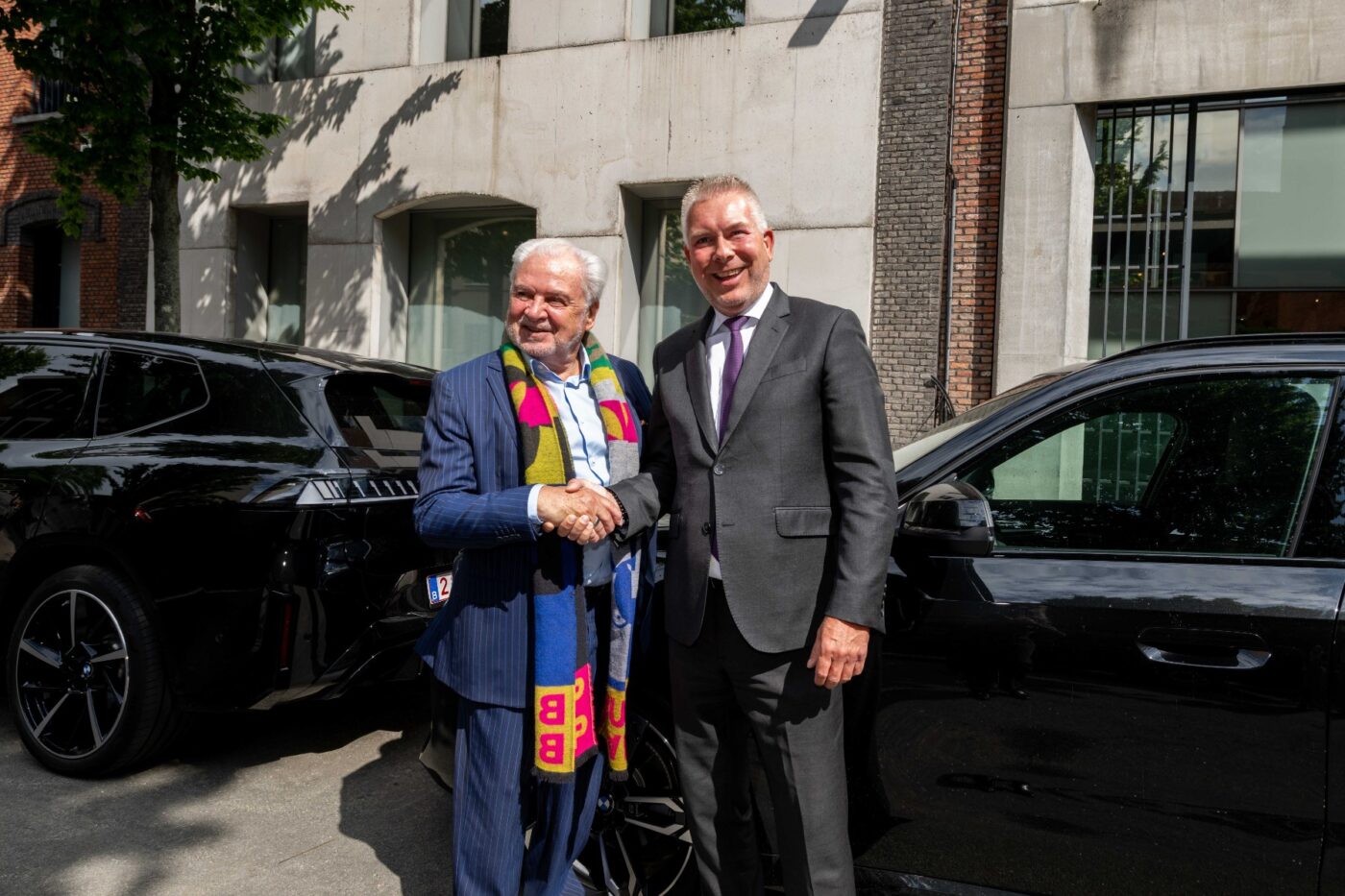
Belgian logistics and industrial services company Katoen Natie has placed an order for more than 1,000 electric vehicles from BMW Group as part of a broader strategy to electrify its corporate fleet and strengthen its sustainability efforts.
According to BMW Group, the agreement represents the largest single order for electric company cars from one manufacturer in Belgium to date.
The vehicles are expected to be delivered and deployed across Katoen Natie’s Belgian operations by the end of 2027, replacing existing internal combustion engine models.
Focus on BMW and Mini Electric Models
While BMW has not disclosed a detailed breakdown of the order, the fleet is expected to consist primarily of the BMW iX1 and the all-electric Mini Countryman.
Future models based on BMW’s upcoming Neue Klasse platform are also expected to form part of the agreement, including the BMW iX3 and the recently announced BMW i3.
Neither company disclosed the total size of Katoen Natie’s passenger vehicle fleet or the percentage that the new electric vehicles will represent once deliveries are completed.
The logistics company has also not announced a timeline for achieving a fully electric passenger vehicle fleet.
Part of a Broader Sustainability Strategy
Katoen Natie said the vehicle transition is linked to a wider energy and sustainability programme that includes renewable power generation, battery storage systems, and intelligent energy management technologies.
The company already generates electricity from solar and wind installations across its operational sites and plans to integrate the new electric vehicle fleet into this energy ecosystem.
“For us, electrification is not a standalone project but a logical next step within a broader energy and sustainability strategy,” said Joris Verheulpen, Chief Procurement Officer at Katoen Natie.
“We are building an integrated system where vehicles, energy production, storage, and smart control reinforce each other. The choice for BMW fits into this approach: scalable, technologically grounded, and focused on the long term.”
Charging Infrastructure Expansion Planned
To support the growing electric fleet, Katoen Natie plans to expand charging infrastructure across its facilities in Belgium.
The company intends to deploy a network of charging stations that will be managed through intelligent systems capable of coordinating charging activity with available renewable energy production and local grid capacity.
Further technical details regarding the charging network have not yet been disclosed.
Existing Partnership Deepens
The fleet agreement builds on an existing relationship between the two companies.
Katoen Natie already works with BMW within the automotive supply chain in Thailand, where it provides logistics services for the automaker’s production operations.
The latest agreement is expected to deepen cooperation in areas including fleet electrification, charging infrastructure, digital mobility services, and logistics solutions.
“Mobility is truly sustainable only when we look at the entire value chain,” said Alexander W. Wehr, CEO of BMW Group Belux.
“Katoen Natie is particularly well-positioned for this, as the company takes a holistic approach to the interplay between energy generation, storage, and consumption.”
Growing Demand for Electric Corporate Fleets
The announcement follows another major fleet electrification deal for BMW Group in Belgium.
In December, professional services firm PwC Belgium added 723 electric vehicles to its fleet, including 423 BMW iX1 models and 300 Mini Aceman vehicles.
At the time, BMW said 90% of PwC Belgium’s fleet consisted of electrified vehicles, with fully electric models accounting for 40%.
The latest order from Katoen Natie highlights the growing role of corporate fleet electrification in Europe’s transition toward zero-emission mobility, particularly among companies seeking to combine vehicle electrification with broader renewable energy and sustainability initiatives.