



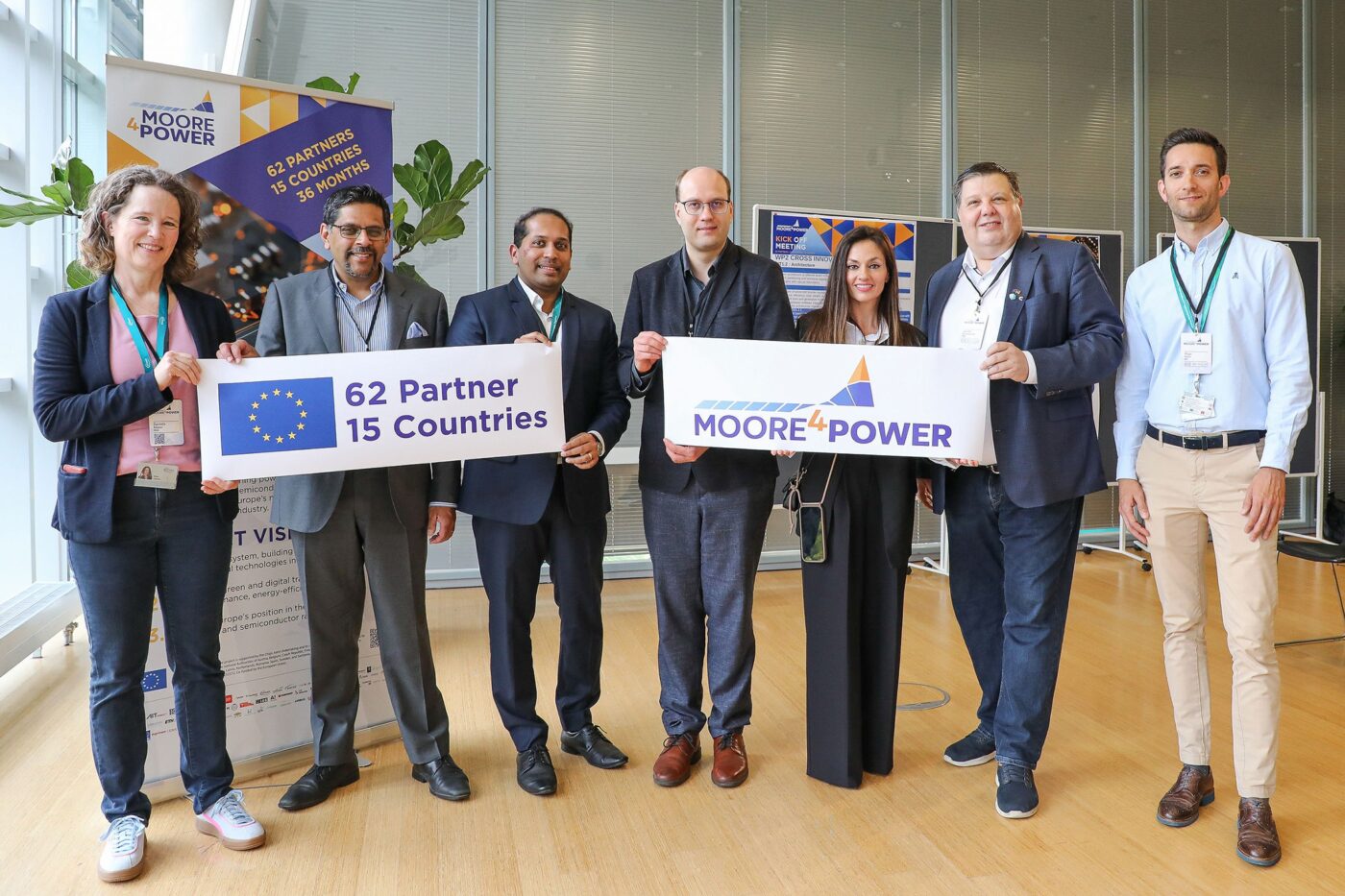
A consortium led by Infineon Technologies has launched Moore4Power, a major European semiconductor research initiative aimed at advancing intelligent power electronics for applications including electric mobility, charging infrastructure, renewable energy and rail transport.
The project brings together 62 partners from 15 European countries, including large corporations, small and medium-sized enterprises (SMEs) and research institutions.
Moore4Power, short for “More than Moore for Disruptive Innovations in Power Electronics,” will receive funding from participating countries and the European Union’s Horizon Europe programme.
With a total budget of €91 million, the three-year initiative is designed to accelerate the development of next-generation power semiconductor technologies while strengthening Europe’s technological competitiveness and industrial resilience.
Focus on System-Level Innovation
Rather than concentrating solely on shrinking semiconductor components, the project follows a “More-than-Moore” approach that emphasizes system-level integration.
According to Infineon, the consortium aims to combine different semiconductor materials, technologies and functions into highly integrated power electronic systems capable of delivering higher efficiency, reliability and power density.
The initiative will focus on the heterogeneous integration of silicon (Si), silicon carbide (SiC) and gallium nitride (GaN) technologies alongside sensing, control and communication functions.
Project leaders said each technology will be deployed where it offers the greatest performance advantages, enabling more compact and efficient designs.
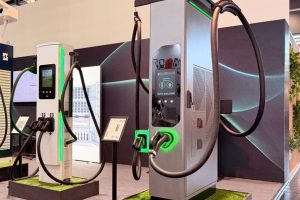
Applications in Electric Mobility and Charging
Power electronics are becoming increasingly important in electric vehicles and charging infrastructure as automakers develop new vehicle architectures and advanced energy management systems.
The semiconductors used in these applications support next-generation electrical and electronic platforms while helping improve vehicle efficiency and performance.
Infineon is already a major supplier of automotive semiconductors and provides components for several electric vehicle platforms, including BMW’s Neue Klasse architecture.
The consortium also highlighted bidirectional charging as a key area where advanced power electronics are expected to play an increasingly important role.
Chiplets, AI and Digital Twins
A central element of the project is the use of chiplet technology, a modular semiconductor design approach that allows different functional components to be integrated into scalable architectures.
The concept builds on work completed under the PowerizeD project, a previous Chips Joint Undertaking-funded initiative that concluded in 2025.
Moore4Power will also incorporate artificial intelligence, digital twins and automated engineering processes to accelerate product development.
According to Infineon, the approach could significantly shorten semiconductor development timelines by enabling hardware and software to be developed simultaneously while improving simulation accuracy.
The company said the period between receiving initial fabrication samples and validating product specifications could potentially be reduced from several weeks to as little as one week.
Digital Product Passport Included
Another key feature of the project is the development of a Digital Product Passport (DPP) embedded directly into power modules.
The system will provide wireless access to lifecycle information, including operating conditions, health status and remaining service life.
The consortium said the technology could improve predictive maintenance capabilities, extend product lifespans and support greater component reuse.
Supporting Europe’s Industrial Strategy
Jochen Koszescha, coordination lead for the Moore4Power project at Infineon Technologies, said power electronics will play a critical role in improving energy efficiency across multiple industries.
“Power electronics are a decisive enabler for energy efficiency and sustainability. With Moore4Power, we are setting the next level of smart integration to achieve significantly higher energy and resource efficiency,” said Koszescha.
“We are proud to join forces with an outstanding consortium from academia, research and industry to make a decisive contribution to Europe’s Clean Industrial Deal.”
The initiative reflects broader European efforts to strengthen semiconductor capabilities and reduce dependence on external technology supply chains while supporting the transition to electrified transport and renewable energy systems.