


Hyundai Motor is pursuing new fast-charging technology aimed at cutting electric-vehicle charging times to about three minutes, a target the company says aligns with consumer expectations for refuelling. The effort comes as the automaker works to reduce charging anxiety among drivers who rely heavily on public infrastructure.
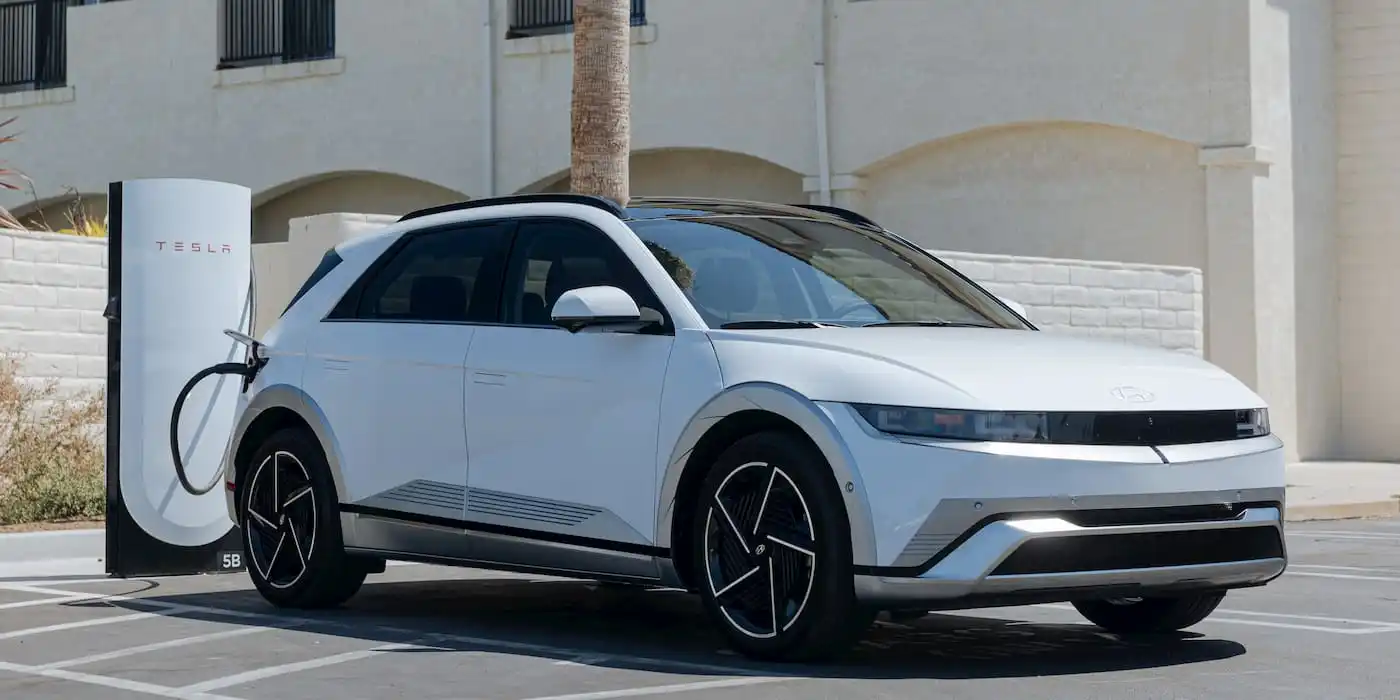
Current Hyundai EVs built on the E-GMP platform — including the Ioniq 5 and Ioniq 6 — can charge from 10% to 80% in about 18 minutes using 350 kW DC fast chargers and an 800-volt architecture. Although the system is among the fastest on the market, Hyundai says customers are increasingly looking for performance comparable to gasoline refuelling.
“The expectation from customers is that it will take three minutes to fill a car, the same as it does with an internal-combustion engine,” Tyrone Johnson, head of Hyundai Motor Europe Technical Center, told Auto Express. He added that charging concerns often stem from perception rather than need, noting that drivers “worry about range anxiety and whether they will suddenly need to drive 200 miles.”
Johnson said the challenge is delivering faster charging without relying on larger, more expensive battery packs. Hyundai is therefore working to commercialise 400 kW charging capability, which the company says would significantly cut wait times while maintaining efficiency and cost targets.
While Hyundai advertises 350 kW charging speeds, real-world rates often fall closer to 250 kW due to factors such as battery temperature and station output. Competitors, including Porsche and Lucid, are moving toward higher-power charging systems as well. The Porsche Taycan remains the fastest-charging EV today, reaching up to 320 kW, with new models such as the Lucid Gravity and the upcoming Porsche Cayenne Electric adopting 400 kW peak charging hardware.


